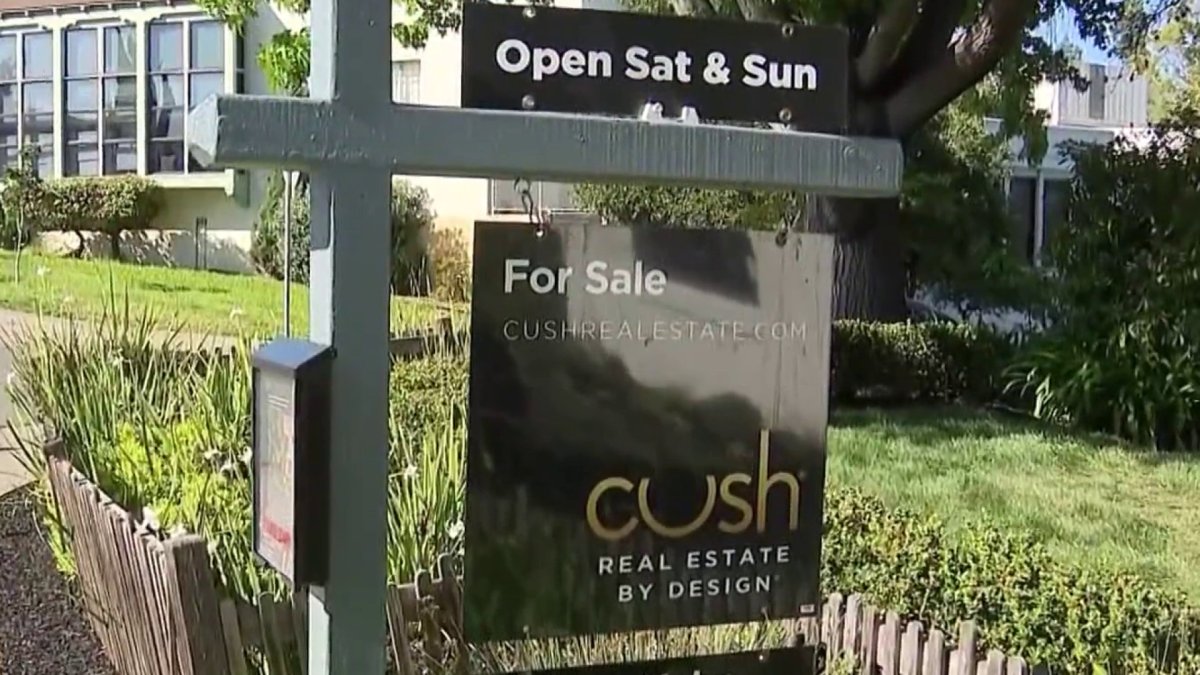
Oakland home values fell 11.4% and 28% on an inflation-adjusted basis versus 2025, according to Zillow data analyzed by the San Francisco Chronicle. The article also says Oakland had one of the largest percentage declines since 2019, though select neighborhoods remain highly competitive, with some homes still selling 20% to 40% above asking. Realtors noted AI-sector buyers are increasingly being priced out of San Francisco and looking by the Bay.
The relevant signal here is not just a local housing drawdown; it is a widening dispersion trade inside Bay Area real estate. Weakening collateral values in Oakland tighten credit conditions for marginal borrowers, but the stronger neighborhoods can keep clearing at premium prices, which means capital will likely migrate toward a narrower set of “best-in-class” locations rather than leave the market entirely. That creates a second-order winner set: mortgage originators and lenders with heavier Bay Area exposure may see lower aggregate volumes but relatively better credit performance if the market bifurcates instead of rolls over uniformly.
The AI angle is more important than the headline decline. If AI hiring continues to push displaced buyers from San Francisco into lower-priced East Bay submarkets, Oakland could become a labor-market spillover beneficiary even as current prices remain under pressure; that delay matters because housing typically lags income shocks by 6-18 months. In other words, today’s weakness may be a function of rate sensitivity and affordability ceilings, while a future rebound depends on whether AI compensation broadens beyond elite SF enclaves.
The main risk is a feedback loop: falling appraisals reduce refi and sale activity, which suppresses transaction-driven services and can pressure local consumer spending through wealth effects. A faster-than-expected rate cut cycle would be the cleanest catalyst to stabilize values over the next 3-9 months, but a sharper AI equity correction would remove the incremental buyer base and extend the downturn into 2026. The contrarian read is that the move may be overdone in the highest-quality submarkets, where scarcity and affluent inbound demand can keep pricing sticky even if citywide averages keep drifting lower.
From a portfolio perspective, the opportunity is more about relative value than outright housing beta: if the market starts pricing a broader Bay Area softness, the better short is exposed mortgage/real-estate service names with thin margins and transaction leverage, not the strongest coastal luxury footprint. Conversely, a selective long on Bay Area consumer and home-improvement proxies only works if rates fall and AI hiring broadens enough to re-ignite turnover. The key is to separate headline home-value declines from transaction volume and credit stress, which will likely diverge over the next two quarters.
AI-powered research, real-time alerts, and portfolio analytics for institutional investors.
Request DemoOverall Sentiment
mildly negative
Sentiment Score
-0.25
