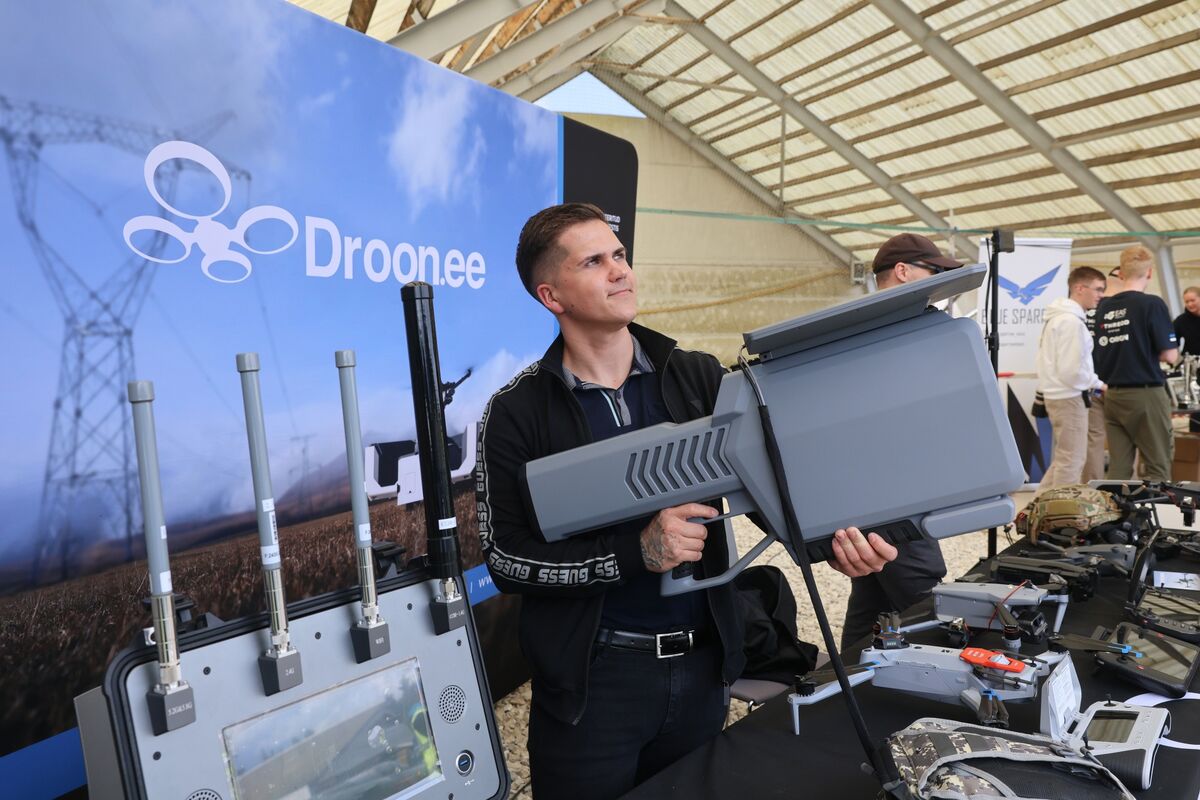
Estonia has sharply increased defense spending since Russia's full-scale invasion of Ukraine and next year is expected to spend over 5% of GDP—the highest ratio in the EU—while also expanding domestic arms manufacturing. The government is promoting its ecosystem of local defense startups to a broader set of customers, creating potential procurement and export opportunities for Estonian suppliers and venture-backed firms, though the report provides no specific contract or revenue figures and is unlikely to move broad markets immediately.
Market structure: Estonia’s shift toward home-grown defense manufacturing benefits Baltic/Nordic system integrators, small-cap defense tech and specialty suppliers (drones, secure comms, sensors) while undermining legacy suppliers reliant on Russian supply chains. Expect pricing power to move toward Western electronics and precision metal suppliers; tactical hardware demand in the region could rise 10–30% over 12–36 months, tightening supply for niche semiconductors and specialty alloys. Cross-asset impact: modest upward pressure on regional sovereign yields (Estonia/Latvia/Lithuania +10–30bps vs. Germany) and on industrial metals (copper, aluminum, nickel), while EUR should be neutral-to-supportive versus EM FX on higher EU defense flows.
Risk assessment: Key tail risks are geopolitical escalation (Russian kinetic/cyber retaliation), EU export-control shifts, and procurement overruns that bankrupt small vendors; these could occur within 0–18 months and cause 30–70% value swings in VC-backed startups. Hidden dependencies include EU/NATO co-funding approvals and non-Russian raw-material access; if NATO funding fails to scale or semiconductors remain constrained, ramp timelines stretch to 24–48 months. Catalysts to watch in the next 3–9 months are Estonia’s 2026 budget passage, NATO procurement commitments, and 3–6 announced M&A exits.
Trade implications: Direct tactical plays favor small/mid-cap aerospace & defense exposure and commodity suppliers for electronics/metals. Relative-value: long small-cap/innovation exposure (XAR) vs. short/underweight large primes (ITA or LMT) to capture re-rating if M&A activity accelerates; volatility favors 3–6 month call spreads on ITA/XAR ahead of NATO funding votes. Sector rotation should tilt from consumer cyclicals into industrials/defense suppliers over the next 6–18 months, with position sizing tied to concrete procurement wins (>€200m) or announced order flow.
Contrarian angles: Consensus overweights headline growth in Estonian startups while underestimating scale challenges — many firms will face margin compression and consolidation, making early-stage VC exits binary (0x or 5–10x). Conversely, markets may underprice the upstream commodity squeeze (specialty alloys, CIS-free semis) which could deliver 6–18 month alpha via miners/metal suppliers. Historical analogy: post‑2014 defense rerating led to a multi-year consolidation; expect similar M&A waves rather than long-lived standalone winners, so prioritize takeover candidates and supply-chain plays over small standalone OEMs.
AI-powered research, real-time alerts, and portfolio analytics for institutional investors.
Request DemoOverall Sentiment
neutral
Sentiment Score
0.12
