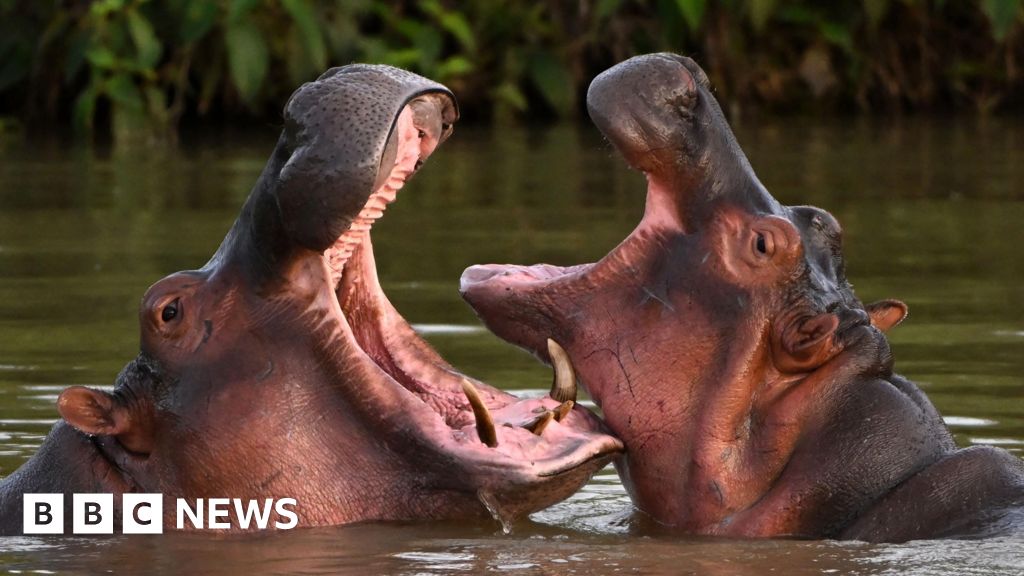
Anant Ambani has offered to relocate and provide lifelong care for roughly 80 of Colombia's Escobar-linked hippos at his Vantara zoo in Gujarat, though Colombia has not commented. The issue centers on invasive wildlife management and conservation policy, with Colombian authorities previously attempting population control measures including castration. The story is largely factual and non-market-moving, with limited direct financial impact beyond reputational considerations for Vantara and the Ambani family.
This is not a direct market event, but it is a useful signal for India-linked governance optionality: the Ambani family continues to convert reputational capital into soft power, including in politically sensitive cross-border issues. The second-order effect is that Vantara is effectively positioning itself as a global “last resort” for high-profile animal transfer cases, which could increase scrutiny from regulators, NGOs, and ESG-focused allocators, even if headline intent is charitable. That scrutiny matters because the zoo’s asset base is not just animals but a branding platform adjacent to a broader conglomerate ecosystem.
The immediate winners are reputationally the Ambanis and, potentially, Colombian authorities if they can defer a politically fraught cull. The losers are local environmental stakeholders in Colombia if this becomes a delay tactic rather than a population-management solution; the herd problem compounds nonlinearly, so every year of inaction likely raises relocation, fencing, and compensation costs. For investors, the relevant lens is governance risk: the more Vantara becomes a magnet for controversial rescues, the more it can become a flashpoint for questions about animal welfare, permitting, and the optics of ultra-wealth private institutions operating quasi-public conservation functions.
The contrarian view is that this is less about actual hippo logistics and more about signaling bidirectional influence: India’s richest family is demonstrating global reach while Colombia signals openness to non-state solutions. That makes the headline fragile as a policy catalyst but durable as a narrative catalyst. If the offer is rejected or stalled, the reputational upside fades quickly; if accepted, expect a multi-month NGO campaign that could spill into broader criticism of private wildlife holdings in India.
AI-powered research, real-time alerts, and portfolio analytics for institutional investors.
Request DemoOverall Sentiment
neutral
Sentiment Score
0.05
