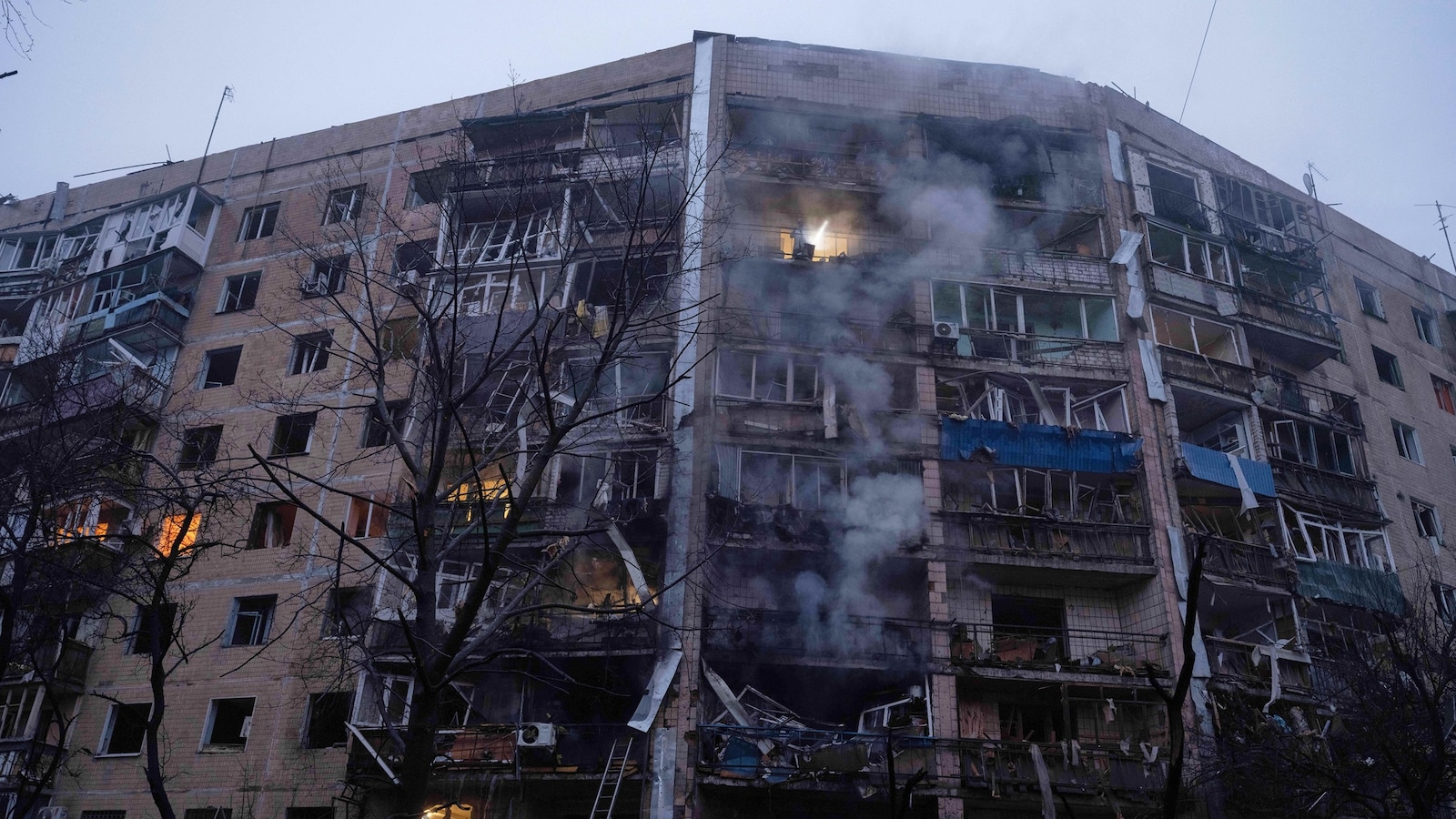
Ukraine reports a sharp escalation in long-range Russian strikes, saying Moscow launched more than 3,300 munitions in a week — including over 2,000 attack drones, 1,200 guided aerial bombs and 116 missiles — while Ukraine’s air force said 101 drones were launched overnight (69 shot down, 32 impacts across 13 locations). Kyiv announced new sanctions on foreign firms accused of supplying components for Russian drones and missiles and signaled Russia’s energy sector is a legitimate target, a stance that raises downside risk for regional stability, could accelerate defense procurement needs and may tighten energy market dynamics and relevant supply chains.
Market structure: The immediate winners are large defense primes (Lockheed LMT, Raytheon RTX, Northrop NOC) and energy exporters; losers are energy‑intensive European utilities and industrials (E.ON EOAN.DE, RWE RWE.DE) exposed to power outages and higher input costs. Demand shock mechanics are clear — sustained air‑defense and missile replenishment cycles imply multi‑year procurement (orders up 10–30% vs. peacetime cadence), tightening specialized munitions and avionics supply and raising pricing power for primes and key subcontractors.
Risk assessment: Tail risks include escalation to strikes on global energy chokepoints (oil spike >$100/bbl within 30 days) or NATO entanglement forcing rapid re‑pricing of risk assets; medium term (weeks–months) risk is supply‑chain sanctions on avionics/semiconductor suppliers that could bottleneck production. Hidden dependencies: availability of high‑end semiconductors, insurance/re‑insurance capacity for maritime routes, and winter weather that could amplify European gas shocks.
Trade implications: Tactical allocation favors defense equities and oil/gas exposure, funded by trimming European utility cyclicals and energy‑sensitive capex names; expect volatility to remain elevated for 3–9 months, so prefer defined‑risk options (9–12 month call spreads on LMT/RTX). Cross‑asset: buy duration and FX hedges (USD, JPY) in risk‑off nights; increase cash reserved for tactical commodity spikes (>20% intra‑month moves).
Contrarian angle: The market understates fragmentation of energy markets—targeted strikes make Russian hydrocarbon revenue volatility structural, creating multi‑year premium for LNG and Western energy independents rather than a transitory oil spike. Beware overpaying for defense winners already priced for victory; look for overlooked midsize electronics suppliers to defense supply chains that re‑rate once multi‑year contracts are awarded.
AI-powered research, real-time alerts, and portfolio analytics for institutional investors.
Request DemoOverall Sentiment
moderately negative
Sentiment Score
-0.60
