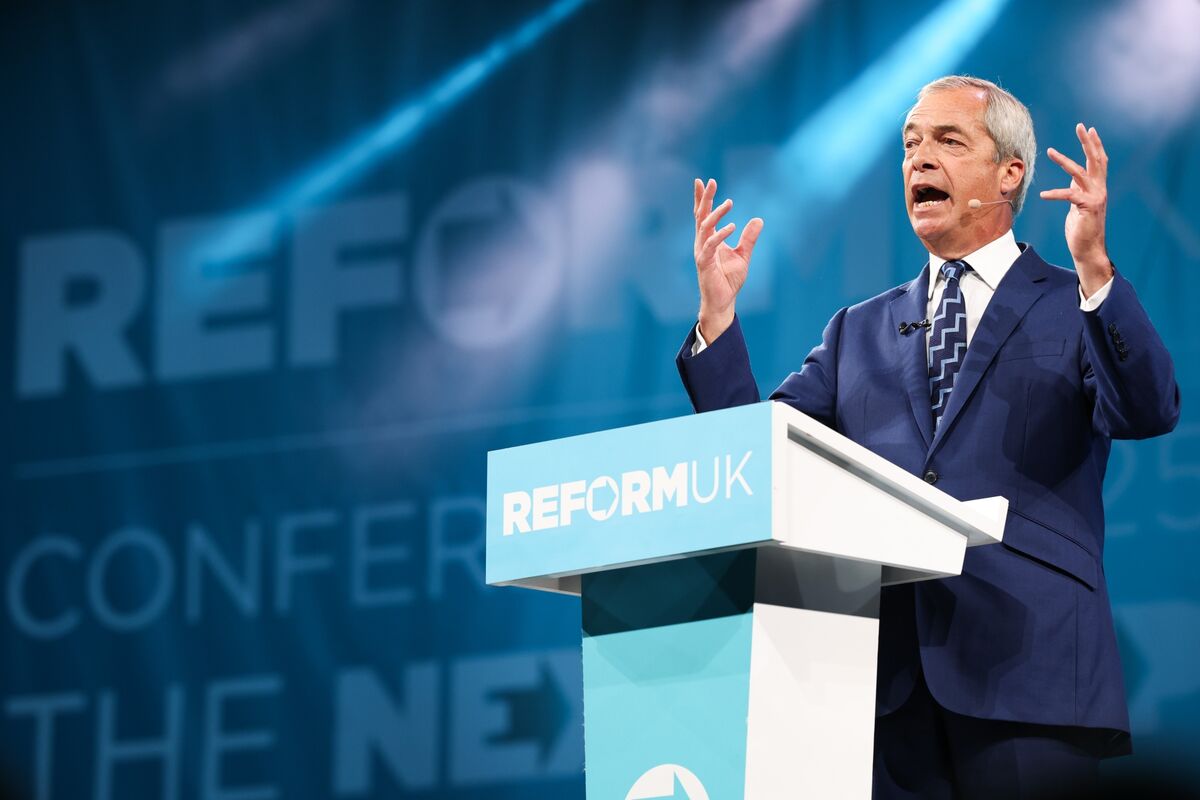
Supporters of Nigel Farage’s Reform UK are launching the Great British Business Council to formalize party links with corporations, to be led by former commodities trader Mark Thompson. The move accompanies Electoral Commission data showing Reform UK raised £10 million (~$13m) in Q3 donations, a record haul that outpaced rival parties and signals growing financial and corporate support as the party seeks governance credibility.
Market structure: The formation of a Great British Business Council plus £10m in Q3 donations materially raises the probability that Reform UK can influence near-term policy debates. Winners would be UK domestic cyclicals (mid/small caps, housebuilders, banks, energy services) which stand to gain from tax/deregulatory proposals; losers include long-duration gilts and defensive exporters if sterling weakens or fiscal loosening is priced (a 20–50bp gilt yield back-up is plausible). Pricing power shifts toward domestically-focused firms where governance risk is reduced by explicit corporate-state channels.
Risk assessment: Tail risks include an electoral shock or policy u-turn that triggers a 10–20% rerating in small-cap UK equities or a >75bp spike in 10y gilt yields; corporate reputational blowback to donor firms could cause idiosyncratic drawdowns. Near-term (days–weeks) risk centers on polling/dataflow and donation rounds; short-term (1–6 months) is manifesto formation and regulatory statements; long-term (6–24 months) is enacted fiscal/tax policy. Hidden dependencies: donor influence could accelerate sector-specific regulation (energy, financial services) and spur M&A or carve-outs, changing fundamentals beyond headline polling.
Trade implications: Favor a modest pro-cyclical tilt to UK domestic exposure while hedging rates and FX: overweight UK midcaps/energy/banks if Reform polling sustains above ~15% for two months, but hedge with short-dated gilt positions and GBP volatility trades. Use options to express asymmetric risk—buy ATM GBP/USD straddles around key political dates and use put spreads on long-dated gilts if fiscal loosening language hardens. Rebalance within 3–12 months as policy clarity arrives.
Contrarian angles: Consensus may underappreciate that formal corporate lobbying can reduce uncertainty for business-friendly reforms, compressing risk premia for regulated sectors—this would support a 5–15% upside re-rating in domestically exposed stocks if Reform converts polling into policy influence. Conversely, markets may be underestimating reputational/tail risks to donors (consumer boycotts, ESG outflows) that could produce idiosyncratic 20–40% hits. Historical parallel: Brexit-era political momentum produced rapid swings in sterling and small-caps; expect similar episodic volatility rather than smooth trend appreciation.
AI-powered research, real-time alerts, and portfolio analytics for institutional investors.
Request DemoOverall Sentiment
neutral
Sentiment Score
0.00
