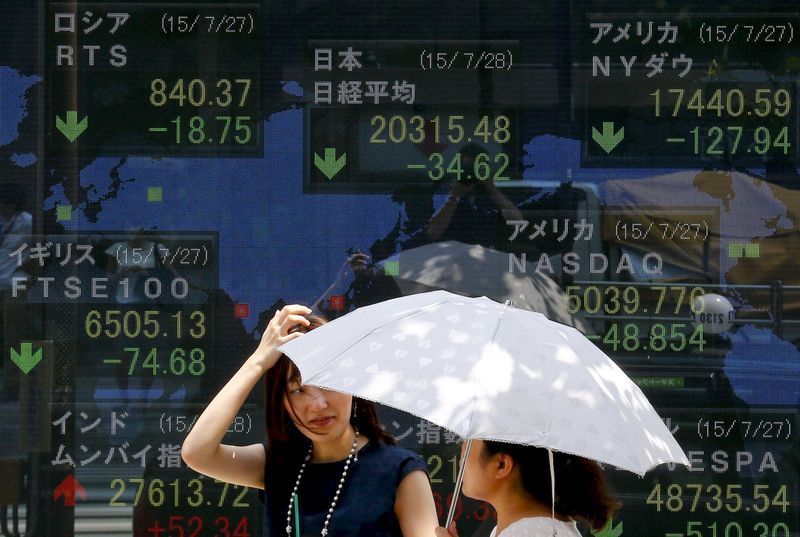
The Bank of Japan held its short-term rate at 0.75% by a 6–3 vote and signaled further gradual tightening if inflation and geopolitical conditions warrant. Asian markets were mixed, with Japan's Nikkei 225 down 0.7% from a record high, South Korea's KOSPI up over 1% to 6,712.73, and China's Shanghai Composite down 0.1% as elevated oil prices and Middle East tensions pressured sentiment. U.S. focus now shifts to the Federal Reserve decision later this week, while AI valuation concerns also weighed on regional tech stocks.
The immediate read-through is not “Asia risk-off” but a cross-asset repricing of real rates: if oil stays elevated into the Fed/BOJ window, the market has to choose between higher nominal growth and tighter policy. That is usually negative for high-duration equity multiples, especially in AI/software where cash flows are discounted far into the future; the more fragile leg is not broad tech beta but the most crowded names with the weakest near-term monetization. NDAQ itself is not the trade here, but the same regime shift tends to increase index/futures and options activity, which can offset some of the valuation pressure via higher volumes and volatility premium.
Japan is the cleaner second-order story. A firmer BOJ tightening path raises the probability of another yen-strength episode, which is a headwind for exporters and a tailwind for domestic financials and brokers. The more interesting impact is on global capital flows: a rising JGB yield can pull marginal Japanese savings home over a 3–6 month horizon, reducing the bid for foreign risk assets that benefited from cheap yen funding.
The oil/geopolitical overlay is less about direct energy earnings and more about inflation persistence. If crude remains near multi-week highs for another 4–8 weeks, the market will likely de-rate EM equities with weak current accounts, while favoring countries and sectors with pricing power and low energy intensity. The contrarian angle is that the AI/tech pullback may be overdone if this is just a temporary multiple compression move rather than a demand shock; the real damage only emerges if higher energy prices start to show up in PMIs and consumer data by late summer.
AI-powered research, real-time alerts, and portfolio analytics for institutional investors.
Overall Sentiment
mixed
Sentiment Score
-0.10
Ticker Sentiment
