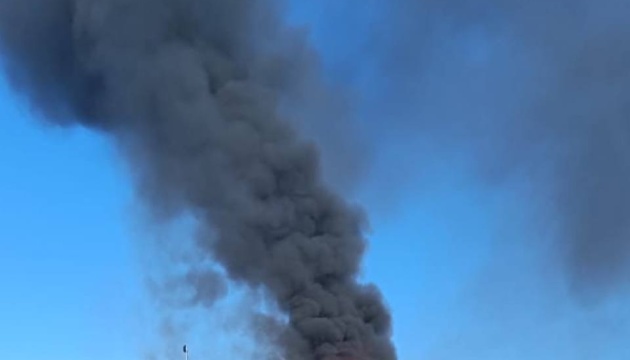
Ukrainian forces reported strikes on Russian and occupied-territory military assets, including ammo depots, air defenses, command posts, UAV hubs, logistics facilities, bridges, and concentrations of personnel. Targets included an Osa air-defense system in Donetsk, storage sites in Velyka Novosilka and Donetsk city, and logistics warehouses in Rovenky and other locations. The article is a battlefield update with limited direct market implications, though it reinforces the ongoing war-risk backdrop in the region.
The immediate market read is not on headline attrition, but on degradation of Russian logistics depth and local air-defense density. Repeated strikes on depots, command posts, bridges, and comms nodes increase the cost of moving ammunition and rotating forces, which tends to matter more than one-off equipment losses: once the last-mile network is stressed, frontline units face intermittent shortages and slower response times for days to weeks, not just hours.
The second-order effect is a widening of the protection gap around rear-area infrastructure. If air-defense systems are being forced to reposition or are being destroyed faster than they can be replaced, the marginal value of fixed depots and rail-linked warehouses falls sharply, pushing Russia toward smaller, more dispersed stockpiles. That is operationally defensive but economically inefficient, and it typically raises transport burn, truck fleet utilization, and maintenance demand over a multi-month horizon.
The contrarian point is that market participants often overestimate the immediate strategic impact of these strikes and underestimate adaptation. Russia can partially offset by dispersing ammo, hardening command sites, and using alternate routes; the key variable is whether Ukraine can sustain tempo faster than repair and rerouting cycles. If the strike rate persists for several weeks, the bigger implication is not a sudden front collapse but a gradual increase in Russian unit-level friction, which usually shows up first in reduced offensive pace and higher logistic losses before it becomes visible in territory changes.
AI-powered research, real-time alerts, and portfolio analytics for institutional investors.
Request DemoOverall Sentiment
mildly negative
Sentiment Score
-0.20
