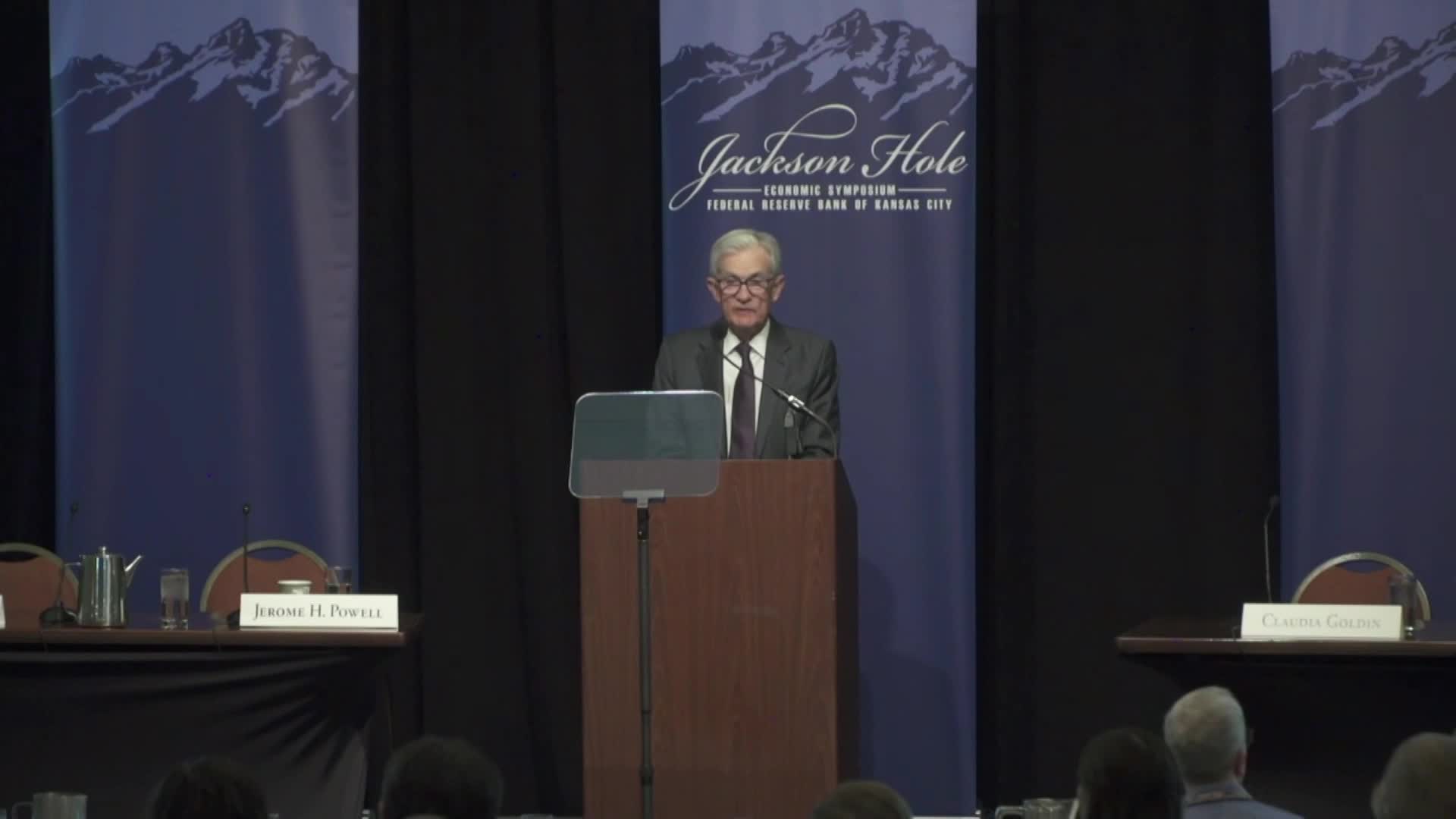
Federal Reserve Chair Jerome Powell indicated that shifting economic risks could warrant adjustments to monetary policy, a statement delivered during a Bloomberg Surveillance segment from Jackson Hole. This suggests the Fed is closely monitoring evolving conditions and remains prepared to adapt its strategy in response to new data.
Federal Reserve Chair Jerome Powell's statement from the Jackson Hole economic symposium signals a pivotal, albeit deliberately ambiguous, stance on future monetary policy. The indication that "shifting economic risks may warrant policy adjustment" suggests the central bank is moving towards a more flexible, data-dependent approach rather than a pre-set course. The neutral sentiment and uncertain tone of the communication, coupled with a high market impact score of 0.8, underscore the significance of this subtle messaging. It implies that while the Fed is not committing to a specific action, its tolerance for either hawkish or dovish pivots has increased. This places an even greater emphasis on forthcoming economic data, as these releases will now be the primary drivers for the Fed's decision-making process, directly influencing asset valuations and market expectations.
AI-powered research, real-time alerts, and portfolio analytics for institutional investors.
Request DemoOverall Sentiment
neutral
Sentiment Score
0.00
