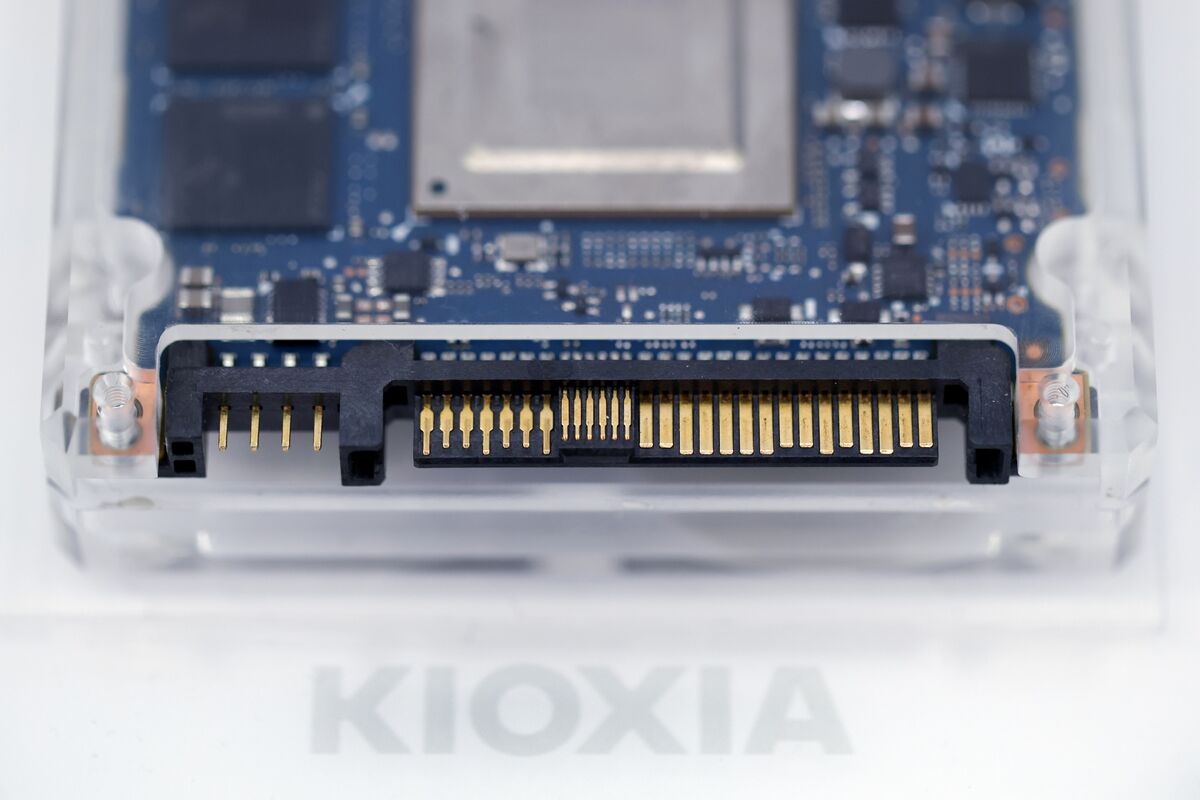
Kioxia Holdings shares plunged more than 12% after BCPE Pangea Cayman LP, a Bain Capital‑backed vehicle, announced plans to sell 36 million Kioxia shares to overseas investors via Goldman Sachs, implying a potential transaction value of roughly ¥355 billion ($2.3 billion) based on Tuesday’s close of ¥9,853. The planned block sale has created immediate supply pressure and renewed concerns about lofty valuations in AI‑related technology names; investors should monitor the deal pricing, allocations and any spillover effect on sector sentiment.
Market structure: The immediate winner is short-term liquidity providers and opportunistic long-term buyers; direct losers are Kioxia equity holders and high‑multiple AI/exposure names as sentiment reprices. This is an equity supply shock (36m shares ≈ ¥355bn) not a NAND product dump, so pricing power among memory wafer suppliers (Samsung 005930.KS, SK Hynix 000660.KS, Micron MU) could diverge based on balance‑sheet resilience and hyperscaler demand visibility. Cross-asset: expect a 24–72h spike in equity vols (especially NVDA, MU), modest JPY safe‑haven inflows and compression in regional yields (JGBs), with gold/Treasuries bids if tech-led risk‑off broadens.
Risk assessment: Tail risks include a Bain forced‑liquidity event or downstream hyperscaler capex pullback that triggers a multi-quarter NAND destocking and a >30% sector rerate; low probability but high impact. Near term (days) see >10% intraday swings; short term (weeks) sentiment could pressure peers by 10–20%; long term (quarters) fundamentals hinge on AI server build cycles and fab utilization rates. Hidden dependencies: OEM inventory cycles, lock‑up/secondary schedules and hyperscaler purchase cadence; catalysts include block sale take‑up rate (48–72h), upcoming quarterly capex guides, and any M&A/strategic bid signals.
Trade implications: Direct short Kioxia if liquid (trigger: break below ¥8,900 = ~10% down) with tight stop; if not accessible, use Japan tech ETFs or short concentrated AI/memory exposure. Relative: establish long MU (accumulate on >10% pullback over 2–6 weeks) vs short NVDA to hedge multiple compression risk—target 20–35% upside on MU over 6–12 months. Options: buy MU 9–12 month call spread to leverage rebound; buy 3‑month NVDA put spread to hedge immediate volatility. Rotate 3–5% portfolio weight from pure AI growth into cyclical semiconductors and industrial AI software.
Contrarian angle: Consensus treats this as fundamental weakness but it may be purely liquidity-driven—if block is absorbed by long-term strategic buyers or if Bain simply harvests gains, downside is limited and a >15% selloff would likely be overdone. Historical parallels: 2018–19 memory stigma created multi-month overshoots followed by strong recoveries when hyperscaler capex resumed. Unintended consequence: aggressive shorting could create squeeze risk if any strategic stake consolidation or buyout talk emerges; monitor buyback/bid rumors and block take‑up within 72h.
AI-powered research, real-time alerts, and portfolio analytics for institutional investors.
Request DemoOverall Sentiment
strongly negative
Sentiment Score
-0.55
Ticker Sentiment
