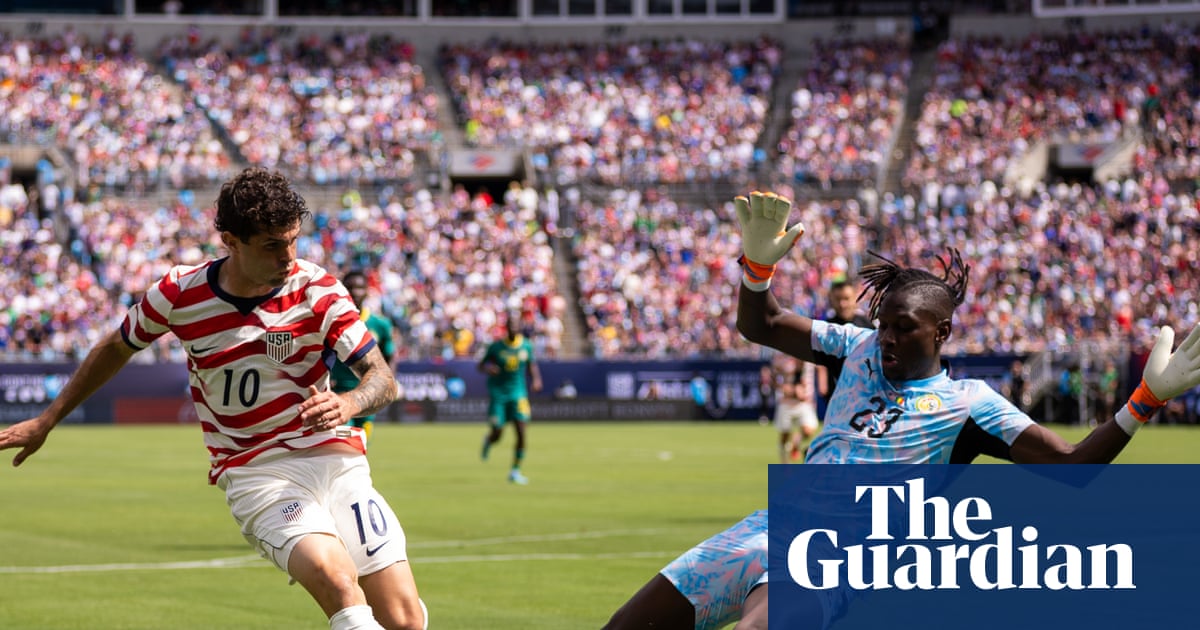
The US beat Senegal 3-2 in a send-off match ahead of this summer’s World Cup, highlighted by Christian Pulisic ending a nearly six-month scoring drought with a goal and an assist. The performance was encouraging for U.S. confidence, though defensive lapses remained an issue after Senegal scored twice through breakdowns. The result is largely sports-news driven and has limited direct market impact.
The marketable signal here is not the headline result but the change in process quality: when a team’s chance creation shifts from isolated transition moments to repeatable left-to-right combinations, the probability of a one-off “confidence game” translating into tournament utility rises materially. That matters because pre-tournament narratives usually overprice either recent bad form or a single standout performance; the edge is in identifying whether the improvement is structural or just variance against a passive opponent. Here, the key positive is that the attacking ceiling appears less dependent on one creator and more on coordinated function through multiple lanes.
The bigger second-order issue is on the defensive side, where repeated concessions around halftime suggest a game-state management problem rather than a simple personnel issue. Teams that struggle to stabilize immediately after the break are vulnerable to tournament opponents who adjust first, which creates asymmetric downside in knockout settings: a 5-10 minute lapse can flip expected advancement probabilities far more than a strong 75-minute stretch can improve them. That makes goalkeeper clarity and rest-defense shape the true catalyst over the next 2-6 weeks, not further attacking positives.
Contrarian read: the optimistic reaction may be too anchored to one star’s regression-to-form and underweights how fragile the team still looks when protecting leads. In markets and in international football, confidence narratives are usually overbought after a clean-looking result; the better setup is to fade the enthusiasm if the same turnover-and-transition issues reappear in the next match. If the coach stabilizes the back line and picks a clear No. 1, the upside is real; if not, this is likely a short-lived sentiment bounce rather than a durable inflection.
AI-powered research, real-time alerts, and portfolio analytics for institutional investors.
Request TrialOverall Sentiment
mildly positive
Sentiment Score
0.35
