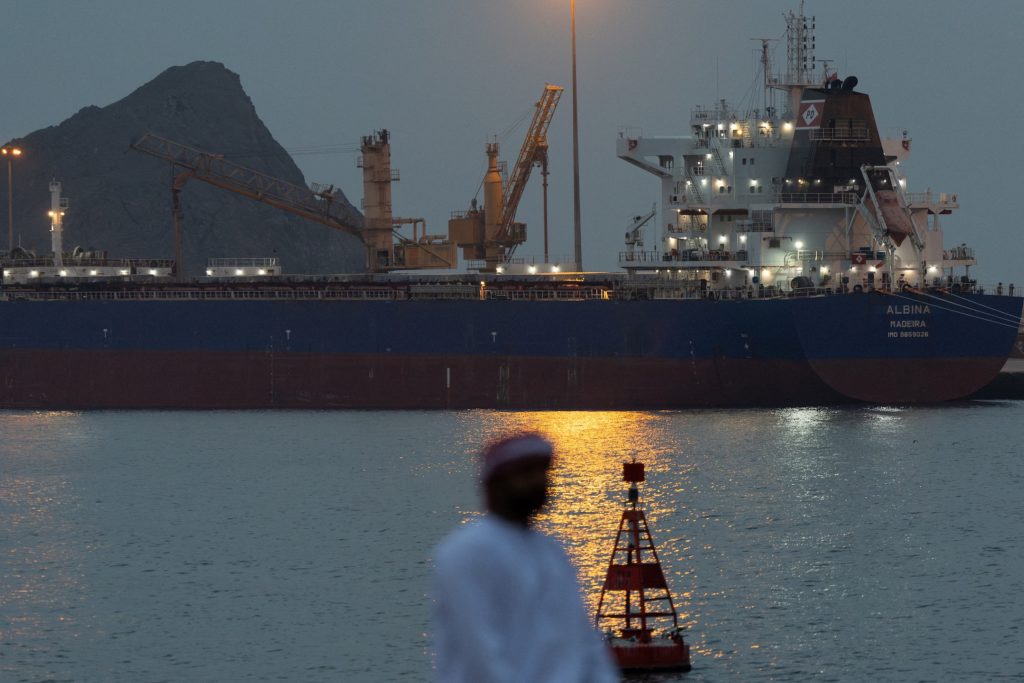
Brent crude peaked at $111/bbl as Iran, Israel and the U.S. continue strikes and counterstrikes, including attacks on oil facilities that forced shutdowns at Kuwait's Al-Ahmadi and Mina Abdullah refineries. The conflict has caused at least 15 civilian deaths nationwide and reportedly 15 senior IRGC officials killed, while Iran struck Jerusalem and other Israeli sites. President Trump rejected a ceasefire, signaled possible "winding down" of operations but continues strikes to reopen the Strait of Hormuz; major NATO/EU partners expressed reluctance to join, leaving elevated supply risk and a near-term risk-off market backdrop.
Market mechanics are shifting from a localized strike environment to a sustained risk premium on seaborne oil flows; even partial disruption of the Strait of Hormuz raises voyage times for Gulf-to-Europe/US cargoes by roughly 7–12 days and increases tanker time-charter earnings by 30–100% depending on vessel class. That dynamic funnels immediate cash margin to owners of VLCCs and Suezmaxes while creating a cadence of backwardated futures curves that favors physical sellers and short-dated storage trades.
Defense and ISR suppliers are in a multi-quarter sweet spot: procurement lead-times mean orders placed now translate into revenue over 6–24 months, and political alignment toward higher baseline defense budgets creates optionality in contractor free cash flow beyond near-term repricing. Conversely, refiners and regional midstream operators face 1–3 month outages on feedstock and export terminals, compressing throughputs and forcing product arbitrage shifts that can erode 2–6% of quarterly margins for exposed refiners.
Tail outcomes are binary and time-sensitive: an escalation that closes major export chokepoints could add $20+/bbl in days and spike shipping insurance premiums, while a negotiated de-escalation or coordinated NATO escort plan could remove the premium within 30–90 days. Monitor three triggers: (1) confirmed multi-week closure of Hormuz or alternate chokepoints, (2) naval coalition deployment announcements, and (3) targeted degradation of Iran’s drone/missile production capacity — each materially alters position sizing and stop discipline.
AI-powered research, real-time alerts, and portfolio analytics for institutional investors.
Overall Sentiment
strongly negative
Sentiment Score
-0.70
