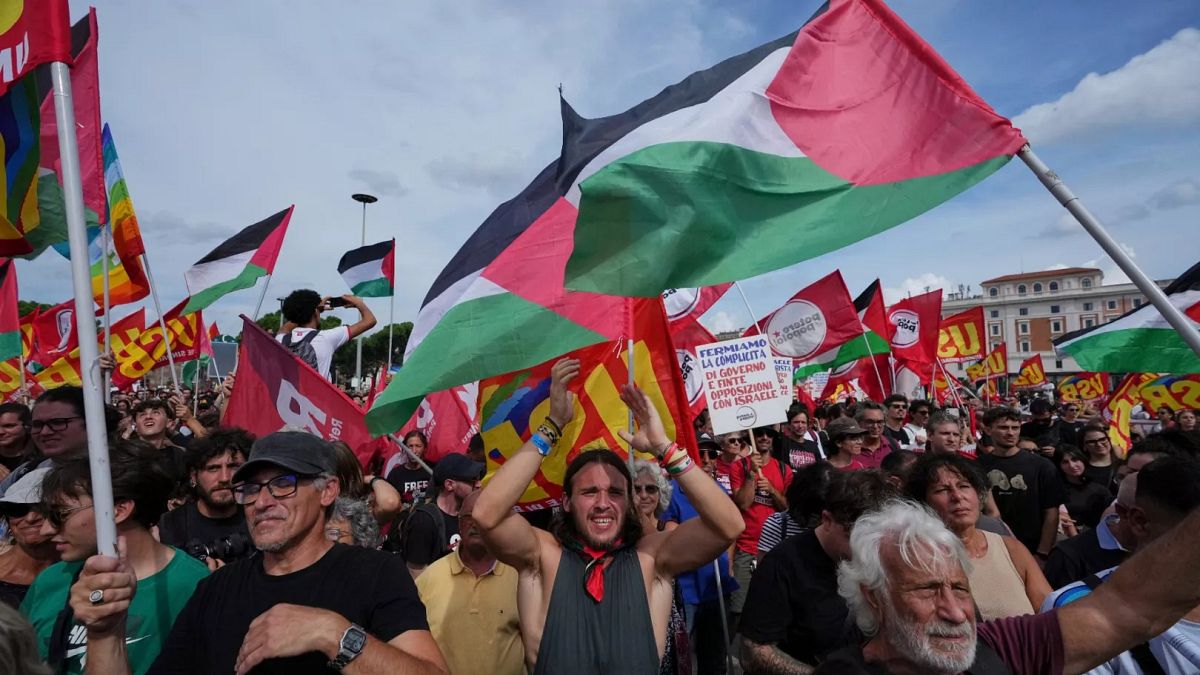
Italian workers and students initiated a second day of general strikes on Monday, significantly disrupting public transport, schools, and critical port operations in Genoa and Livorno, thereby impacting goods transit nationwide. Organized by major unions including CGIL and USB, the action protests Israeli military operations in Gaza and perceived inaction by the Italian government and EU. This widespread disruption highlights escalating domestic pressure on Premier Meloni's administration regarding the Israel-Hamas conflict, despite Italy's current stance against formally recognizing a Palestinian state.
Widespread general strikes in Italy, organized by major trade unions including CGIL and USB, are causing significant economic and logistical disruptions for a second consecutive day. The action has directly impacted national infrastructure, slowing or partially blocking goods transit through the critical ports of Genoa and Livorno and causing long delays in public transport and train services in major hubs like Rome and Milan. This labor action is explicitly political, protesting the Italian and EU governments' perceived inaction regarding the Israel-Hamas conflict and calling for sanctions against Israel. The strikes highlight mounting domestic political pressure on Premier Giorgia Meloni's administration, creating a notable level of political risk as the government's foreign policy stance is challenged by widespread civil action. The situation presents a tangible, near-term risk to supply chains reliant on Italian logistics and signals growing internal political instability.
AI-powered research, real-time alerts, and portfolio analytics for institutional investors.
Overall Sentiment
moderately negative
Sentiment Score
-0.50
