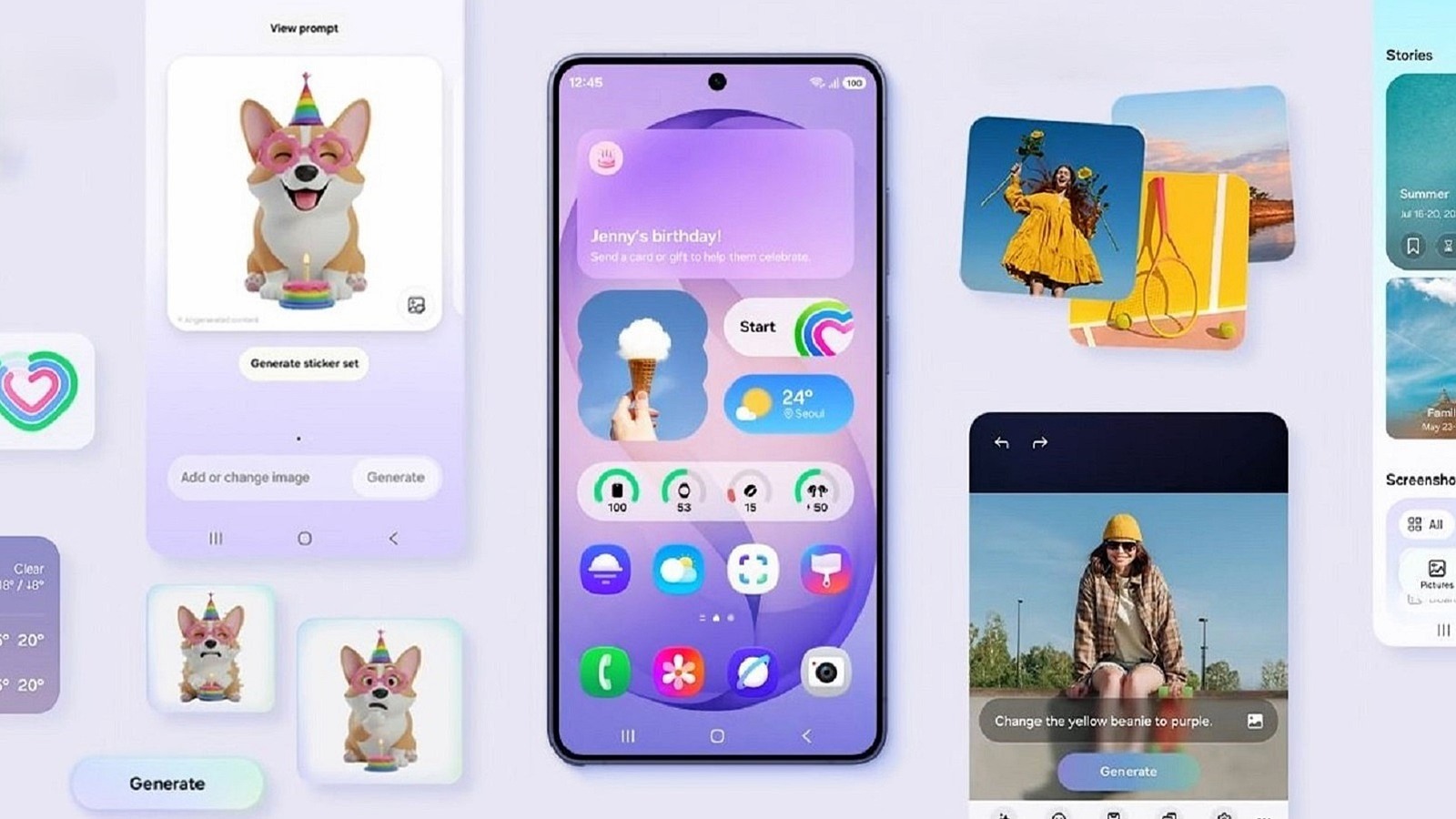
Samsung’s One UI 8.5 software update is rolling out from May 6, with global availability for most devices starting May 11, and support confirmed for Galaxy S25, S24, S23, Z Fold/Flip 7, Z Fold/Flip 6, Z Fold/Flip 5, Z Fold Special Edition, and multiple A-series models. The update brings newer Galaxy S26 features such as AI call screening, family sharing improvements, and enhanced security tools to older phones, including support as far back as the Galaxy S23. Older 2022 models like the Galaxy S22, Z Fold 4, and Z Flip 4 remain uncertain for support.
This reads less like a handset feature note and more like a confirmation that Samsung is extending software monetization deeper into its installed base. The investment implication is not the update itself, but the implied durability of Samsung’s ecosystem lock-in: once AI-assisted call handling, security tooling, and family-sharing workflows become standardized across generations, switching costs rise and refurbishment/resale economics improve. That tends to support premium-device retention in the 12-24 month window, which is more important for ASPs than one-off launch volume.
Second-order winner is the Android supply chain, especially app developers and security vendors that benefit from a larger homogeneous feature set. A wider roll-out of AI call screening and privacy controls also increases the value of on-device processing, which favors Samsung’s in-house silicon/firmware integration versus more fragmented Android OEMs. Relative losers are smaller Android OEMs that cannot match multi-year support or reliably ship feature parity; this can pressure mid-tier share and worsen pricing in the A-/M-series bands where upgrade cycles are already weakest.
The contrarian angle is that this is bullish for Samsung’s platform quality, but not necessarily for near-term handset units. A more capable older-phone refresh can actually defer upgrades, especially if consumers perceive older devices as “good enough” for another year. That makes the biggest risk a near-term moderation in replacement demand over 1-2 quarters, while the upside thesis compounds over 2-3 years through retention and reduced churn.
Catalysts are mostly product-cycle driven: if Samsung demonstrates that AI features are consistently being backported without performance penalties, Android competitors will be forced into a support-arms-race, raising opex and compressing margins. If adoption data shows meaningful engagement with the new call screening and security tools, it could strengthen Samsung’s premium narrative ahead of the next flagship refresh; if not, the market may decide this is more marketing than monetization. On balance, the move looks modestly underappreciated because the strategic value lies in ecosystem stickiness, not the immediate feature set.
AI-powered research, real-time alerts, and portfolio analytics for institutional investors.
Request TrialOverall Sentiment
mildly positive
Sentiment Score
0.20
