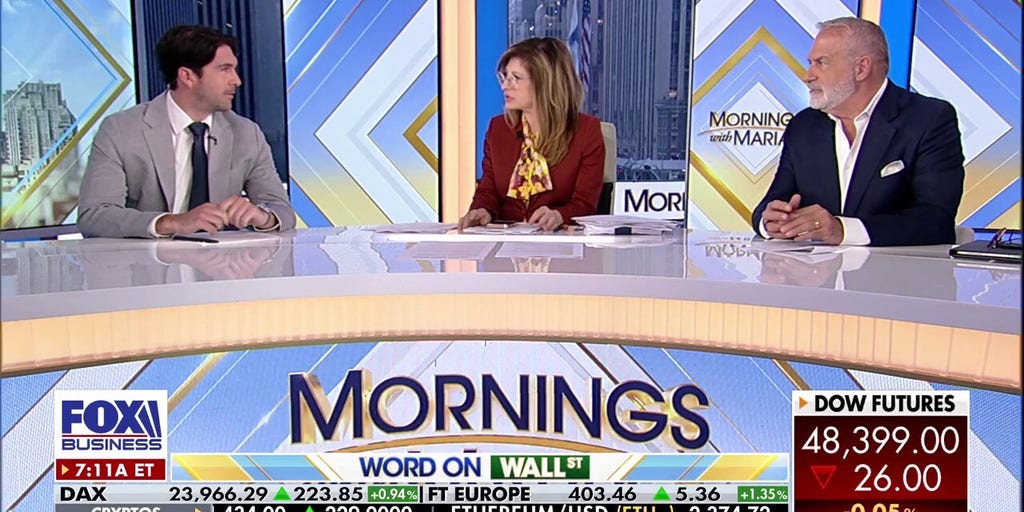
The provided text appears to be a TV programming schedule and live channel lineup, not a financial news article. No reportable market, company, economic, or policy information is present.
This is effectively a non-event for cross-asset positioning. The headline is scheduling inventory, not an information shock, so the only tradable implication is that media-driven volatility should stay subdued until a real catalyst reappears. In the absence of a new theme, factor leadership should revert to idiosyncratic earnings and rates rather than headline beta.
The second-order effect is more about attention allocation than fundamentals: when financial networks are in routine programming mode, there is less narrative pressure to chase momentum names or rotate into event-driven trades. That tends to compress intraday dispersion and punish late-day breakout attempts, especially in high-beta growth and meme baskets. Any move that depends on retail attention or broadcast amplification should be treated as lower-conviction over the next 1-3 sessions.
Contrarianly, the absence of a headline is itself a signal for mean reversion strategies. If there has been any premarket drift in a crowded sector, the lack of fresh catalyst raises the odds that the move is being supported by positioning rather than information. That favors fading extended names and harvesting theta rather than paying up for upside convexity.
AI-powered research, real-time alerts, and portfolio analytics for institutional investors.
Request TrialOverall Sentiment
neutral
Sentiment Score
0.00
