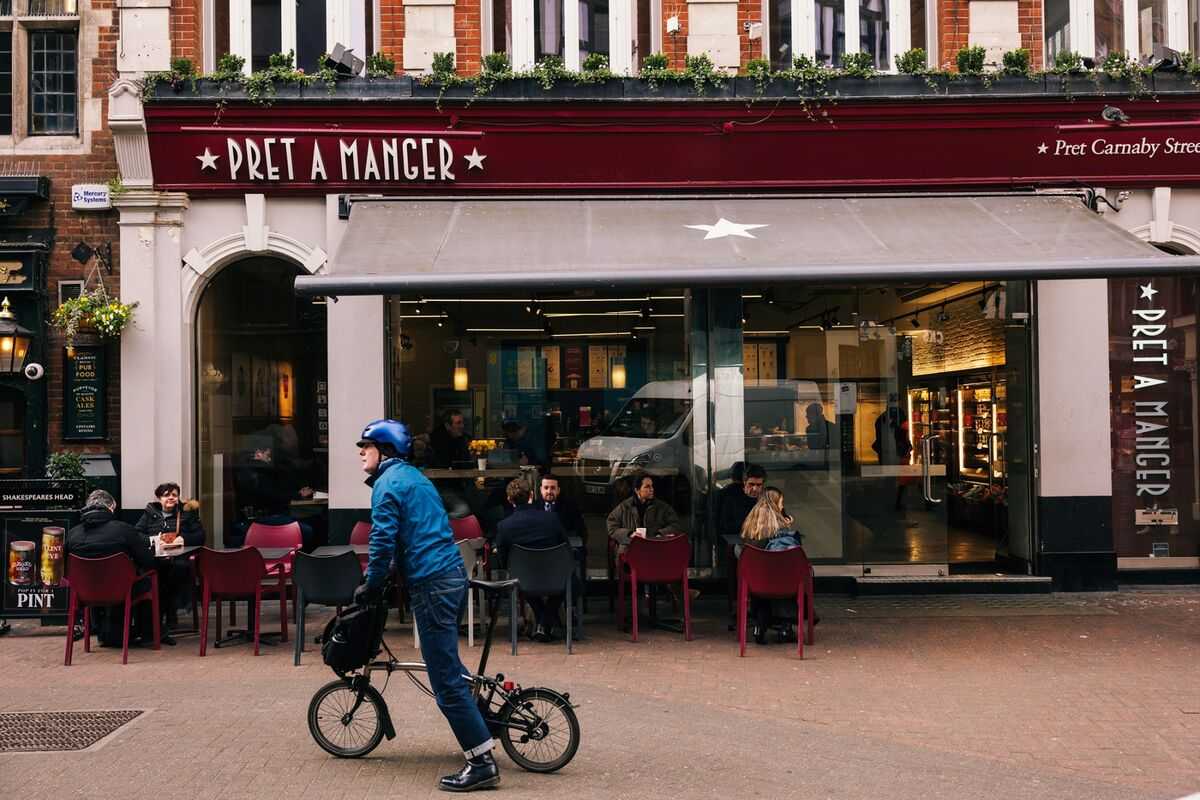
Pret A Manger has introduced a UK meal deal from £6 (sandwich, chips and drink) and larger salads priced near £13 as CEO Pano Christou experiments to broaden the customer base and boost footfall. The strategy comes amid mounting margin pressure from higher taxes, energy costs, business rates, wages, post‑Brexit labour shortages, increased homeworking and shop theft, with potential additional tax increases in the imminent budget posing further downside to profitability.
Market structure: Value-oriented quick-service operators and delivery-first chains win if low-price combos drive footfall and throughput; scale operators with franchise models (McDonald's MCD, Domino's DOM.L) can defend margins via supplier leverage while small-to-mid UK sit-down chains and travel-focused retailers (SSP Group SSPG.L, Restaurant Group RTN.L) are losers due to lower office and travel footfall. Pricing power compresses for premium sit-down concepts as promotions anchor customer expectations; expect 3–7% same-store-margin compression for exposed UK independents over the next 6–12 months.
Risk assessment: Near term (days–weeks) the UK budget is the biggest tail risk — a material rise in business rates or employer NICs within 30 days could trigger 5–15% equity re-rates in UK hospitality names and widen credit spreads 50–150bp for sub-investment-grade issuers. Longer term (quarters–years) structural remote work and higher base wages create persistent cost inflation; labor constraints can force capex on automation, shifting cash-flow timing. Hidden dependencies include landlord-tenant negotiations (rent abatements) and theft-driven security costs that can flip thin margins to losses.
Trade implications: Favor defensive QSR and large franchisors (establish 2–3% long MCD, 2% long DOM.L) and short travel/urban-reliant UK operators (1–2% short SSPG.L or RTN.L) as a pair trade for 3–12 months. Use options to define risk: buy 3-month puts on RTN.L (strike ~10–15% OTM) and sell covered calls or purchase 6–9 month calls on MCD/DOM.L to capitalize on mean reversion and margin resilience.
Contrarian angles: The market may underweight the demand elasticity upside — price-led footfall increases can boost non-core add-ons (coffee, snacks) raising AUV by 5–10% if execution is tight. Conversely, if wage or tax shocks hit above a +200–300bp margin shock, current small-cap valuations will unwind faster than macro consensus expects. Look for mispricings in UK-listed franchisors with strong balance sheets and in high-yield bonds of distressed operators priced for default but backed by lease renegotiation potential.
AI-powered research, real-time alerts, and portfolio analytics for institutional investors.
Request DemoOverall Sentiment
moderately negative
Sentiment Score
-0.30
