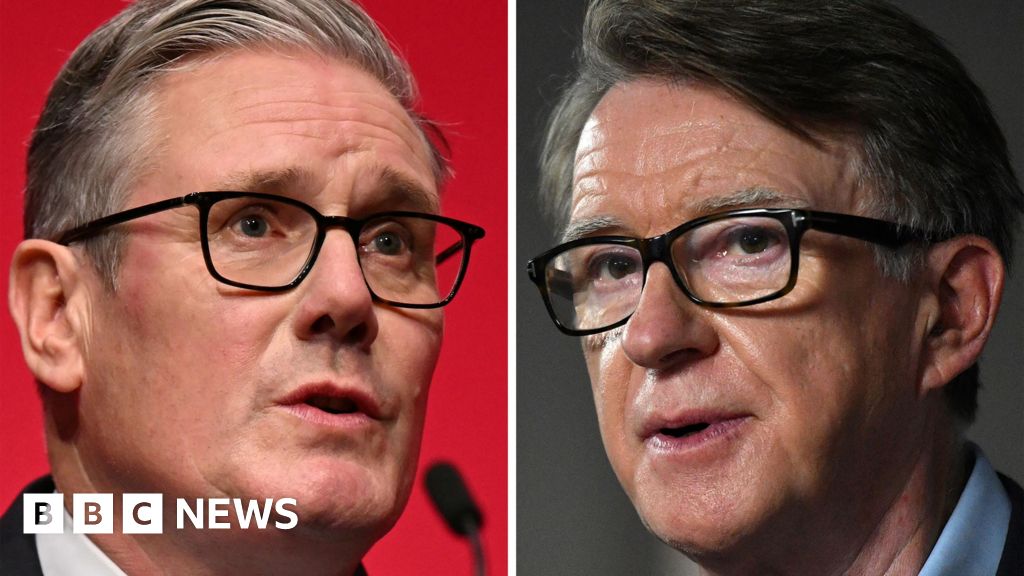
The article centers on a political and governance controversy surrounding Lord Mandelson's vetting and the dismissal of Sir Olly Robbins, with the prime minister facing questions over what he knew and when. It highlights possible legal action by Robbins, conflicting interpretations of the Constitutional Reform and Governance Act 2010, and renewed pressure on Sir Keir Starmer ahead of upcoming elections. The issue is politically damaging but unlikely to have direct market-wide impact.
This is not a market-moving political scandal in the traditional sense; it is a governance credibility event with a short half-life unless it metastasizes into a broader pattern of concealment. The immediate second-order effect is on the government's operational bandwidth: every hour spent on defensive process arguments is an hour not spent on fiscal delivery, planning reform, or agenda-setting ahead of the local elections. For domestic UK risk assets, that matters less through direct policy change and more through the probability of another reset in ministerial authority, which tends to widen the discount investors demand for policy execution.
The most important asymmetry is between headline damage and institutional damage. If the committee testimony and PM response converge on a narrow legal-defense frame, the episode likely fades within days; if documents or timelines contradict that frame, the issue shifts from embarrassment to competence, raising the odds of further personnel churn and a more defensive Whitehall. That would be mildly negative for UK-facing cyclicals and capex-sensitive names because it increases the odds of slower approvals and less predictable ministerial follow-through over the next 1-3 months.
The contrarian point is that the sell-side tendency will be to treat this as noise because it is political and not macro. That may be too complacent: in a low-growth, high-friction UK backdrop, governance shocks can matter more than usual because they reduce confidence in policy stability at the margin. The better read is not "government in crisis," but "governance premium slightly higher," which is enough to keep foreign capital cautious and to favor businesses with low UK policy dependence.
If there is a tradable angle, it is likely in relative rather than outright exposure. Any broad UK market weakness from this episode should be viewed through the lens of underperformance in domestically levered names versus global earners, especially if the story crowds out other headline risks and depresses sentiment into the election window.
AI-powered research, real-time alerts, and portfolio analytics for institutional investors.
Request DemoOverall Sentiment
moderately negative
Sentiment Score
-0.30
