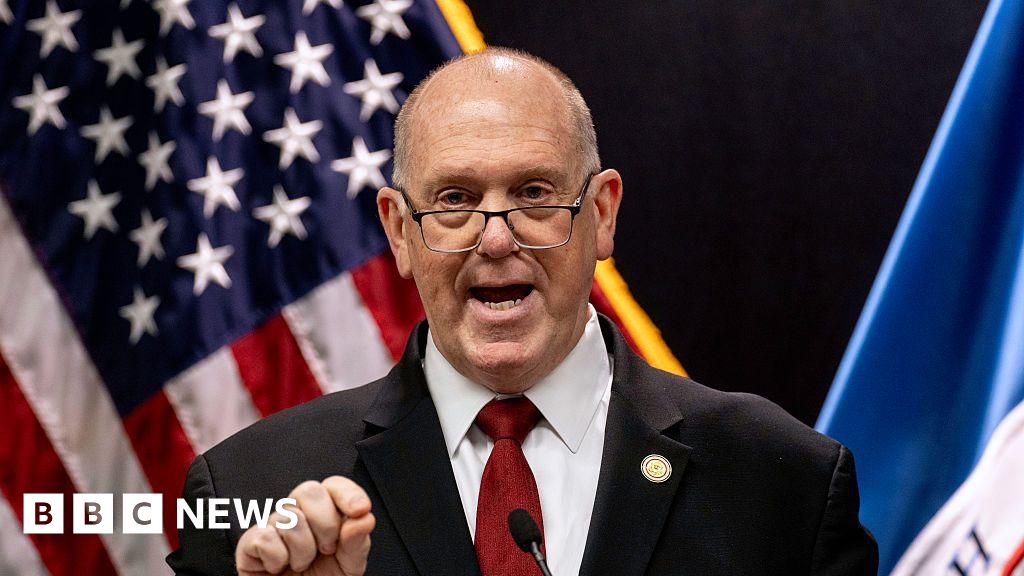
Tom Homan, President Trump's border tsar, announced the conclusion of Operation Metro Surge in Minnesota and will oversee a drawdown after more than 4,000 arrests; he said ICE will retain a continued presence while moving staffing back toward pre-December levels after removing 700 agents and leaving roughly 2,000 federal officers. The operation, which Homan called a success for detaining individuals convicted of violent crimes, ignited nationwide protests following the deaths of two U.S. citizens and has provoked legal challenges and political pushback; Democrats are leveraging demands for operational reforms in ongoing DHS funding negotiations, raising a modest risk of a partial government funding standoff.
Winners and losers: Short-term winners are homeland-security and surveillance contractors (L3Harris LHX, Leidos LDOS, Palantir PLTR, CACI) which see recurring demand for ICE/CBP tech and analytics; ambiguous/loser names are private-prison operators (GEO, CXW) due to reputational, legal and protest risk despite higher detainee counts (4,000+ arrests). The removal of ~700 agents (down to ~2,000) implies local detention throughput in Minnesota will fall ~25% from peak, reducing near-term incremental revenue for local service providers but leaving national demand contingent on federal policy.
Competitive dynamics & supply/demand: The operation showed how federal-local cooperation can temporarily boost detainee supply and paid services (transport, IT, detention), increasing pricing power for specialist contractors if funding holds. However, the looming DHS appropriations fight is the lever: a budget cut of >5–10% or successful amendments forcing ID disclosure/warrant constraints would materially reduce addressable demand and compress margins over the next 1–4 quarters.
Cross-asset implications & risks: Near-term political risk raises tail-risk premium — partial DHS funding shutdown (days–weeks) would likely push Treasury yields down (2–5bp safe-haven), USD slightly firmer vs EM, and spike options IV on defense/security names by +30–60% around votes. Tail risks include litigation from deaths/protests that could trigger multi-quarter contract freezes or state-level sanctuary rollbacks, creating asymmetric downside for GEO/CXW and reputational risk for contractors.
Time horizons, hidden dependencies & catalysts: Immediate (days–weeks) catalyst is the DHS funding vote and any amendment language; short-term (1–3 months) is contract re-awards/earnings revisions; long-term (3–24 months) depends on court rulings, municipal cooperation and midterm election outcomes. Hidden dependency: operational scale is driven more by local law-enforcement cooperation than federal rhetoric — reversals there can rapidly erase demand.
AI-powered research, real-time alerts, and portfolio analytics for institutional investors.
Request DemoOverall Sentiment
neutral
Sentiment Score
-0.05
