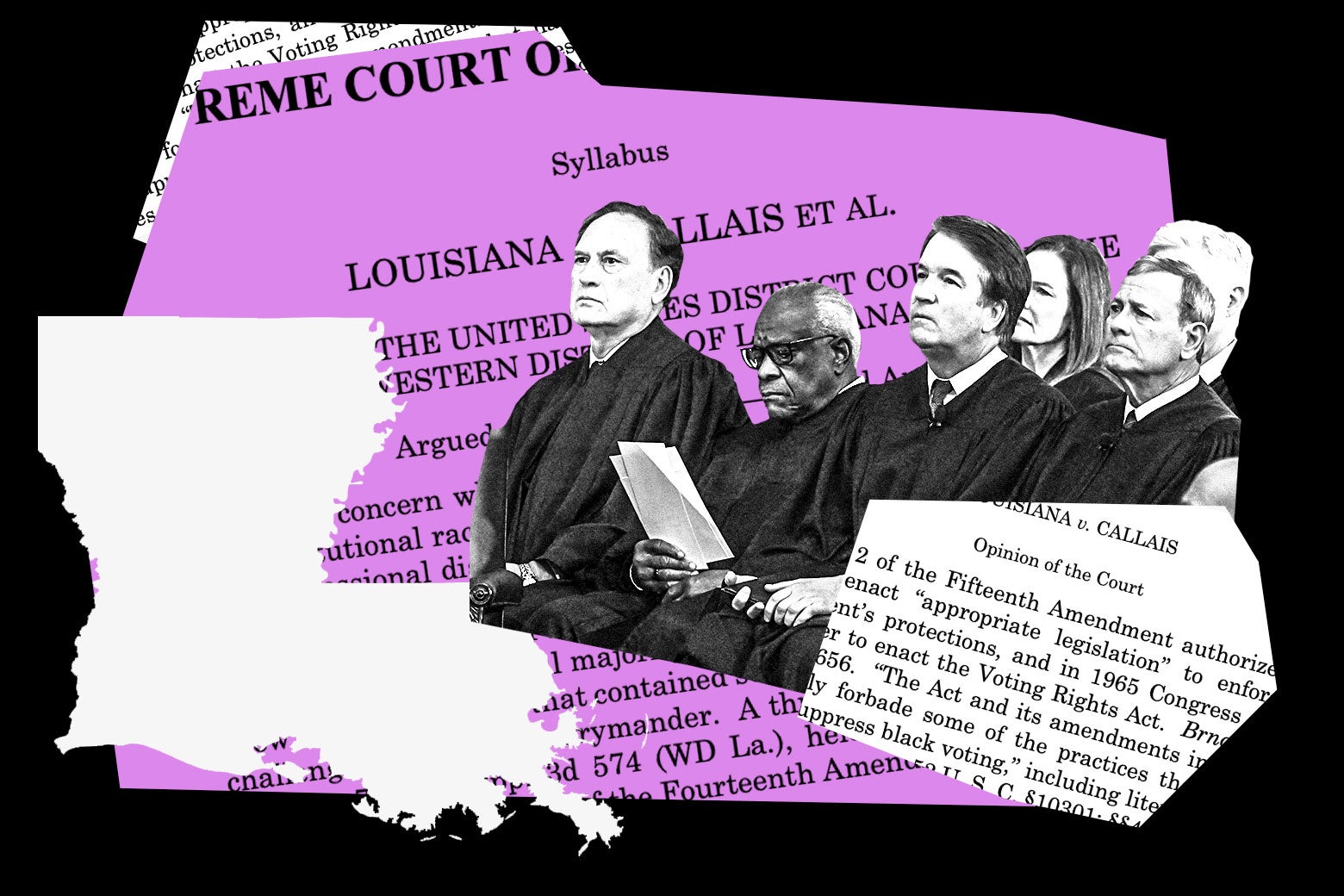
The Supreme Court’s Louisiana v. Callais ruling is described as sharply weakening Section 2 of the Voting Rights Act by shifting it toward an intent-based standard and making vote-dilution claims far harder to prove. The article says Tennessee has already used the ruling to carve up the state’s only majority-Black district, splitting Memphis into three districts and diluting Black voting power. The decision is framed as part of a broader judicial trend narrowing remedies for racial discrimination, with immediate implications for redistricting and election law across the South.
The first-order market read is not about one court case; it is about a higher-probability regime shift in how state power is allocated in close elections. The immediate beneficiaries are incumbent state-level political machines in jurisdictions where Black voting strength is easiest to fracture, while the losers are any coalition dependent on legal remedies to preserve district-level influence. That matters for capital because tighter, less representative maps tend to reduce policy volatility at the statehouse level but increase it at the federal level through closer House margins, fewer durable swing districts, and more litigation-driven election risk.
The second-order effect is a rising path dependency in redistricting itself: once a few states move, the incentive set for others flips from compliance to retaliation. That creates a multi-year loop of map churn, delayed primaries, and budgetary noise for states with split legislatures or court supervision. The tradeable implication is not a clean sector call, but a higher premium on election-sensitive event risk, especially in communications, regulated utilities, and healthcare names exposed to state AG or ballot-driven policy swings.
Contrarianly, the consensus may be underpricing how quickly this can become a national corporate governance issue rather than a civil-rights issue. If tighter maps produce more ideologically homogeneous delegations, federal policy may become less stable but more extreme, increasing odds of abrupt changes in antitrust, labor, and healthcare reimbursement. That is a tailwind for volatility strategies and a headwind for long-duration assets that rely on policy continuity. The near-term catalyst is procedural: any fast redraw or election delay should be treated as a signal that the legal shock is being monetized into practical power before markets have fully repriced it.
AI-powered research, real-time alerts, and portfolio analytics for institutional investors.
Request DemoOverall Sentiment
strongly negative
Sentiment Score
-0.78
