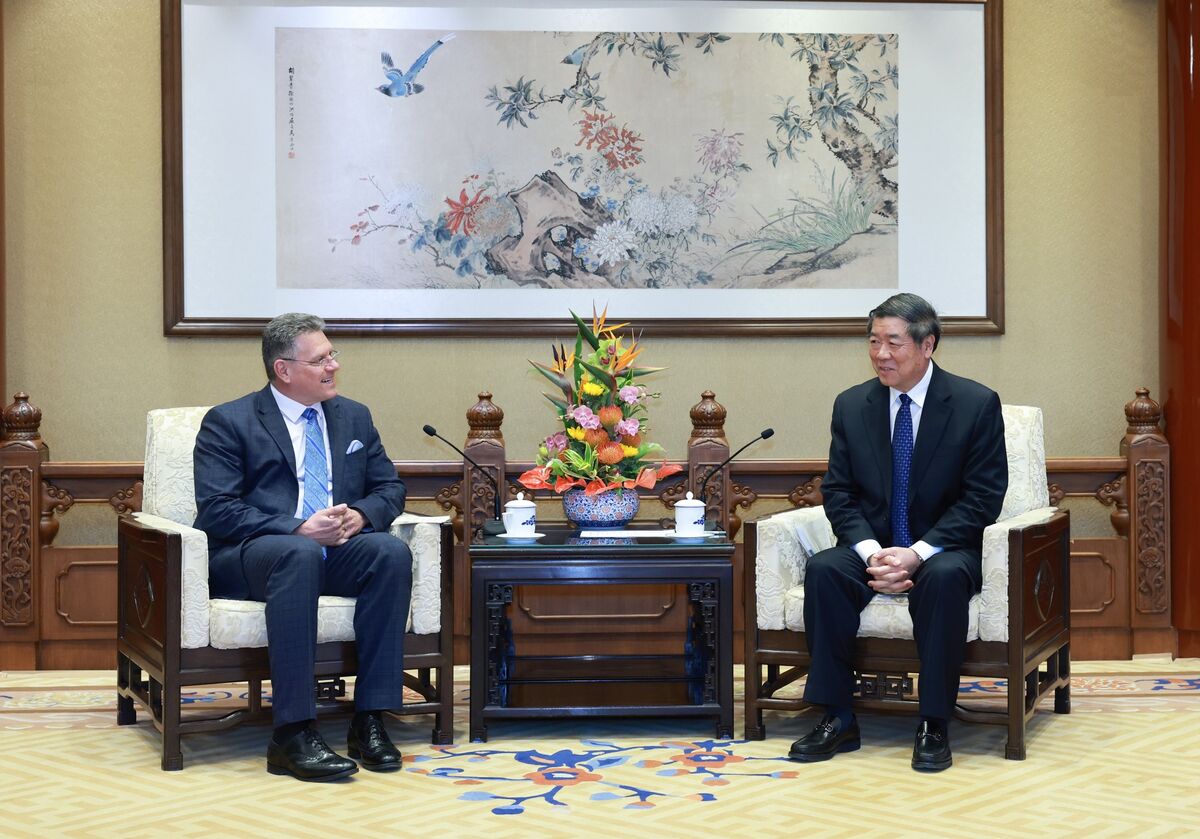
Top trade officials from the European Union and China are scheduled to meet early next month, signaling increased cooperation between the two powers amid rising tariff pressures from the Trump administration; this engagement suggests a potential united front against US trade policies.
The upcoming meeting between senior EU and Chinese trade officials early next month signals a significant development in international trade relations, indicating a concerted effort by both parties to strengthen engagement in response to rising tariff pressures attributed to the Trump administration. This proactive dialogue suggests a potential strategic alignment to counter US trade policies, which could reshape global trade dynamics. The moderately negative sentiment (score -0.3) and uncertain tone surrounding this news reflect the inherent complexities and potential for escalation in trade disputes, despite this attempt at a coordinated response. The situation carries a moderate market impact score (0.6), highlighting its relevance for investors, as developments touch upon critical themes of trade policy, tariffs, and broader geopolitical tensions, which have direct implications for supply chains.
AI-powered research, real-time alerts, and portfolio analytics for institutional investors.
Request DemoOverall Sentiment
moderately negative
Sentiment Score
-0.30
