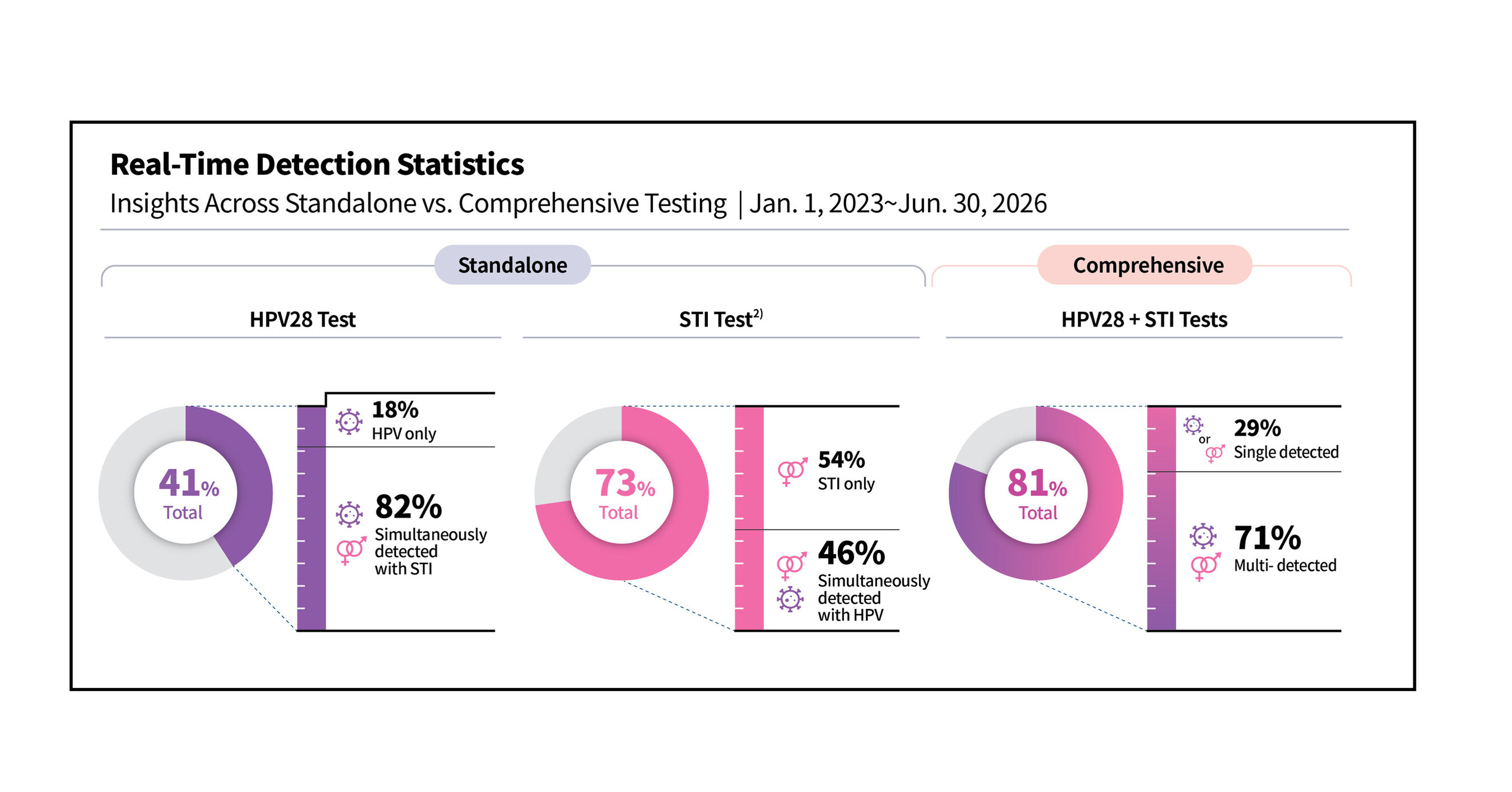
Seegene lance une approche de dépistage syndromique PCR combinant HPV et IST dans le cadre de la Global Million Clinical Study (GMCS). Sur ~60 000 résultats analysés sur 42 mois, des agents responsables d’IST sont détectés dans 82% des cas positifs à l’HPV, avec une codétection HPV+IST observée dans 71% des cas identifiés via ce dépistage complet (HPV détecté dans 46% des cas positifs aux IST). La société prévoit de valider l’utilité clinique et de produire des données pour contribuer à la définition d’une nouvelle norme mondiale de tests PCR, ce qui soutient un potentiel de différenciation produit.
The economic signal here is less about one assay and more about a push toward bundled syndromic testing, which, if it sticks, shifts value from one-off HPV/STD tests toward higher-plex platforms, middleware, and automated lab workflows. That is constructive for menu-broad diagnostics players like QGEN and large platform vendors such as TMO/DHR, while it is a softer read for narrower women’s-health franchises that rely on a simpler test cascade and lower follow-on complexity.
Near term, this is mostly a narrative catalyst: the market will care more about whether independent labs and guideline bodies adopt the workflow than about the internal cohort statistics. The real gate is reimbursement and operational friction; a broader panel only matters if payors accept the incremental cost and clinicians believe the extra positives change management, not just volume. Over 1-3 months, the watch item is whether ADLM and subsequent talks translate into placement wins or referenced clinical pathways; over 6-18 months, the structural upside is more recurring consumable pull-through if multiplex testing becomes the default in fertility, prenatal, and asymptomatic screening pathways.
Contrarian view: the consensus may be overestimating how much co-detection alone proves utility. A high co-positivity rate can reflect sample selection bias in symptomatic or higher-risk populations, and broad panels can raise specificity/reimbursement questions rather than solve them. The trade is not to chase the press release; it is to wait for external validation, reimbursement language, or instrument order commentary that confirms this is a TAM expansion rather than just another data-rich marketing cycle.
AI-powered research, real-time alerts, and portfolio analytics for institutional investors.
Request DemoOverall Sentiment
mildly positive
Sentiment Score
0.25
