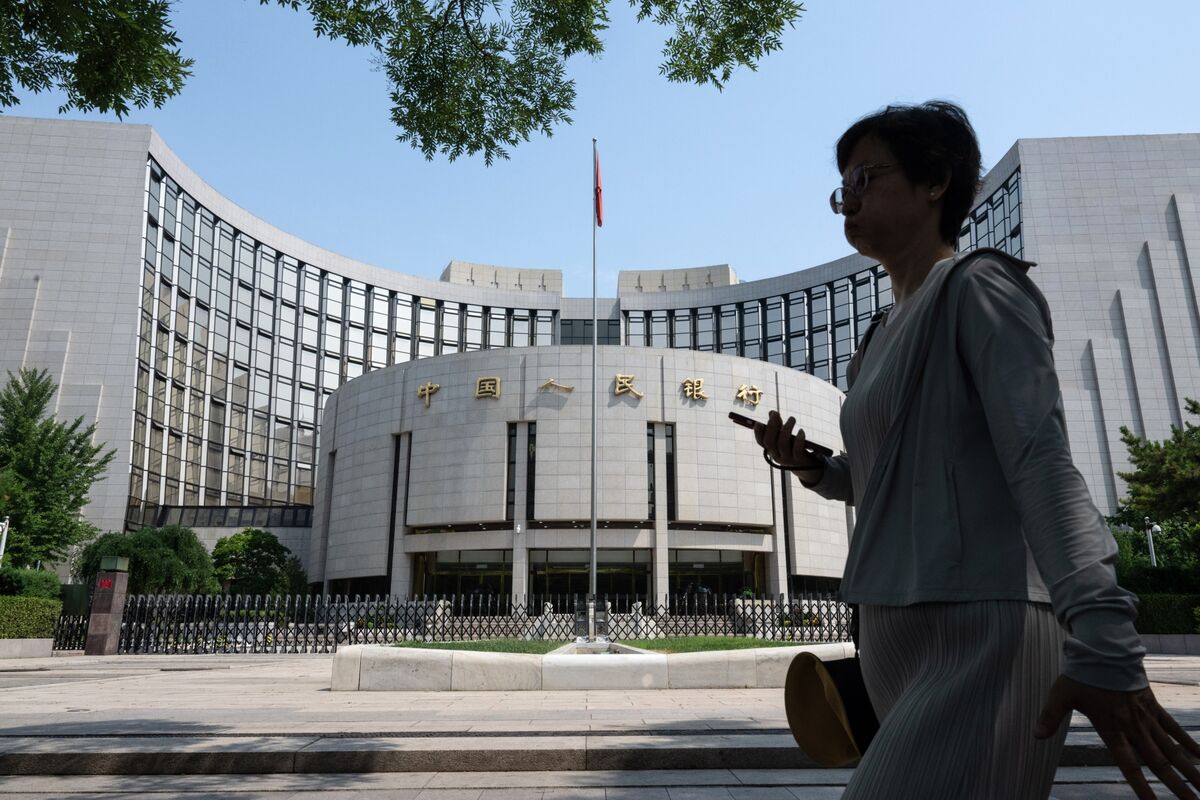
The People’s Bank of China instructed major state-owned banks and policy banks to strictly control net interbank lending to prevent borrowing costs from falling too far below the policy rate. The move signals tighter management of liquidity conditions and aims to curb a cash glut in the banking system. It is modestly negative for banks active in interbank funding and could support short-term money-market rates.
This is a liquidity-normalization signal, not a growth signal. By forcing large lenders to stop recycling excess cash through the interbank market, policymakers are trying to pull the effective funding rate back toward the policy corridor and away from a de facto easing that would otherwise leak into asset prices, leverage, and speculative credit. The immediate winners are institutions that rely less on wholesale funding and more on sticky retail deposits; the losers are the marginal carry traders, smaller banks, and non-bank players that have been using cheap overnight money to fund duration and spread trades.
The second-order effect is a sharper skew in curves and funding spreads rather than a broad-based rise in front-end rates. If the system is flush with deposits but constrained in interbank placement, expect pressure on repo-rich strategies, lower interbank volume, and potentially wider bank funding dispersion over the next 1-4 weeks. In bond markets, the move is mildly bearish for short-duration government paper and high-grade credit because it reduces the odds of an unchecked cash-driven rally; the more vulnerable pocket is lower-quality local credit that has benefited from abundant liquidity and compressed refinancing costs.
The main risk to the hawkish read is that this is more about optics than restraint: if credit growth or property stress deteriorates, authorities can reverse course quickly through targeted liquidity injections while keeping the headline stance tight. That makes the trade asymmetrical in the near term but not durable over quarters. The contrarian view is that the signal may be underwhelming versus the market’s habit of front-running easing; if positioning has been built on a cash-glut thesis, even modest enforcement can trigger an air-pocket in short-end rates and repo-sensitive assets before policy is actually tightened.
For global investors, this modestly supports the USD versus CNH in the next 2-6 weeks if Chinese money-market rates stop drifting lower while growth data stay soft. It also argues for caution on duration trades premised on persistent Chinese liquidity overflow into offshore bonds and commodities. The key tell is whether the PBOC follows this with net injections or simply lets the interbank balance-sheet contraction do the work; the latter would be materially more bearish for risk assets.
AI-powered research, real-time alerts, and portfolio analytics for institutional investors.
Request DemoOverall Sentiment
mildly negative
Sentiment Score
-0.15
