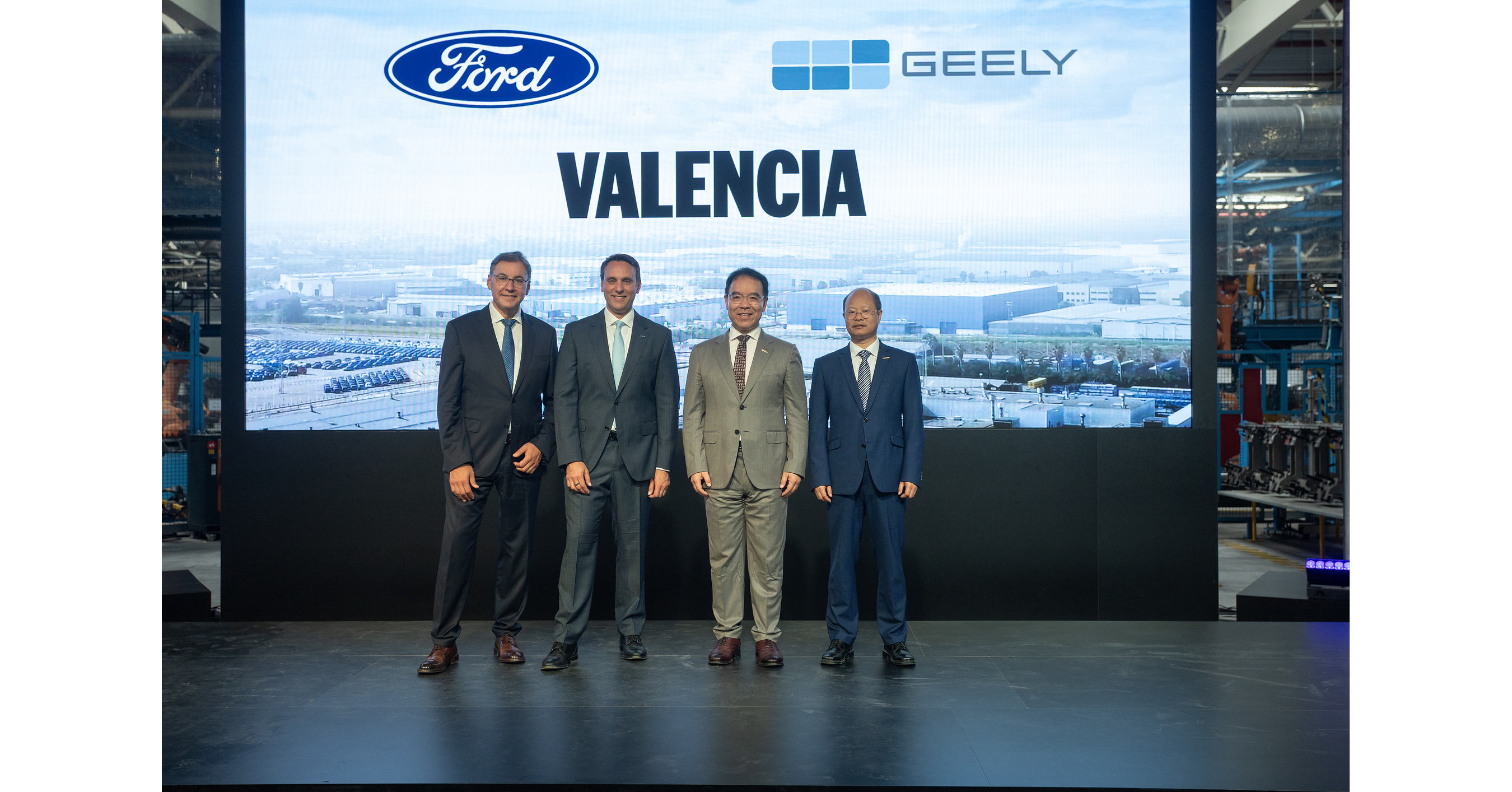
Ford and Geely will form a Europe-focused joint venture at Ford’s Valencia, Spain plant (Ford 66% / Geely 34%) to produce low- and zero-emission “multi-energy” vehicles, with JV operations starting in 1H 2027 and first new vehicles rolling off in 2028. The agreement is designed to reset Valencia’s manufacturing cost benchmark amid intense competition, cost pressure, and tightening regulation, while supporting continued Kuga production. The lineup includes a new Ford Bronco family member (start of production in 2028), an all-new multi-energy crossover (2028), and two Geely electric SUVs (2028), alongside Ford’s goal of five new passenger vehicles in Europe by 2029.
This is more a manufacturing-options decision than a near-term earnings event. For F, the value comes from reducing Europe’s fixed-cost burden and improving plant utilization, but the cash-flow impact is back-end loaded and depends on approvals, platform execution, and volume discipline in 2028-29. That means any share reaction now is mostly a sentiment/credibility trade, not a clean fundamental rerate.
The larger second-order beneficiary is Geely: local production in Europe lowers tariff, logistics, and political-friction risk, while giving the brand a legitimacy boost versus pure import competitors. The pressure falls hardest on incumbents with bloated European capacity and on China-export models that rely on shipping rather than local assembly; this raises the odds of more JV activity and platform sharing across the sector. Suppliers around Valencia should see incremental demand, but only if sourcing is meaningfully localized rather than a thin assembly shell.
Contrarianly, the market may overstate the strategic win for Ford and understate execution drag. Ford is trading future flexibility for a multi-year commitment, and if Europe demand softens or EV mix disappoints, the JV can still become a capacity-utilization trap. The key falsifiers are delayed regulatory approval, evidence that Ford Europe margins do not improve over the next 2-4 quarters, or renewed EU scrutiny of Chinese OEM participation that narrows Geely’s advantage.
AI-powered research, real-time alerts, and portfolio analytics for institutional investors.
Overall Sentiment
mildly positive
Sentiment Score
0.25
Ticker Sentiment
