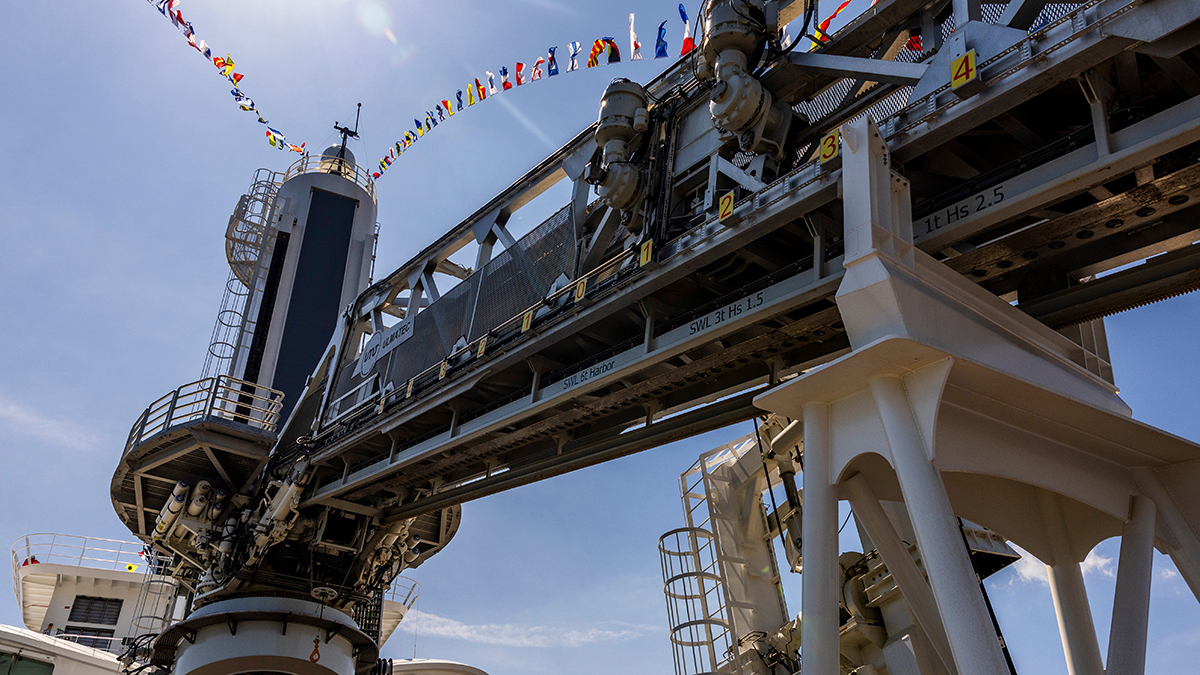
Revolution Wind has begun delivering power to the Connecticut grid after overcoming a federal pause; the Ørsted-led project was ~85% complete and is expected to power 350,000 homes when fully operational. The project offers electricity at about $0.09/kWh versus a regional average cited at ~$0.30/kWh and DEEP estimates up to $500M/year in wholesale cost savings for New England. The administration’s pause—citing national security—was challenged in court, and judges found the government failed to justify a total halt, allowing construction and delivery to proceed.
Winners are not limited to the project owner: turbine OEMs, cable contractors and regional fabrication yards that prove they can deliver offshore foundations and export cables to tight schedules will see order lead-times shorten and margin recovery across later project vintages. On a system level, modeling for New England shows an incremental 1–2 GW of offshore output during windy hours can depress marginal wholesale prices by roughly $10–25/MWh in those hours, which compounds into low-to-mid hundreds of millions of dollars of lost merchant revenue per year for gas-fired peakers and cycling units — a structural headwind for unhedged merchant generators.
Key tail risks are regulatory/political reversals and grid-integration frictions. Near-term headlines can move valuation multiples quickly (days–weeks), while substantive downside (re-routing cables, retrofits, higher insurance or security-driven capex) plays out over months and can add single-digit to low-double-digit percent incremental capex, compressing IRRs. Technically, without additional onshore transmission or storage, expected curtailment during high-wind periods will compress capture prices over the first 3–5 years until market products or storage scale to soak the energy.
Second-order effects: capacity-market dynamics and battery economics will shift — downward energy prices reduce battery arbitrage returns but increase the value of capacity/firming contracts; ports that demonstrate efficient build/assembly will attract more private investment, reducing future cost inflation on the East Coast supply chain. The consensus bullish narrative understates the speed and magnitude of revenue repricing for merchant thermal assets and understates the optionality in transmission and storage vendors if they can capture firming contracts rapidly.
AI-powered research, real-time alerts, and portfolio analytics for institutional investors.
Request DemoOverall Sentiment
moderately positive
Sentiment Score
0.50
