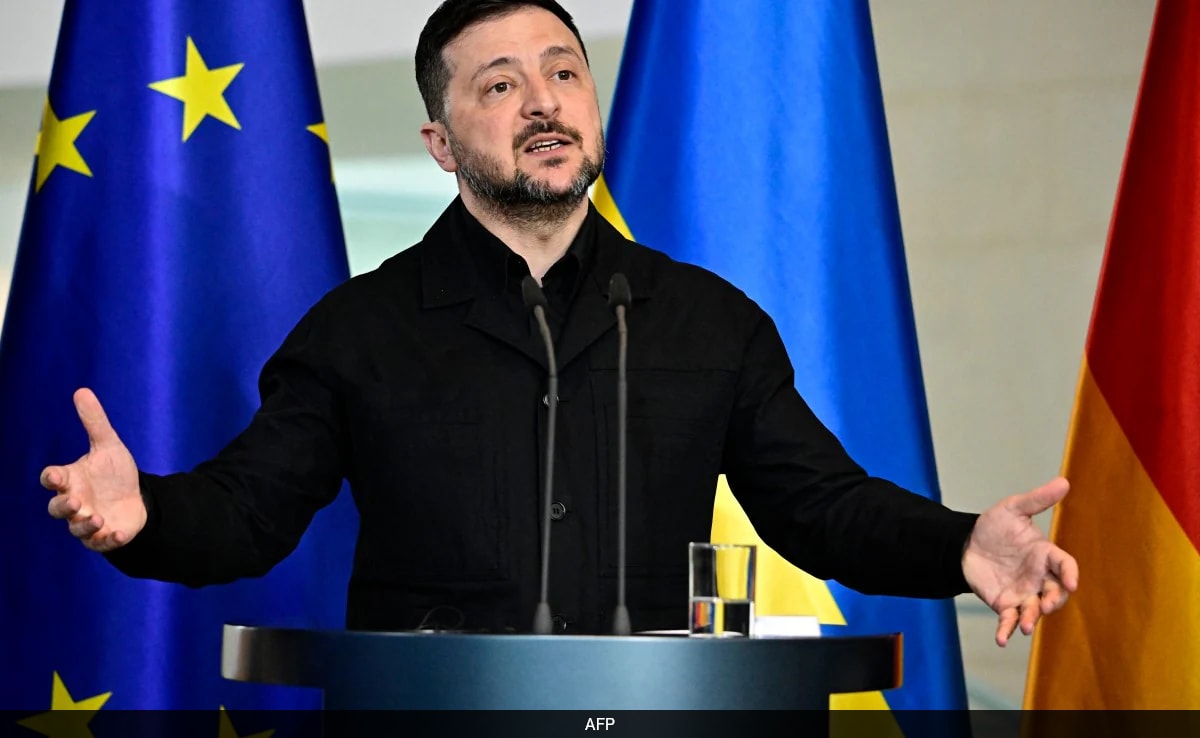
Zelensky said US peace negotiators are distracted by the Iran war, stalling Russia-Ukraine talks and slowing critical US arms deliveries, especially PAC-3 and PAC-2 air-defense missiles. He warned that if the US does not pressure Putin, Russia will feel less constrained, while Ukraine faces a worsening supply situation for air defenses. Ukraine also signed enhanced defense cooperation deals with Norway and Germany, including plans for Ukrainian drone manufacturing in Norway.
The market implication is not simply "less support for Ukraine"; it is a repricing of European defense as a quasi-permanent, multi-year procurement cycle. The bottleneck appears less about willingness than about allocation scarcity in Patriot interceptors and other high-value air-defense munitions, which should tighten lead times and increase pricing power for the handful of prime contractors with production capacity and subsystem bottlenecks. Second-order winners are European industrials that can localize assembly, maintenance, and eventually licensed production, because governments will want sovereign stockpiles after seeing how quickly externally sourced interceptors become strategically rationed.
The more immediate loser is any near-dated expectation for a ceasefire premium across Eastern Europe assets. If negotiations are being displaced by another theater, the probability distribution shifts toward a longer war, which supports a steady bid for drones, EW, air defense, and ammunition supply chains but hurts companies exposed to a rapid normalization scenario. The key timing window is 1-3 months: that is when procurement urgency, budget reallocations, and headline-driven stock moves tend to be most pronounced; over 6-18 months, the trade migrates from headlines to contract awards and capacity expansion.
Contrarianly, the move may be underpriced in one important respect: reduced US attention could accelerate European strategic autonomy faster than consensus assumes, especially if domestic production of drones and interceptors gets politically prioritized. That means the best long is not necessarily the obvious US prime, but the select European names with sovereign content, local manufacturing, and export optionality. The tail risk is diplomatic de-escalation in the Middle East, which could snap attention back to Ukraine and reverse the "scarcity" narrative, so any position should be paired with names whose earnings are driven by backlog and installed base rather than only near-term emergency replenishment.
AI-powered research, real-time alerts, and portfolio analytics for institutional investors.
Request TrialOverall Sentiment
mildly negative
Sentiment Score
-0.35
