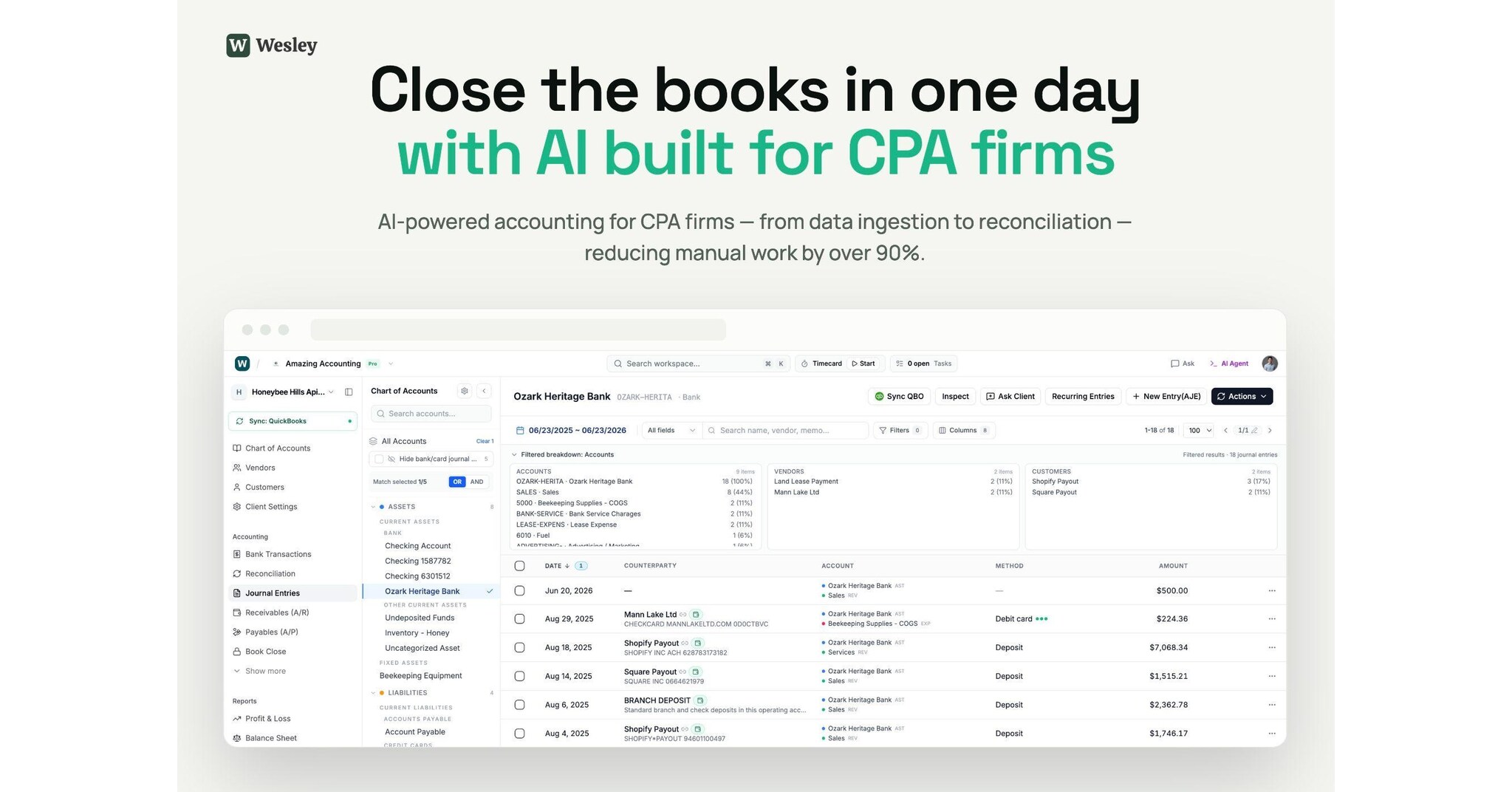
Wesley launched in the U.S. an AI bookkeeping automation platform for CPA firms, cutting recurring bookkeeping from up to two weeks to under 24 hours and reducing manual bookkeeping time by more than 90%. In pilots with 100+ SMB clients, the system automated over 80% of transaction categorization and reconciliation tasks, cutting manual review time by more than 90%. The platform uses exception-based AI workflows and offers QuickBooks Online/Desktop bidirectional integration or standalone deployment to expand capacity without adding headcount.
The meaningful read-through is not “AI in accounting” but labor deflation in a sticky, under-automated workflow. If firms can absorb more SMB clients without adding staff, the profit pool shifts from billable hours toward software-like margins, which should favor the best-distributed platforms and pressure smaller service-heavy competitors that monetize manual review. The near-term beneficiary is likely the core system of record vendor if this kind of automation increases seat retention and transaction volume, while niche bookkeeping BPOs and offshore labor arbitrage models face margin compression over 6-18 months.
The second-order effect is channel expansion: faster month-end close lowers churn for SMB customers who value responsiveness, so accounting firms may become more willing to serve subscale clients that were previously uneconomic. That can lift total workflow throughput for adjacent fintechs embedded in payments, payroll, and reconciliation, but only if the implementation friction is low enough to avoid a human-in-the-loop bottleneck. If adoption proves real, the most exposed public comps are labor-intensive accounting services and any software names selling point solutions that can be bundled away by a broader workflow layer.
The contrarian view is that the market will likely overrate first-year revenue impact and underrate onboarding drag. Accounting firms are conservative, exception handling remains messy, and integration-heavy products usually face a 1-3 quarter sales-cycle lag before measurable operating leverage appears. The thesis would be falsified if pilot-to-paid conversion is weak, if QuickBooks-native workflows remain “good enough,” or if churn/retention metrics at incumbent accounting platforms do not budge despite the AI narrative.
AI-powered research, real-time alerts, and portfolio analytics for institutional investors.
Request DemoOverall Sentiment
mildly positive
Sentiment Score
0.25
