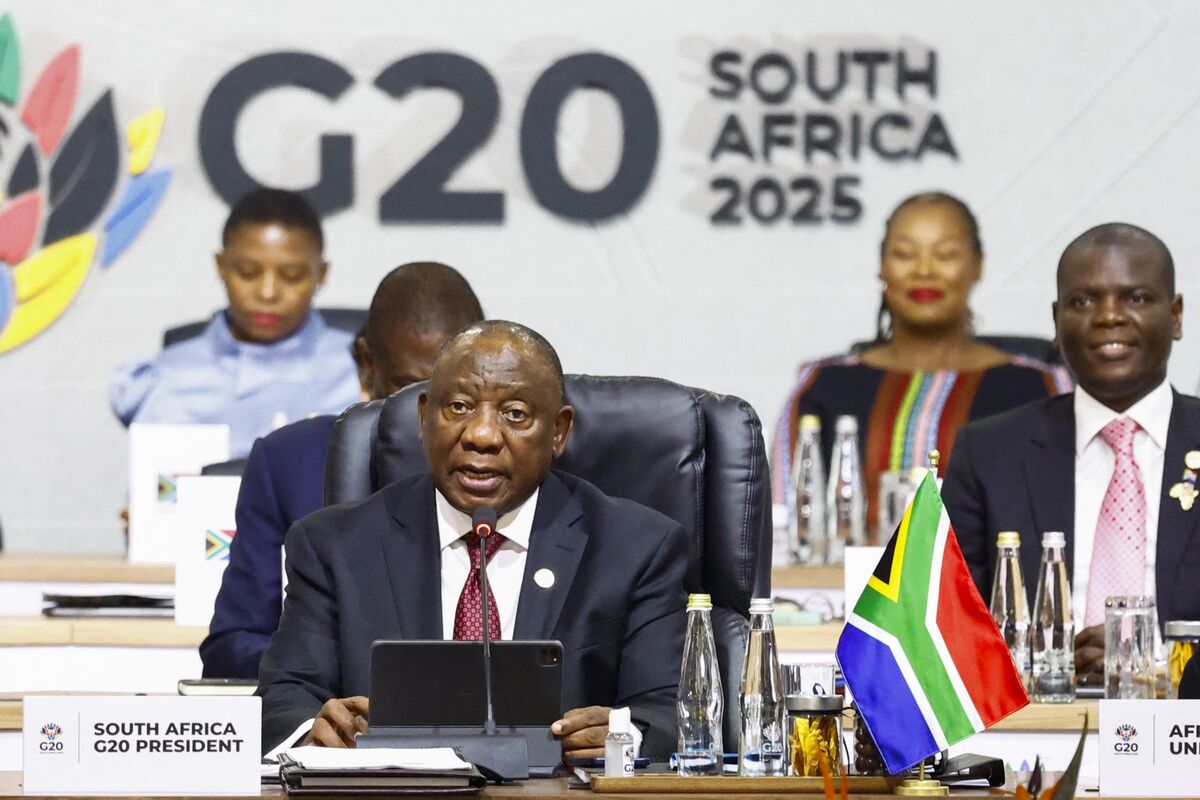
South African officials say they expect imminent notification from the U.S. that South Africa will be excluded from participating in Group of 20 meetings during its upcoming presidency, a move described as further deterioration in bilateral ties. While primarily a diplomatic development, the exclusion raises geopolitical uncertainty around South Africa's international standing and could modestly pressure investor sentiment toward the sovereign and related assets if followed by additional measures.
Market structure: diplomatic exclusion of South Africa from G‑20 activities is primarily a political shock that raises EM risk premia for South Africa specifically. Expect immediate downward pressure on ZAR and upward pressure on spreads for ZAR‑denominated sovereign and corporate debt (potentially +50–200bps) as global allocators re‑price country risk over 1–3 months. Large hard‑currency exporters (mining, telecoms with USD revenue) will see relatively less pain and may gain market share as capital rotates away from local banks and domestic cyclicals.
Risk assessment: tail risks include a ratings downgrade, partial capital controls, or Western private‑sector retraction from joint projects — low probability (<15% within 12 months) but high impact (sovereign spread widening >300bps). Near‑term (days) the main risk is FX and liquidity shocks; short‑term (weeks/months) is portfolio outflows and bond selloffs; long‑term (quarters/years) is geopolitical realignment with China/Russia that could entrench trade flows but limit Western investment. Hidden dependencies: large foreign holdings of South African assets (pension/sovereign funds) can flip quickly; commodity price moves (PGMs) are conditional amplifiers.
Trade implications: tactical trades favor short‑ZAR and short South Africa beta while selectively long high‑quality USD earners. Specific instruments: EZA (iShares MSCI South Africa ETF) and NPSNY (Naspers ADR) for pair trades, USD/ZAR options for volatility plays, and buying SA CDS or shorting local sovereign bond futures for downside protection; time horizon 1–3 months for options, 3–12 months for bond positions. Catalysts to watch: formal US announcement (likely within days), S&P/Fitch review windows, sovereign flows data; use these to scale in/out.
Contrarian angles: consensus may overstate permanent decoupling — exclusion is political and reversible; a >10% ZAR selloff would create value in export‑earning large caps (NPSNY, AGL.A/AAL equivalents) that are mispriced if commodity prices hold. Historical parallels (Russia 2014) show rapid overshoots then partial recovery; therefore layer positions — short over 1–3 months, but look to flip to selective longs on 8–12% ZAR drawdown or sovereign spread impulse that stabilizes after central bank intervention.
AI-powered research, real-time alerts, and portfolio analytics for institutional investors.
Request DemoOverall Sentiment
mildly negative
Sentiment Score
-0.25
