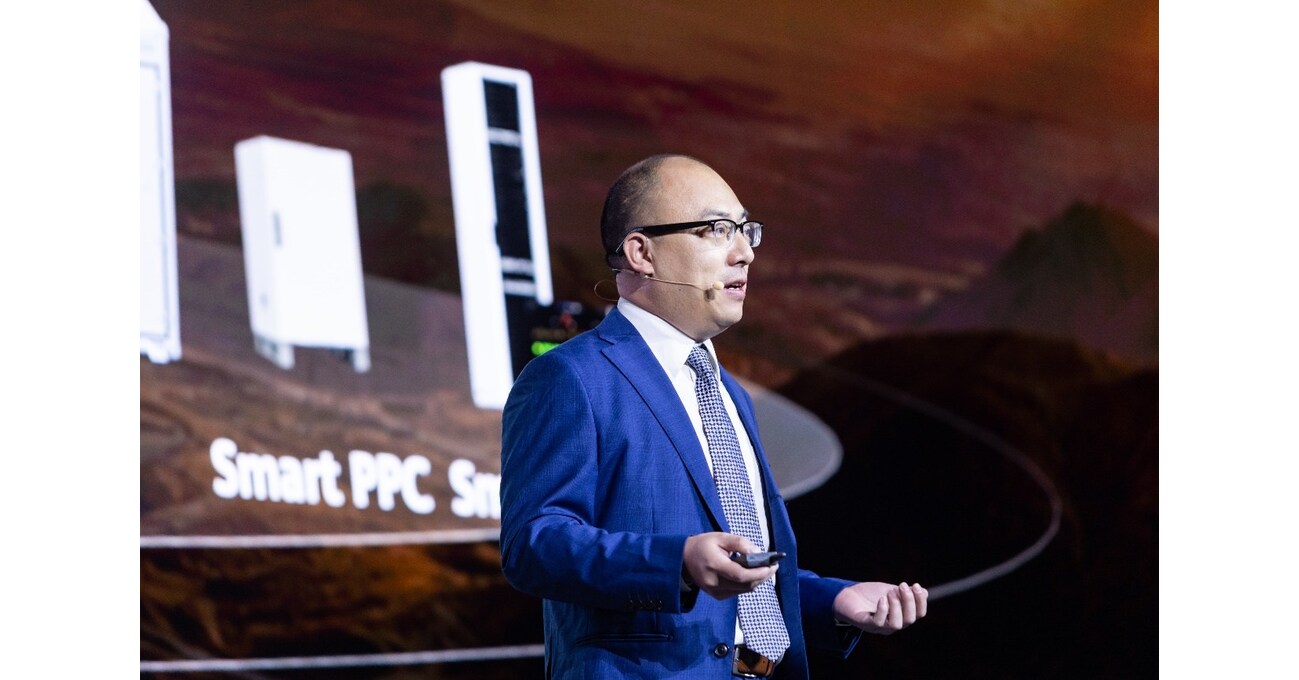
Huawei presentó LUTERRA, su plataforma Smart String Grid-Forming ESS para formación de red a nivel de planta, destacando una eficiencia de 93,1% (lado bajo voltaje del PCS a 25°C) y precisión de SOC de 2,5% (y 3% en meseta). En una planta BESS de 1 GWh, la plataforma apunta a reducir el tiempo de entrega ≥30%, los costes BOP ≥20% y el espacio ocupado a 1 m² por MWh (vs. soluciones convencionales), apoyado por una arquitectura de buses colectores pasantes y un diseño de doble etapa a 1000 V AC con refrigeración distribuida. El artículo enmarca la propuesta en el contexto de creciente necesidad de estabilidad de red con alta penetración renovable y adopción de capacidades GFM por operadores/guías en Europa y otros países.
This is less a product story than a pricing-power story for utility-scale storage. If grid-forming becomes a procurement requirement instead of a spec sheet feature, the market shifts from buying the cheapest battery box to buying certified grid services, which should widen the moat for vendors that own controls, power electronics, and field integration rather than just cells. That is a margin threat to commodity-oriented integrators and a relative tailwind to electrical equipment names tied to interconnection and high-voltage BOS spend.
The second-order effect is that the addressable revenue pool for BESS owners expands beyond energy arbitrage into inertia, black-start, and voltage support, which should improve project IRRs over 1-3 years if service markets scale. The catch is that this only matters where TSOs actually pay for those attributes; outside Germany, Australia, and a handful of grid-constrained markets, the near-term monetization is still mostly hypothetical. So the immediate trade signal is modest, but the medium-term implication is that grid-forming capability may become a gating item for award flow in Europe and APAC.
Contrarian view: consensus will likely treat this as another Huawei demo, but the more important point is standard-setting. If Huawei can keep proving lower BOP, faster install, and higher efficiency in live projects, Western peers face a choice between matching the architecture or accepting price compression; however, security/procurement barriers could also limit Huawei's direct share gains in Europe and the U.S., which would cap the headline impact while still forcing the industry to spend more on compliance and controls. What would falsify the thesis is continued award flow to non-grid-forming systems, or a lack of follow-through in TSO tariff design over the next 2-3 quarters.
AI-powered research, real-time alerts, and portfolio analytics for institutional investors.
Request TrialOverall Sentiment
mildly positive
Sentiment Score
0.25
