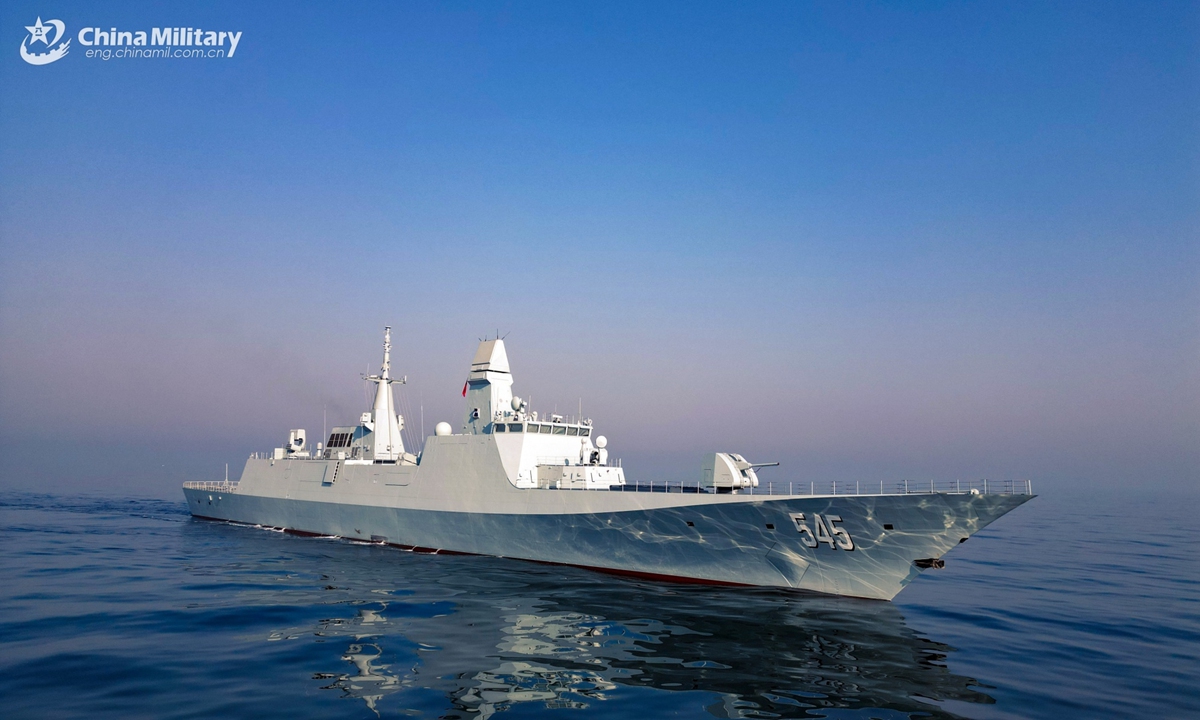
Japan said it detected a Chinese PLA Navy carrier task group in the Western Pacific, including the Liaoning, a Type 055 destroyer, a Type 052D destroyer, the new Type 054B frigate Luohe (Hull 545), and a Type 901 replenishment ship. If confirmed, this would be the first far-seas deployment for the Type 054B since its January 2025 commissioning, highlighting improved escort, anti-submarine, and air-defense capabilities within the Liaoning formation. The report is strategically relevant but should have limited direct market impact beyond defense and regional-security sentiment.
The near-term market implication is not a direct equity trade but a reinforcement of the regional security premium across Japanese and Indo-Pacific defense supply chains. The key second-order effect is budget durability: once a platform is seen in blue-water carrier operations, it strengthens the narrative for multi-year procurement of ASW, air-defense, ISR, and unmanned countermeasures across Japan, South Korea, Australia, and select U.S. primes. That tends to favor names with recurring software, sensors, and munitions exposure over pure platform builders, because the response path is faster in electronics and command-and-control than in shipbuilding.
The bigger strategic point is that this is a capability signaling event, not just a headline event. If the new frigate is now being integrated into a carrier screen, the operational lesson for adversaries is that the cost of tracking and saturating a Chinese carrier group rises, which should increase demand for distributed maritime surveillance, long-range anti-ship weapons, undersea sensors, and expeditionary logistics. That also creates a small but important negative for commercial shipping risk appetite in the region: even without kinetic escalation, insurers and charterers tend to reprice transits around contested maritime lanes when training cycles become more frequent and more public.
The contrarian view is that markets may overestimate how quickly this translates into a meaningful shift in force balance. One hull does not change the regional equation, and the first deployment of a new class often exposes integration frictions, maintenance burdens, and training bottlenecks rather than true mass production readiness. The more actionable catalyst is whether the next 2-3 quarterly exercises show repeatable multi-ship deployment and replenishment patterns; if not, the signaling premium fades and defense beneficiaries could mean-revert.
From a timing perspective, this is a 3-12 month setup rather than a days-long trade. The best risk/reward is to express it through companies that benefit from persistent elevated threat perception rather than one-off headlines, while keeping position size modest because geopolitical premium can compress quickly if diplomatic tone softens or if the deployment is framed as routine rather than escalatory.
AI-powered research, real-time alerts, and portfolio analytics for institutional investors.
Request DemoOverall Sentiment
neutral
Sentiment Score
0.05
