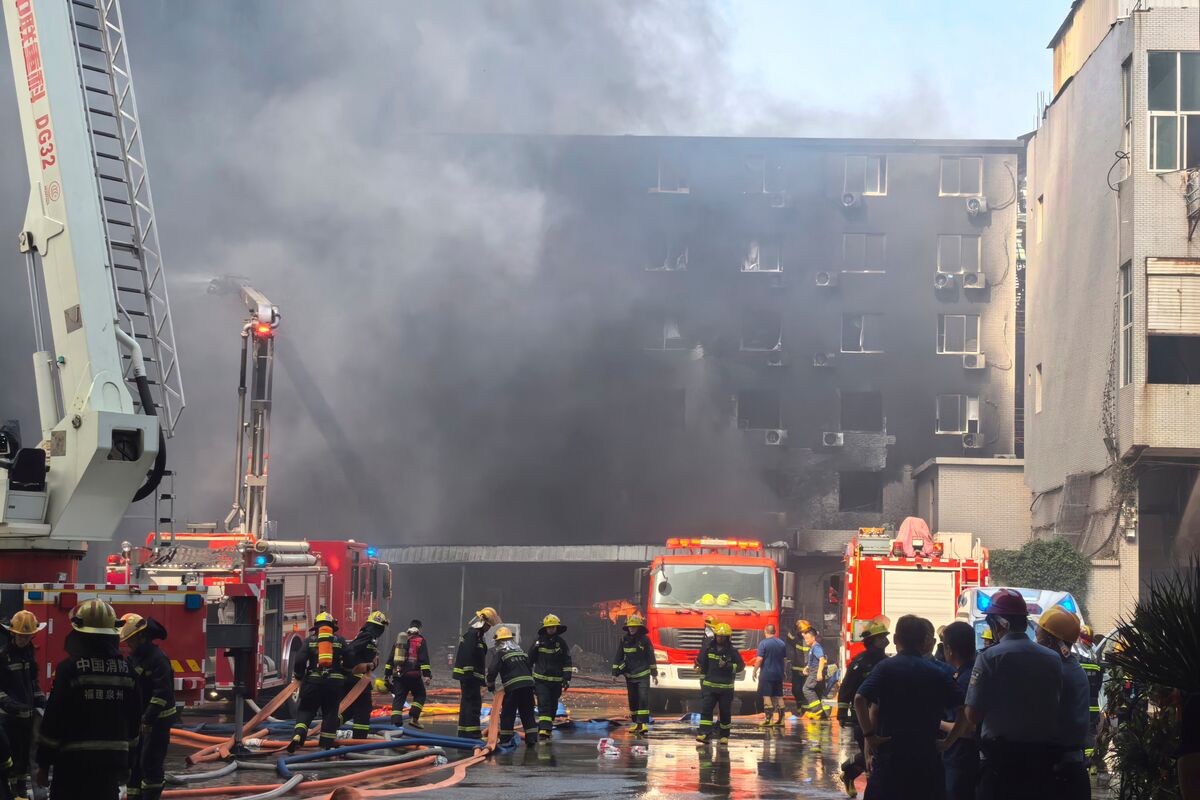
A shoe factory fire in Quanzhou killed 28 people, with CCTV reporting the blaze occurred on Thursday and leaving two dead at hospital and 26 more later confirmed dead. Xi Jinping raised concerns about repeated deadly workplace accidents following the tragedy, signaling potential pressure on workplace safety enforcement. The immediate financial market impact is likely limited, but the incident adds to regulatory scrutiny around labor and safety standards.
The investable effect is less about this single incident and more about whether it triggers a compliance wave that selectively penalizes smaller, under-audited factories. That would tighten capacity at the bottom of the Chinese manufacturing stack and slowly shift share toward larger, better-capitalized suppliers with stronger process controls; for global brands such as NKE, LULU, and DECK, the first-order impact is usually not demand but sourcing friction and a modest cost-up/timeline risk.
The immediate market reaction should be local and transient unless Beijing converts rhetoric into systematic inspections and plant closures. Over 1-3 months, watch for enforcement actions, fines, and production stoppages in labor-intensive export clusters; over 6-18 months, the structural winners are automation, industrial safety equipment, and supply-chain diversification into Vietnam/Indonesia/India. The main risk is that a broad crackdown compresses margins for smaller OEMs before large brands can renegotiate, but the countervailing effect is reduced accident/ESG headline risk for multinational buyers that can prove traceability.
The contrarian view is that markets may overprice the headline while underpricing the second-order consolidation effect. Unless this becomes part of a sustained regulatory campaign, it is more of an idiosyncratic China governance risk than a durable shock to global footwear/apparel earnings. What would falsify a bearish supply-chain thesis is the absence of broader inspection mandates or any measurable uptick in factory closures, shipment delays, or compliance capex in the next quarter.
AI-powered research, real-time alerts, and portfolio analytics for institutional investors.
Request DemoOverall Sentiment
strongly negative
Sentiment Score
-0.75
