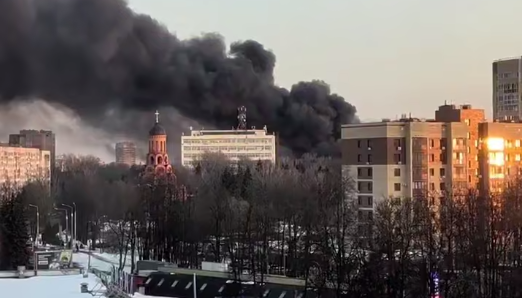
Ukrainian forces struck the Kremniy El microelectronics plant in Bryansk with Storm Shadow missiles, inflicting "significant damage" to production facilities that manufacture discrete semiconductors and integrated circuits used in Russian precision weapons including Iskander missiles. The Ukrainian General Staff confirmed the hit and full damage is still being assessed. The strike risks degrading Russia's missile guidance supply chain and elevating near-term geopolitical risk, which could pressure defense-related equities and Russia-exposed assets.
A localized removal of a specialized semiconductor production node has outsized effects beyond the immediate factory: discrete military-grade components require qualification cycles (typically 3–9 months) and trusted-supply certification (6–18 months) before they can be re-sourced. Expect lead times for MIL-spec discretes to extend by 30–100% and spot premiums to emerge for already-qualified parts; that forces program managers to either slow production or accept higher unit costs.
Second-order winners will be firms offering trusted-foundry capacity, test/qualification services, and legacy-architecture suppliers whose parts can be cross-walked into weapon systems after requalification; conversely, vertically concentrated defense supply chains with little dual-sourcing face meaningful throughput and margin risk. Third-country brokers and alternative suppliers are a likely stopgap, which increases compliance friction and elevates the probability of additional export controls and sanctions enforcement—raising transaction costs for any firm operating in Eurasian supply corridors.
Timeline and tail risks are asymmetric. Near-term (days–weeks) the main catalyst is escalation/retaliation risk which can spike risk premia across regional logistics and defense equities; medium-term (3–12 months) the measurable effects are order re-routing, inventory rebuilding, and margin pressure on systems integrators forced to pay spot premiums; long-term (12–36 months) is an acceleration of onshoring and capex into secure microelectronics capacity. A rapid diplomatic de-escalation or a credible alternative supply qualification program are the main reversal paths and would compress the current premium quickly.
AI-powered research, real-time alerts, and portfolio analytics for institutional investors.
Request DemoOverall Sentiment
mildly negative
Sentiment Score
-0.25
