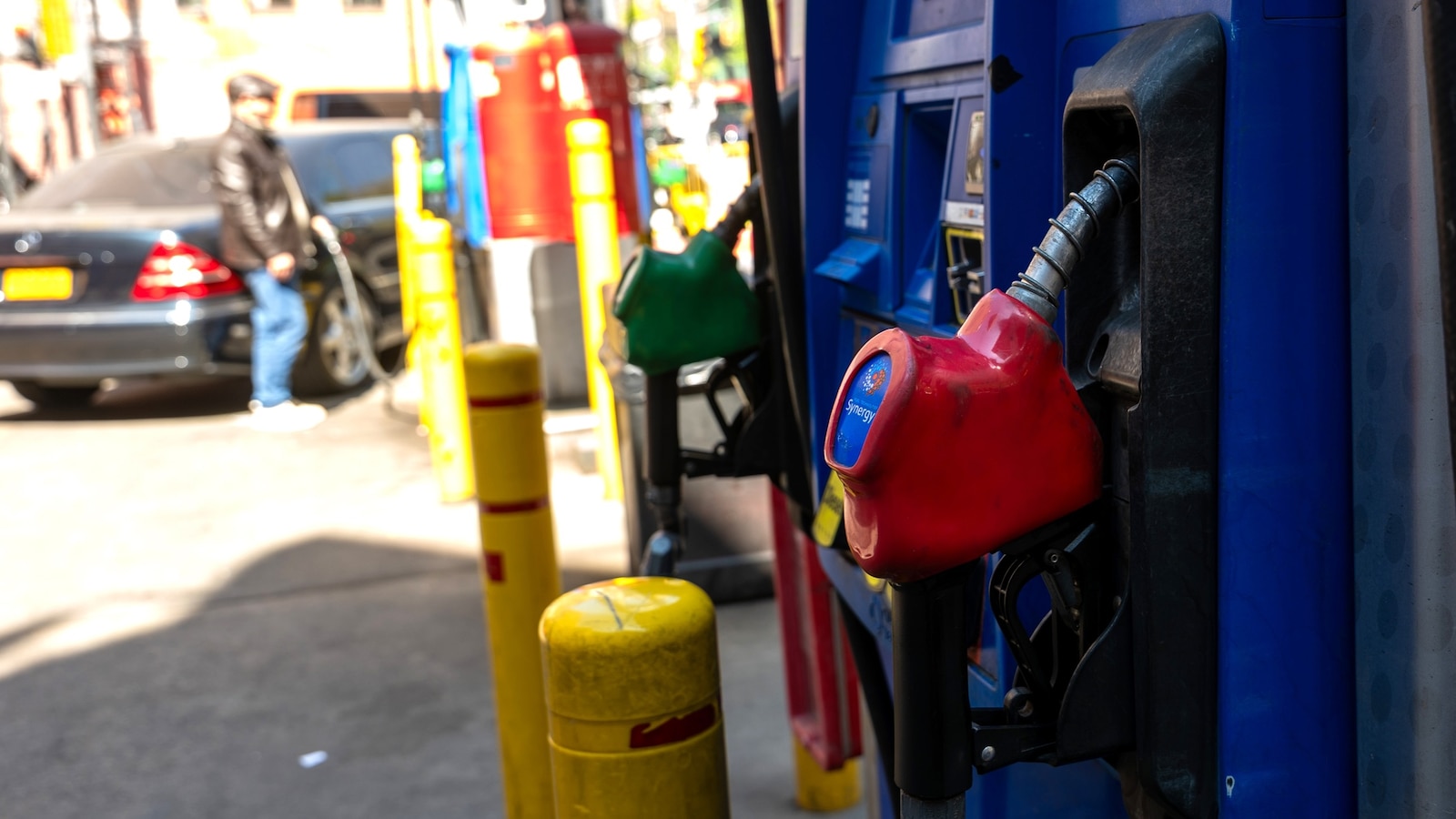
U.S. average gasoline prices hit a four-year high at $4.17 per gallon, up $1.19 since the war began on Feb. 28, a 28% increase in about two months. U.S. oil futures hovered near $99 a barrel, more than 50% above pre-war levels, as the Iran war and Strait of Hormuz disruption kept pressure on global crude supply. The surge is likely to feed into broader inflation and poses a market-wide energy shock risk.
The immediate winners are not just upstream producers but any asset tied to domestic hydrocarbon scarcity premiums: refiners, pipeline/logistics bottlenecks, and short-duration energy equities with leverage to prompt crude. The second-order loser set is broader than consumers — airlines, trucking, chemicals, and discretionary retail face margin compression with a lag, while headline inflation reaccelerates into the next CPI/PCE prints, complicating any easing narrative. If prices remain elevated for several weeks, the market will start discounting a slower growth / higher rates mix rather than treating this as a pure commodity shock.
The key market mechanic is that gasoline is a visible, politically sensitive transmission channel, so the trade is less about the absolute oil level and more about duration. A short-lived spike can be absorbed by earnings and inventories; a 6-10 week plateau above current levels is where demand destruction and margin repricing start showing up in guidance. The biggest reflexive risk is that elevated fuel costs depress miles driven and discretionary spend just as summer demand season peaks, creating a delayed but meaningful hit to consumer cyclicals.
Contrarian-wise, the market may be underpricing policy response rather than supply response. Because the shock is politically salient, strategic reserve releases, diplomatic pressure, or a ceasefire headline can compress the risk premium very quickly, making outright long crude risky at these levels. That argues for structures that monetize volatility and downside asymmetry rather than directionally chasing the move after a 50% run in front-month oil.
The cleaner expression is to stay long energy cash-flow generators but hedge the macro beta: the spread trade matters more than single-name longs here. Expect the relative performance of energy vs. consumer/discretionary and transports to widen first on earnings revisions, then potentially reverse sharply if a de-escalation headline hits. Timing is critical — the next 1-3 weeks should be treated as event-risk, not a secular commodity regime shift.
AI-powered research, real-time alerts, and portfolio analytics for institutional investors.
Request DemoOverall Sentiment
moderately negative
Sentiment Score
-0.35
