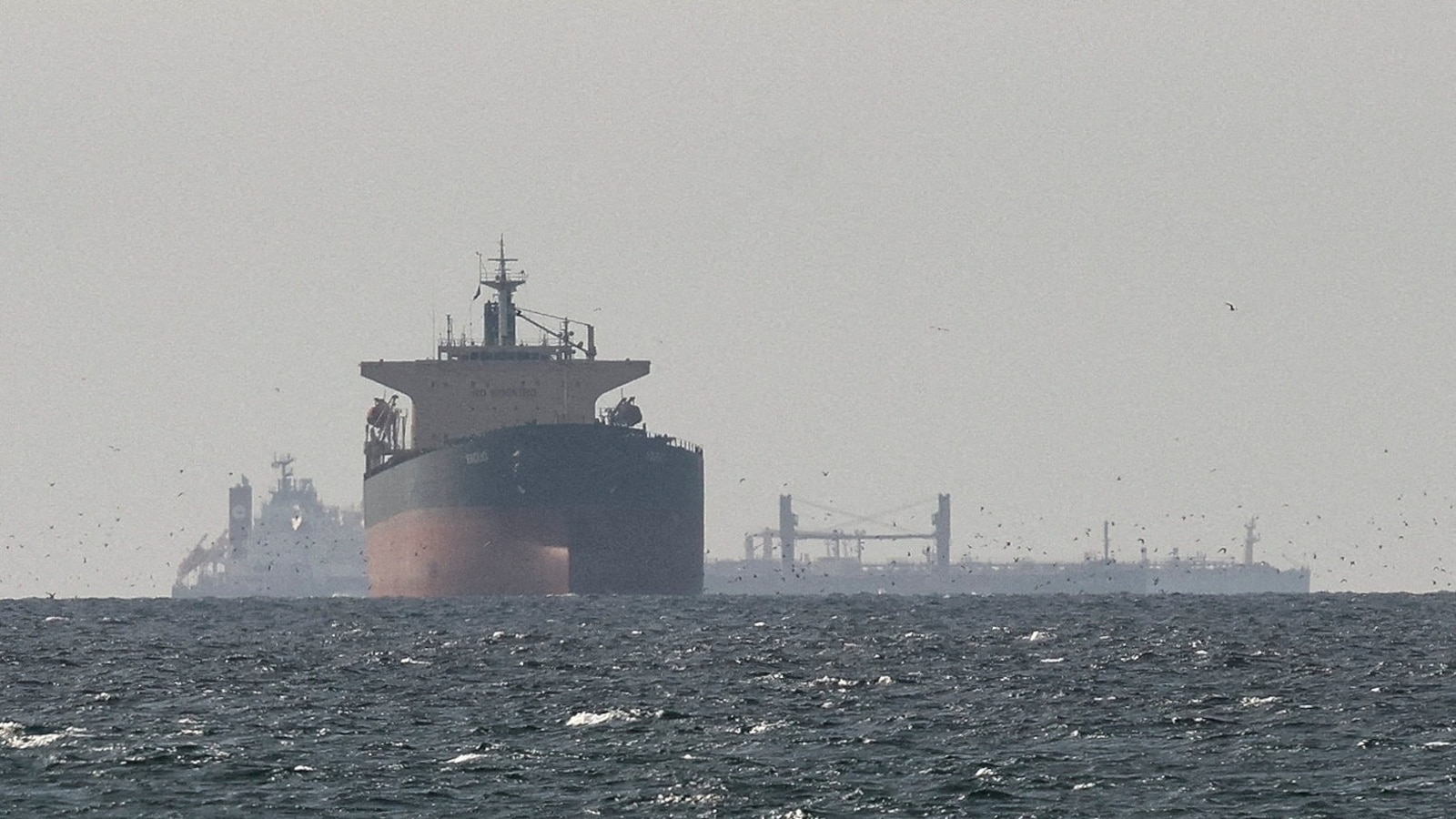
Gas prices have risen about $0.76 per gallon on average since the start of the Iran war, while ~20% of global oil transits the Strait of Hormuz, which Iran has effectively closed and which has driven crude prices sharply higher. Energy Secretary Chris Wright said the conflict 'will certainly' end in the next few weeks and expects prices to come down but warned there are no guarantees; he also indicated a U.S. Navy escort of tankers could be possible by month-end though not yet ready. The developments pose material market-wide energy risk and ongoing volatility; domestic security incidents and partisan disputes over DHS/ICE funding add near-term political and homeland-security uncertainty.
The market is pricing a near-term premium into crude, tanker freight and insurance that can be unwound rapidly if a naval escort coalition restores safe passage; that makes the current move highly liquidity- and sentiment-driven rather than reflecting a structural supply shock. Expect tanker charter rates and war-risk insurance to spike within days, pushing arbitrage flows into storage and encouraging owners of VLCCs and Aframax tonnage to idle or re-route, which mechanically tightens available capacity and amplifies short-duration freight profits.
Second-order winners are firms that capture elevated transaction margins rather than commodity price exposure — maritime insurers/brokers, spot tanker owners and security contractors — while consumer-facing, fuel-intensive operators (airlines, long-haul logistics) face immediate margin compression and hedging shortfalls. If escorts are implemented on a defined schedule (days–weeks), the freight/insurance premium can collapse faster than oil prices fall, creating a compressed window for capture but material option-like payoffs for the long side of freight/insurance and short oil-intense operators.
Key catalysts to watch on a tight timeline: (1) formal announcements of coalition naval escorts or insurance pool agreements (days–2 weeks) which would remove the shipping risk premium, (2) any credible escalation by proxies that expands targets beyond shipping (weeks–months), and (3) visible SPR releases or large buyer tolerances in Asia swapping to other supply routes (weeks). Position sizing should reflect the high probability of a short, sharp repricing event — asymmetric payoffs favor instruments that can capture tail spikes in freight/insurance and that can be exited quickly on normalization.
AI-powered research, real-time alerts, and portfolio analytics for institutional investors.
Request DemoOverall Sentiment
mildly negative
Sentiment Score
-0.25
