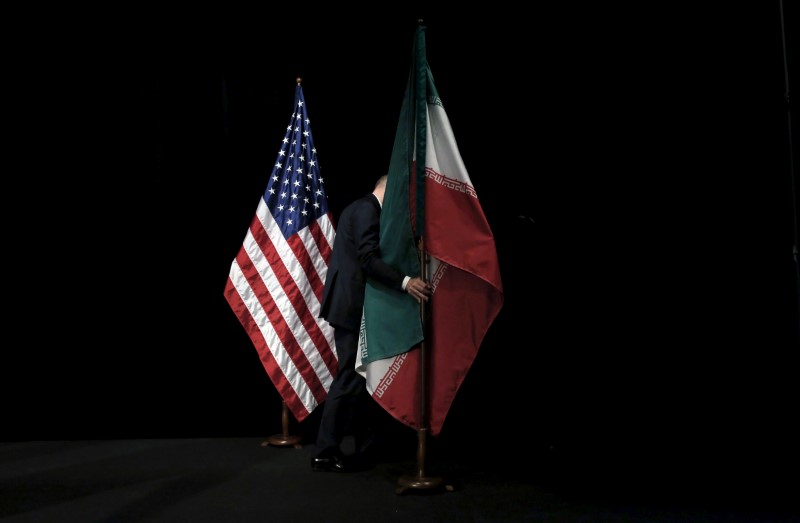
Trump warned Iran of possible military strikes and said a U.S. delegation led by Vice President JD Vance would travel to Pakistan for negotiations if talks fail. The ceasefire remains fragile amid reports of gunfire in the Strait of Hormuz, attacks on commercial vessels, and potential U.S. plans to seize Iran-linked tankers. The risk of disruption to a critical shipping chokepoint keeps oil, defense, and broader risk assets on edge.
The market is underpricing how quickly a maritime escalation can transmit from geopolitics into physical supply frictions. Even without a formal closure of the Strait, seizure risk, insurance repricing, and rerouting premiums can tighten delivered crude availability within days, which tends to hit refiners, shipping, and industrials before the commodity itself fully re-prices. The first-order beneficiary is upstream energy, but the cleaner trade is often the relative move: integrated producers and tanker names outperform while transport-heavy and fuel-sensitive sectors de-rate.
The more interesting second-order effect is on global logistics and emerging-market beta. Any credible threat to board tankers raises voyage times, war-risk premia, and working-capital needs for commodity traders; that mechanically favors firms with shorter supply chains and domestic demand exposure over import-dependent businesses. In parallel, heightened Middle East risk usually lifts the dollar and real rates at the margin, which is a headwind for long-duration growth names and for any company whose valuation is supported by abundant liquidity.
For the two AI-linked tickers in the data, the move is probably more about factor contamination than direct fundamentals. SMCI and APP can both sell off in a risk-off tape if investors de-gross and rotate toward cash-generative defensives, even though neither is economically levered to the conflict. The setup matters over days, not quarters: if the situation de-escalates and crude retraces, these high-beta AI names are likely to snap back harder than the market, so the short-term dislocation may be the opportunity rather than the thesis.
The contrarian view is that the market may be overpricing an immediate supply shock and underpricing diplomatic containment. If enforcement stays limited to episodic seizures rather than a sustained blockade, oil spikes can fade fast once inventories and SPR optionality are brought into focus. That argues for trading the volatility rather than owning outright directional exposure.
AI-powered research, real-time alerts, and portfolio analytics for institutional investors.
Request DemoOverall Sentiment
strongly negative
Sentiment Score
-0.70
Ticker Sentiment
