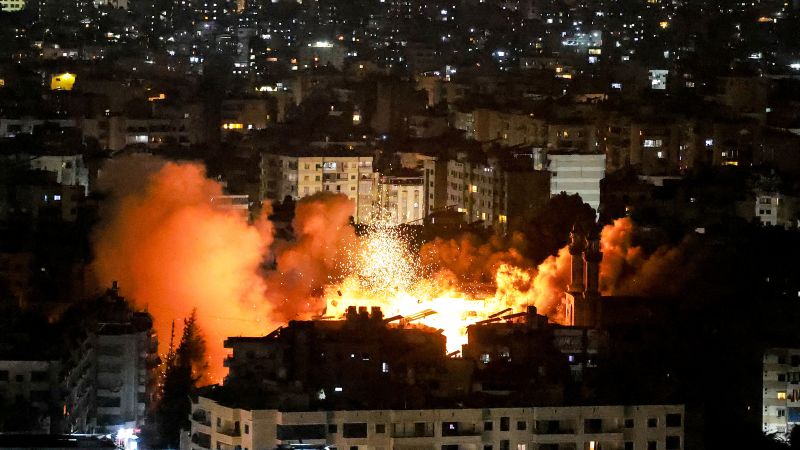
The Israeli military conducted strikes on alleged Hezbollah "drone factories" in southern Lebanon and Beirut suburbs, marking the largest escalation since the November ceasefire. The IDF targeted what it claims were Hezbollah Aerial Unit facilities, prompting evacuations following warnings to residents in specific Beirut neighborhoods. Lebanese officials condemned the strikes as a violation of international law, while Israel's Defense Minister held the Lebanese government responsible for preventing ceasefire violations and terrorist activity.
The Israeli military's strikes on alleged Hezbollah "drone factories" in southern Lebanon and Beirut suburbs represent the most significant escalation since the November U.S.-brokered ceasefire agreement, directly impacting regional stability. The Israel Defense Forces (IDF) stated their operations targeted "terror targets of the Hezbollah Aerial Unit (127)" following "urgent warnings" that prompted civilian evacuations and panic. Lebanese officials, including President Joseph Aoun, condemned the actions as a "blatant violation of an international agreement" and humanitarian laws, particularly occurring on the eve of Eid al-Adha. In contrast, Israeli Defense Minister Israel Katz asserted that the Lebanese government bears responsibility for preventing ceasefire violations and terrorist activities, vowing to enforce ceasefire rules. These events, including previous Israeli strikes in the same Hezbollah stronghold in late March, indicate ongoing friction and the fragility of the existing ceasefire. The associated "strongly negative" sentiment (score -0.7), "volatile" tone, and a notable market impact score of 0.6 underscore the heightened geopolitical risk stemming from these developments.
AI-powered research, real-time alerts, and portfolio analytics for institutional investors.
Request DemoOverall Sentiment
strongly negative
Sentiment Score
-0.70
