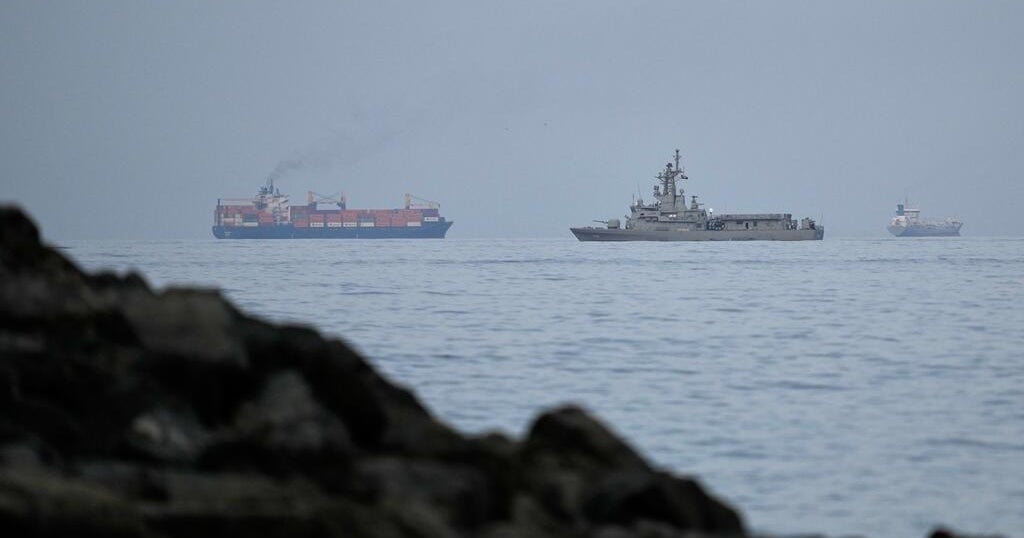
Approximately 20% of global crude oil transits the Strait of Hormuz and traffic has effectively ground to a halt after U.S./Israeli strikes on Iran and Tehran's retaliatory missile and drone fire, sharply lifting energy prices. The EU (27) declined President Trump's requests for broad military deployments to reopen the strait, with the U.K. also refusing immediate commitments; officials are instead considering diplomatic measures and limited naval options (e.g., expanding Operation Aspides) while the risk to shipping and energy markets remains elevated.
Assuming persistent disruption to Gulf export flows, the mechanically predictable crude price impulse is only the first-order signal; the higher-impact channels are freight rate dislocations, insurance premia and refinery feedstock substitution that unfold over 4–12 weeks. VLCC and Suezmax charter rates should spike faster than spot Brent, creating a temporal arbitrage for owners/operators and bumping tanker equity values even if oil prices mean-revert.
Rerouting toward longer passages increases voyage days by ~20–40% for Asia-bound barrels, raising effective landed cost and pressuring refinery margins that process heavy sour grades; expect margins for complex refiners in Europe and Asia to compress relative to Gulf Coast peers over the next 1–3 months. Fertilizer inputs (ammonia/urea) have a tighter elasticity to shipping cost than crude; regional shortages could appear within a single crop cycle (~2–3 months), creating asymmetric inflationary pressure in EM agricultural exporters.
A delayed, politically-brokered multinational escort mission is the highest-probability reversal catalyst but carries execution risk and could take 6–12+ weeks to assemble binding ROEs and insurance backstops, meaning market participants should price in a multi-month elevated-risk premium. Conversely, a rapid de-escalation or credible reroute corridor announcement would likely see Brent retrace quickly but leave freight/insurance spreads and certain equities (shipping, reinsurers) lagging to the downside for another 30–90 days.
Defense-industrial and insurance plays will see differentiated outcomes: producers with flexible export infrastructure and regional storage (PADDs, Singapore, Fujairah) capture optionality, while integrated refiners with fixed sour-processing setups absorb margin stress. Monitor real-time measures — VLCC time-charter, War Risk premiums for Gulf, and booked refinery throughput vs. historical seasonal baselines — as leading indicators to time entries and exits.
AI-powered research, real-time alerts, and portfolio analytics for institutional investors.
Request DemoOverall Sentiment
strongly negative
Sentiment Score
-0.55
