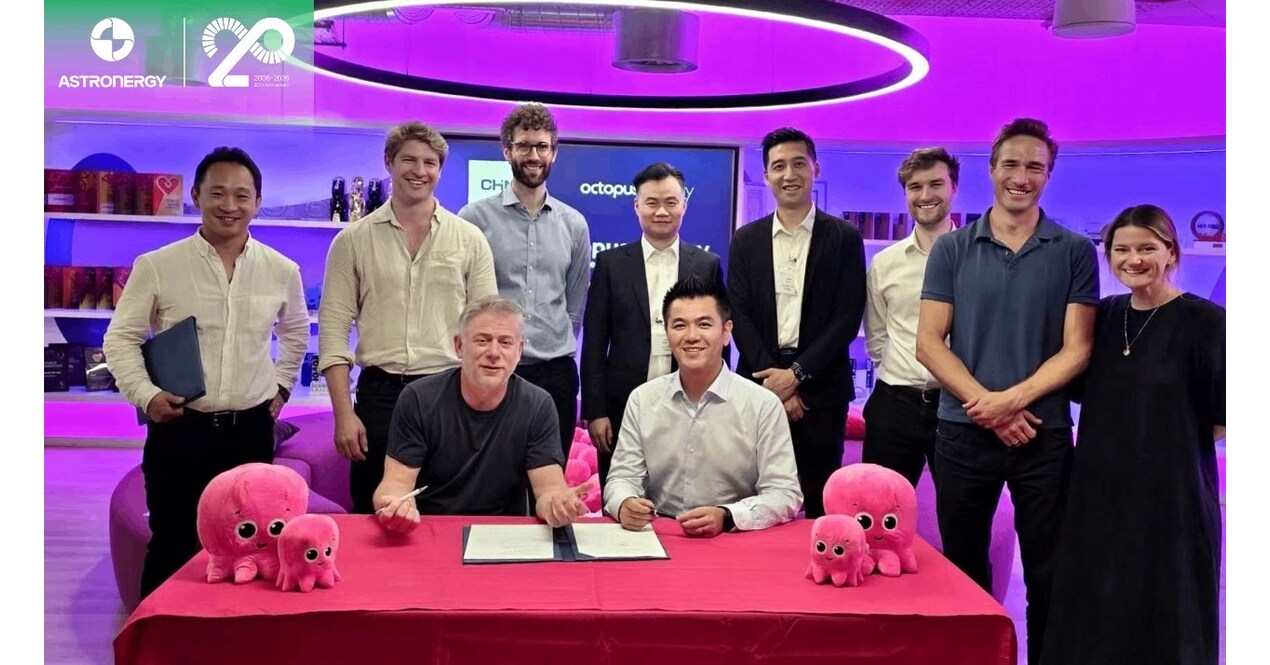
CHINT and Octopus Energy signed two MoCs to accelerate clean energy deployment and Virtual Power Plant (VPP) innovation, including renewable equipment (PV modules, inverters, BESS, smart meters, EV charging) and potential EPC support for projects in Europe. The second MoC targets VPP opportunities in China, spanning distributed energy aggregation, demand response, and intelligent energy management. The news is broadly supportive for clean-energy digitization efforts but provides no immediate financial figures beyond CHINT’s 2025 operating revenue of $25.91B.
This reads more like a distribution-and-channel signal than a new demand pool. The practical winner is the party that can bundle hardware, financing, EPC, and software into one procurement package; that tends to compress friction costs and squeeze smaller installers, module brokers, and point-solution vendors that rely on fragmented procurement. The first-order revenue impact is probably modest, but the second-order effect is sharper pricing discipline across European solar/BESS bids, especially where customers care more about bankability and execution than brand.
The more interesting leg is VPP optionality in China, but that is a policy-and-market-structure trade, not a headline trade. Monetization depends on dispatch rights, ancillary-service pricing, and utility participation; that pushes any real earnings impact into a 12-24 month window. If Chinese regulators widen demand-response compensation or grid services markets, Octopus gets a scalable software model; if not, this stays in pilot mode and the partnership is mostly signaling.
Contrarian view: the market may overread "strategic cooperation" as evidence of imminent backlog. Without signed project awards, the financial impact is likely negligible, and the setup may actually be bearish for commoditized clean-tech names because it reinforces how much of the sector is becoming a low-margin supply chain game. Falsifiers to watch: actual project wins within 1-2 quarters, margin expansion at the hardware layer, or evidence that EU procurement is prioritizing domestic supply over lowest-cost bundled execution.
AI-powered research, real-time alerts, and portfolio analytics for institutional investors.
Overall Sentiment
mildly positive
Sentiment Score
0.25
Ticker Sentiment
