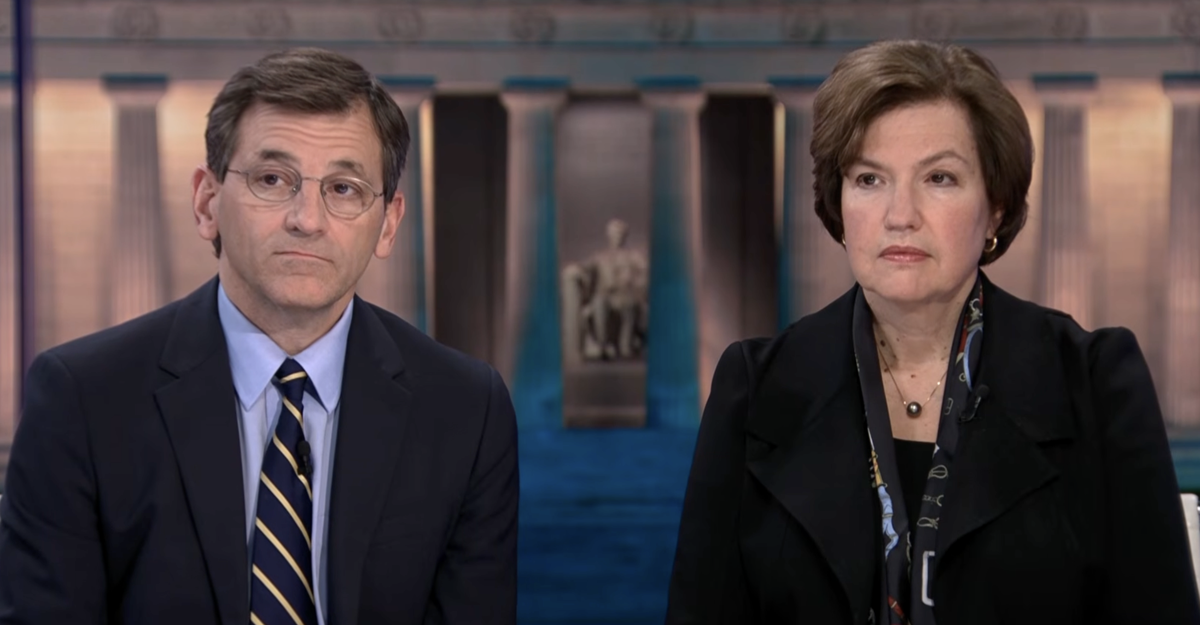
Trump’s summit with Xi in Beijing centered on U.S.-China relations and raised concerns among America’s allies about the durability of U.S. commitments. Panelists emphasized the geopolitical implications rather than any direct economic or corporate developments. The article is largely commentary and unlikely to have a meaningful near-term market impact.
The market implication is less about near-term optics and more about credibility decay in U.S. commitments. That raises the option value of bilateral hedging across Asia: governments, suppliers, and multinationals will increasingly assume policy discontinuity and diversify away from U.S.-centric security and trade assumptions. The second-order effect is a slow but persistent reallocation of strategic and procurement decisions toward “China plus one” and “America plus one,” which benefits firms that can arbitrage fragmentation rather than depend on a single bloc.
The near-term winner is volatility itself. Any perception that alliance structures and trade rules are negotiable on a leader-to-leader basis increases the probability of episodic tariff threats, export controls, and retaliatory procurement rules over the next 3–9 months. That tends to compress multiples in semis, industrial automation, and cross-border consumer names with large China revenue exposure, while lifting defense, cyber, and domestic infrastructure names as geopolitical insurance trades.
The contrarian read is that markets may be underpricing how little immediate change actually follows summit headlines. If the policy message is ambiguity rather than escalation, the real tradeable effect may be delayed rather than instantaneous: suppliers keep investing in redundancy, but P&Ls only reflect it after several quarters. That argues for positioning on the second-order beneficiaries of supply-chain duplication rather than chasing headline-sensitive China proxies.
Tail risk is a sharper policy pivot: if the meeting is followed by concrete tariff relief or enforcement carve-outs, the current premium on geopolitical hedges can unwind quickly. Conversely, if Congress or agencies respond with tighter controls, the impact window is months, not days, because inventories and sourcing contracts blunt the immediate shock before margin pressure shows up.
AI-powered research, real-time alerts, and portfolio analytics for institutional investors.
Request DemoOverall Sentiment
neutral
Sentiment Score
-0.05
