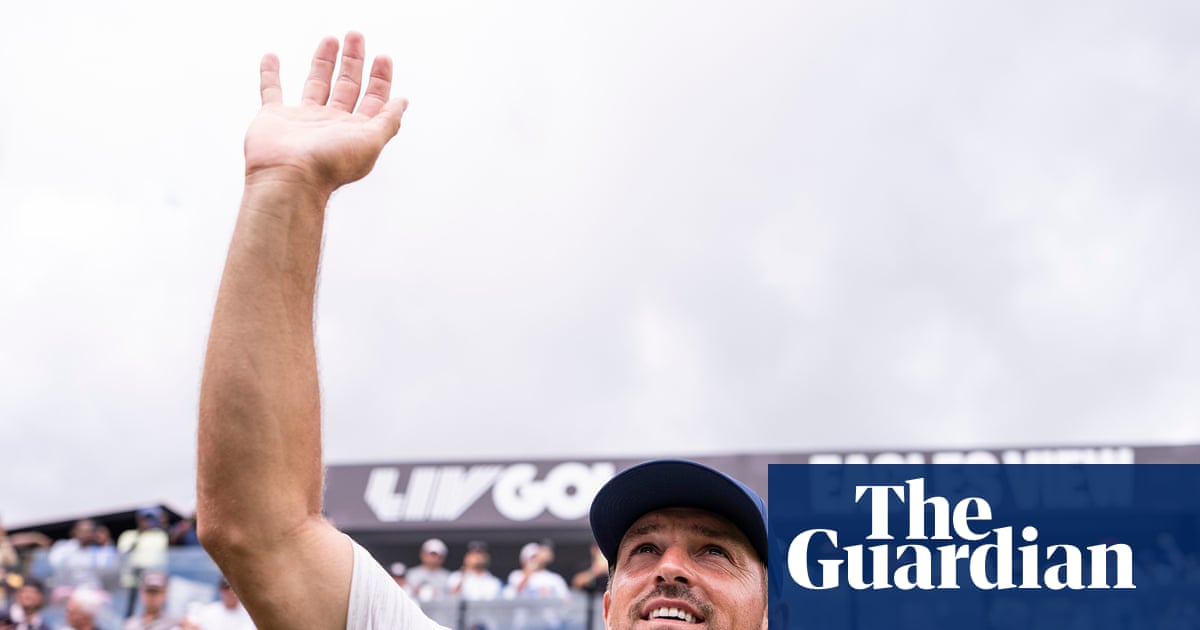
LIV Golf faces funding uncertainty after Saudi Arabia’s Public Investment Fund said it will end its multibillion-dollar sponsorship at the end of the 2026 season, raising doubts about the league’s long-term viability. Bryson DeChambeau denied reports he is seeking a PGA Tour return and said he is still working on a potential contract extension with LIV, but the league is now searching for new backers and could be nearing its final season. The article highlights risk to LIV’s ability to retain star players and continue operating at its current scale.
The immediate market read is that the sponsor pullback converts LIV from a cash-funded growth story into a refinancing/capital-structure problem. That changes the game for athlete retention: the real pressure point is not public messaging from one marquee player, but whether teams, venues, and media partners start repricing the league as a 2026 wind-down rather than a going concern. Once that perception takes hold, any replacement capital is likely to demand punitive terms, which accelerates the odds of a soft collapse or a forced reset into a smaller, less expensive product.
Second-order winners are the incumbent ecosystem and adjacent media rights holders: a weaker LIV reduces the bidding pressure that forced up appearance fees, and it removes a subsidized competing inventory from the global golf calendar. The bigger loser may be sports-marketing agencies and event operators that built staffing, hospitality, and international venue pipelines around a multiyear LIV expansion thesis; those contracts are high fixed-cost and harder to reprice than player deals. For elite players, the risk is asymmetric: contract renewal leverage declines sharply after the 2026 sponsor exit date, so the rational move is to preserve optionality now rather than wait for liquidity to vanish.
The contrarian view is that this is not necessarily bearish for every stakeholder if LIV transitions from a balance-sheet-burning challenger into a lower-cost, niche franchise platform. A smaller league with lower guarantees could still survive as a content property, especially if it becomes a feeder or complementary format rather than a full PGA rival. But the window for that transition is narrow: if no fresh anchor capital appears within the next 3-6 months, the league’s negotiating power likely deteriorates before the next offseason, not at the 2026 deadline.
AI-powered research, real-time alerts, and portfolio analytics for institutional investors.
Request DemoOverall Sentiment
moderately negative
Sentiment Score
-0.35
