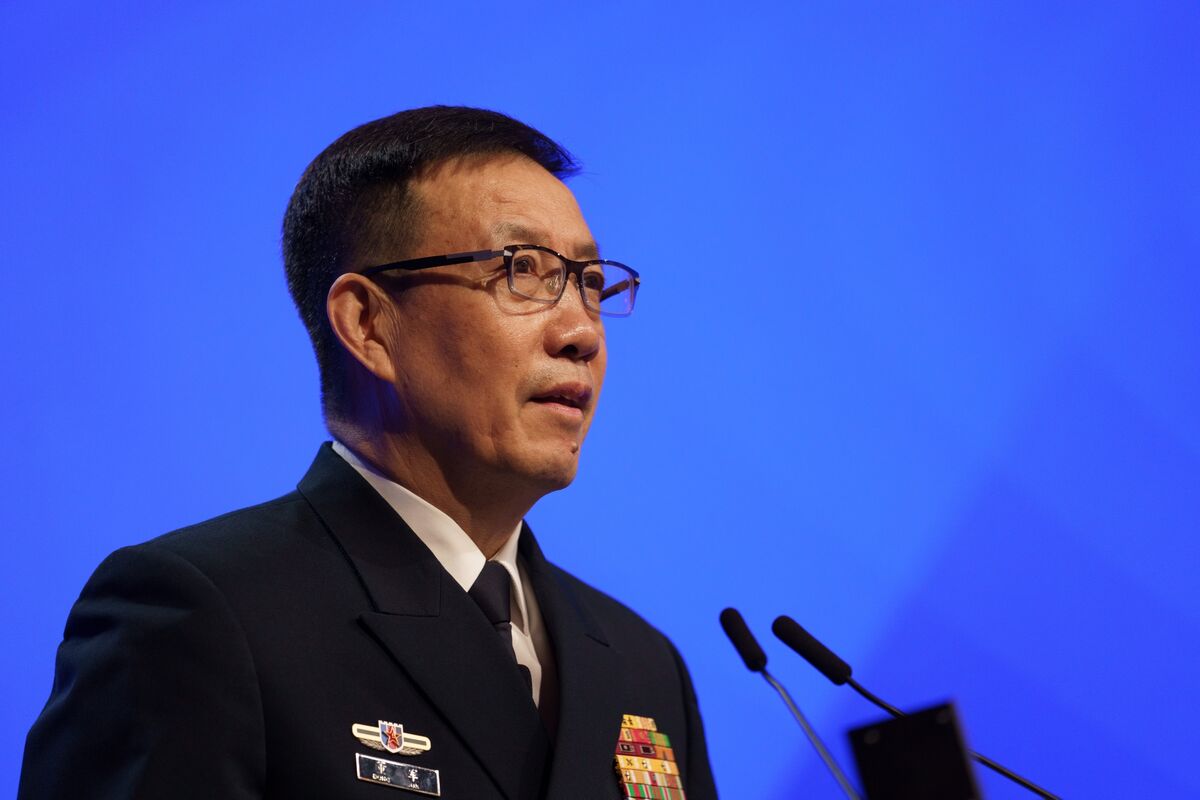
China’s Defense Minister Dong Jun is expected to skip the Shangri-La Dialogue in Singapore for a second straight year, leaving Beijing represented by a lower-profile delegation instead. The move cedes public defense-diplomacy space to the US and its allies but does not imply an immediate market event. The article is primarily a geopolitical signaling story with limited direct financial market impact.
This is less about a single diplomatic absence and more about Beijing choosing opacity over signaling at the exact forum where military messaging is supposed to lower miscalculation risk. That tends to advantage the US and allied defense establishments in the near term because it increases the relative visibility of their commitments to regional partners, while China forfeits a low-cost chance to shape narratives around Taiwan, the South China Sea, and escalation management.
The second-order effect is on procurement sentiment, not hardware demand. Every episode that reinforces “China as a hard-to-read strategic actor” supports longer-duration spending plans in Japan, Australia, India, and Southeast Asia, because ministries can justify incremental missile defense, ISR, EW, and undersea investments without waiting for a near-term kinetic catalyst. The beneficiaries are the contractors and supply-chain names tied to command-and-control, sensors, munitions, and shipbuilding rather than headline fighters.
The market may underappreciate the asymmetry that absence creates: fewer chances for de-escalation can increase tail-risk premiums even if day-to-day geopolitics look calm. Over days, this is mostly narrative; over months, it can add to budget momentum and reorder supplier pipelines toward non-Chinese vendors, especially for dual-use electronics and security software. The main reversal catalyst would be a later high-level bilateral military channel or a visible confidence-building measure, which would compress some of this premium quickly.
Contrarian view: the signal may be weaker than it looks because Beijing may be optimizing for internal discipline rather than external confrontation, and the forum itself is often more theater than substance. If markets are already pricing a structurally higher Asia defense spend cycle, the better trade is not to chase broad defense beta but to own the parts of the value chain where allied rearmament has the longest lead times and the least capacity slack.
AI-powered research, real-time alerts, and portfolio analytics for institutional investors.
Request DemoOverall Sentiment
neutral
Sentiment Score
-0.10
