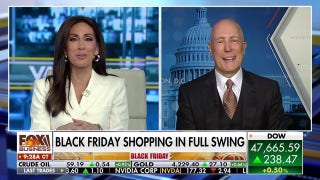
Online Thanksgiving Day spending hit a record $6.4 billion, up 5.3% year-over-year, driven by steeper-than-expected discounts (electronics up to 28% off, apparel 25%, toys 27%, etc.) and increased use of buy-now-pay-later plans which accounted for $447.7 million (up 4.1% YoY). Adobe cited impulse mobile shopping and generative AI tools helping shoppers find deals, underscoring stronger consumer demand into Cyber Week; however, the report notes broader headwinds as household debt reached a record in Q3 2025 and consumer sentiment fell while inflation was 3% in September.
Market structure: Thanksgiving’s $6.4B online haul (+5.3% YoY) with discounts up to ~28% (electronics) and BNPL usage of $447.7M (+4.1% YoY) signals a volume-for-margin trade: large platforms and analytics/AI vendors (e.g., ADBE) capture share while smaller, margin-constrained retailers face compression. Deep, broad discounts imply retailers are prioritizing inventory clearance and share — expect winners to be scale players (AMZN, SHOP) and technology vendors selling personalization/price-optimization tools. Cross-asset: persistent discounting + 3% inflation keeps core CPI sticky, pressuring real yields and increasing bond market sensitivity to Fed communications over next 3–12 months.
Risk assessment: Tail risks include BNPL regulatory action (CFPB guidance or caps within 90–180 days) and a consumer-credit shock as household debt hit records in Q3 2025; either could spike delinquencies and blow up BNPL receivables. Immediate risk (days–weeks): sales normalization and return/chargeback revisions; short-term (months): Q4 earnings showing margin damage; long-term (6–18 months): structural consumer deleveraging or sustained discounting reducing retailer EBITDA margins 200–500bps.
Trade implications: Favor long ad/analytics and generative-AI tools (ADBE) and large e-commerce platforms (AMZN/SHOP) over mall/department stores (M, KSS, XRT). Use pair trades to capture share shifts (long AMZN, short M) and protect BNPL exposure via options on AFRM/PYPL. Timing: size initial positions into post-Thanksgiving weakness and reprice into Q4 retail prints (Jan–Feb 2026).
Contrarian angles: Consensus treats Thanksgiving growth as durable demand — it may instead reflect demand pull-forward enabled by financing and AI deal-finding, not higher willingness to pay. Market may underprice regulatory and credit-cycle risks for BNPL and overprice perpetual margin recovery for legacy retailers; historical parallel: 2019–2020 discount cycles preceded multi-quarter margin contraction for mid-tier retailers. Unintended consequence: heavier discounting raises returns and fraud, amplifying credit loss for fintech lenders and forcing more aggressive markdowns next season.
AI-powered research, real-time alerts, and portfolio analytics for institutional investors.
Request DemoOverall Sentiment
mildly positive
Sentiment Score
0.28
Ticker Sentiment
