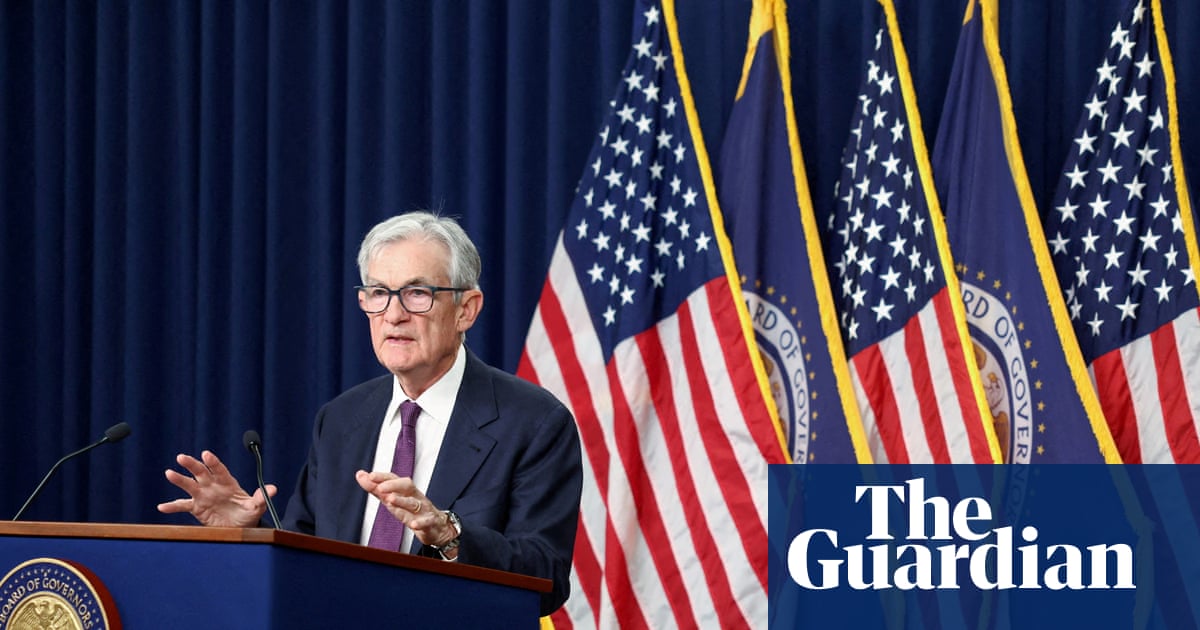
The Federal Reserve left rates unchanged, keeping the policy range at 3.5% to 3.75% amid elevated inflation, soft job gains, and Middle East uncertainty. Fed officials cited 3.3% March inflation versus a 2% target, while Brent crude briefly hit $119 a barrel, up 7% in a day, highlighting renewed energy-price pressure. Kevin Warsh’s confirmation advances the leadership transition, but he would still need broader board support to deliver cuts.
The immediate market implication is not the unchanged rate level; it is the widening probability distribution for the next 6-12 months. A Fed that is split internally while facing a leadership transition raises the odds of a policy regime where forward guidance becomes less reliable, which steepens term-premium volatility even if front-end rates stay anchored for now. That argues for duration-sensitive assets to trade with a higher risk premium rather than assuming a clean easing path.
The larger second-order effect is on the inflation mix. Energy-driven price pressure is the kind of shock the Fed cannot offset without risking a sharper labor-market deterioration, so the policy reaction function is becoming more asymmetric: easier to cut on growth weakness, harder to cut if commodities stay hot. That makes any rally in rate-sensitive equities vulnerable if oil remains elevated for another 1-2 quarters, because the market may have to price slower disinflation and fewer cuts simultaneously.
Governance risk is now a macro input. Even if a new chair is more dovish, a 1-of-12 vote means the market should discount personality changes until the board composition shifts; meanwhile, the prospect of a chair remaining on the board creates a messy dual-authority period that can amplify headline volatility. The contrarian read is that the market may be overestimating how quickly policy can be re-centered around a new chair — the institutional bottleneck is the board, not the individual.
The cleanest trade is not a directional rates call but a volatility and curve-expression trade. If oil stabilizes above current levels, breakevens and front-end inflation expectations can stay sticky while the long end still prices eventual slowdown, favoring curve-steepener structures over outright duration longs. The main reversal catalyst is a rapid de-escalation in Middle East risk or a labor-market break that forces the Fed to prioritize growth over inflation within the next 1-2 meetings.
AI-powered research, real-time alerts, and portfolio analytics for institutional investors.
Request DemoOverall Sentiment
neutral
Sentiment Score
-0.05
