
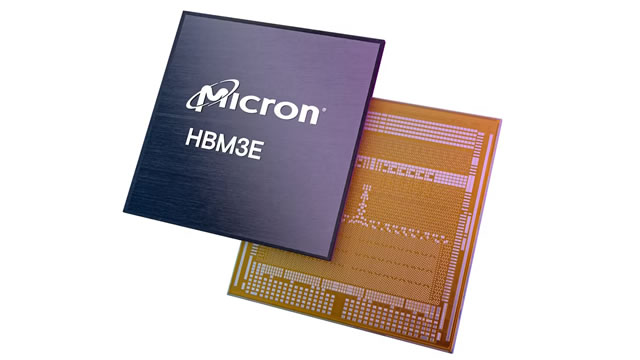
Micron (MU) is cited as the author’s top 2025 investment, up nearly 1,400% since an April 2025 Strong Buy rating. Despite this, the stock has fallen about ~20% from its all-time high, leaving investors debating whether to sell or add more. The article frames the move as a sentiment-driven inflection rather than citing new company fundamentals.
The move looks more like an air-pocket in a crowded winner than a thesis break. For a high-beta memory leader, a 20% retrace after a vertical run usually reflects multiple compression and position unwinds first, fundamentals second; that matters because the stock can fall faster than the underlying pricing cycle deteriorates. Near term, the key question is whether this is a normal reset before the next leg higher or the market beginning to discount a peak in HBM/DRAM enthusiasm.
The second-order winner if this is only a reset is the supply discipline cohort: weaker competitors with less flexibility in NAND/legacy DRAM would be forced to keep capital allocation rational, which supports industry pricing rather than starting a race to the bottom. If MU weakens on no new data, the broader semicap complex could also de-rate temporarily because investors often treat memory as a proxy for the durability of AI-related spend, even though the real sensitivity may be in the equipment names and not just the chip seller.
The real risk is that the market is ahead of itself on AI memory economics. If HBM supply catches up faster than expected or hyperscaler orders normalize, MU’s earnings power can stay good while the forward multiple still contracts, which is how a stock can underperform for months despite decent results. Falsification comes from the next guidance cycle: if pricing, mix, or gross margin outlook inflects down, this becomes a real drawdown rather than a buy-the-dip setup.
Contrarian view: the crowd may be overreacting to the chart and underweighting how sticky memory supply discipline can be once pricing is repaired. If the company is still adding to the HBM mix while peers remain capacity constrained, the pullback is likely more about crowded ownership than deteriorating economics. In that case, the better trade is not to chase today, but to accumulate into continued volatility with a clearly defined earnings-risk stop.
AI-powered research, real-time alerts, and portfolio analytics for institutional investors.
Request TrialOverall Sentiment
mildly negative
Sentiment Score
-0.18
Ticker Sentiment
