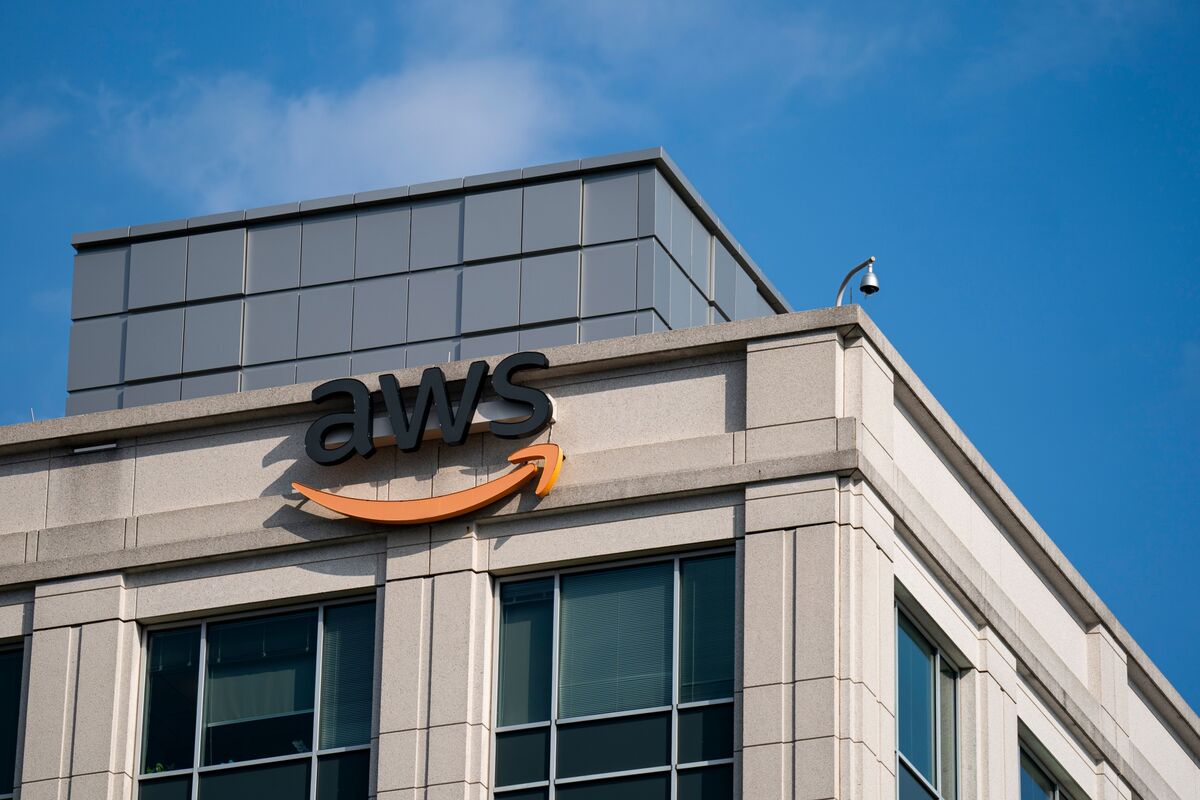
Amazon's in-house silicon unit is on pace to generate more than $20 billion over a year, and CEO Andy Jassy said the company is considering selling its AI and general-purpose chips to other firms. The portfolio includes AI accelerators and chips that improve server efficiency, indicating a potential new external revenue stream and strategic expansion of AWS's addressable market. Execution could pressure third-party chip vendors and reshape competition in cloud infrastructure and AI hardware.
Verticalizing AI silicon at scale changes the economics of cloud compute more than headline revenues imply: owning the stack lets a hyperscaler shift CPU/GPU spend from third parties to internal margins, which can translate into 200–400 bps of incremental AWS gross margin over 12–24 months if adoption follows typical hyperscaler rollout curves. That margin lever can be redeployed into price competition or higher reinvestment in services, creating a feedback loop that favors integrated suppliers and raises the bar for standalone accelerator vendors.
Second-order supply effects are underappreciated. Large contract allocations to a hyperscaler compress foundry and EUV lithography cycles for everyone else, elevating time-to-supply for AI startups and OEMs by 6–18 months and increasing bargaining power (and pricing) for TSMC/ASML. Conversely, enterprise OEMs that rely on third-party accelerators (Dell, HPE) face channel conflict risk and may accelerate partnerships or white-label deals to avoid being undercut.
Key near- and medium-term catalysts are measurable: third-party benchmark results (inference latency, TCO per 1B tokens) within 3–6 months, TSMC capacity allocations announced over the next 6–12 months, and enterprise design wins disclosed across 12–24 months. Tail risks include regulatory scrutiny over preferential treatment of internal silicon, and technical shortfalls vs incumbent GPUs — losing a single marquee training customer would blunt the narrative and slow monetization materially.
A contrarian read is that the market is overstating immediate displacement of incumbent GPU leaders. CUDA lock-in, software ecosystem depth, and the economics of large-scale training favor incumbents for at least 18–36 months; a pragmatic rollout will likely target inference and cost-sensitive deployments first, meaning incumbent vendors retain the high-margin training business longer than headlines suggest.
AI-powered research, real-time alerts, and portfolio analytics for institutional investors.
Request DemoOverall Sentiment
moderately positive
Sentiment Score
0.60
Ticker Sentiment
