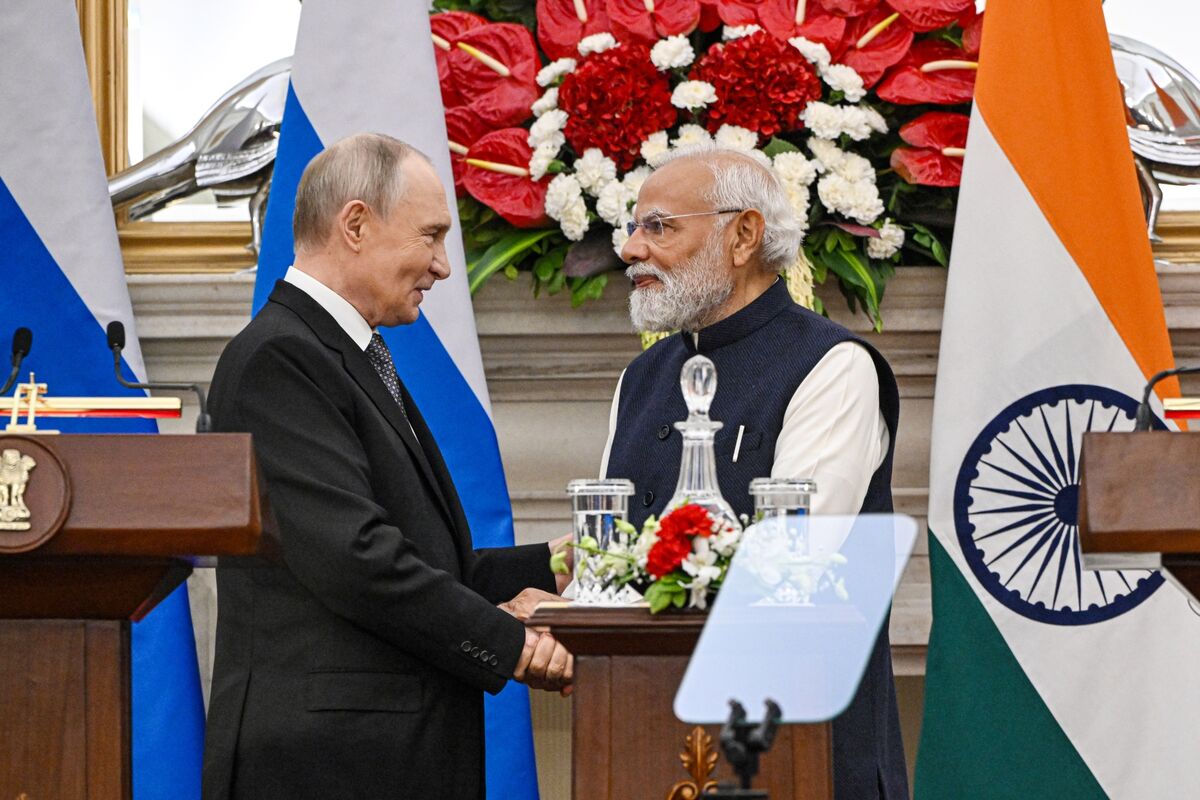
Vladimir Putin's visit to New Delhi is expected to produce a handful of trade and migration agreements between Russia and India, but the trip is characterized more by political theater than by detailed economic commitments. The visit signals a deepening bilateral relationship that could complicate Western policy toward Russia and influence bilateral trade flows, though no concrete deal terms or material financial figures were reported.
Market structure: India stands to gain as a buyer of discounted Russian energy and as a migration/skills recipient; winners are Indian refiners/energy integrators and logistics, while sanctioned Russian financials and Western intermediaries facilitating USD clearing are losers. Expect 3–12 month pressure boosting Indian trade volumes and a modest INR appreciation (1–4% scenario) as rupee-ruple/bilateral settlement reduces USD demand, with upward pressure on Brent/WTI of 2–8% if flows tighten elsewhere.
Risk assessment: Tail risks include US/EU secondary sanctions on India-facing intermediaries (10–20% probability over 6–12 months), which could widen EM sovereign spreads by 50–150bps and spike oil volatility 30–80% in days. Near-term (days) risks are FX swings and news-driven vol; medium-term (weeks–months) are capital flow shifts and trade realignments; long-term (quarters+) are strategic decoupling and supply-chain rerouting.
Trade implications: Favor India exposure (equity ETFs, refiners) and tactical energy longs; hedge with gold and options for policy shock. Use relative-value plays (India vs broader EM) and low-cost option structures (call spreads on oil, puts on EM banks) to express asymmetric payoffs over 3–12 months, scaling into price moves of 2–6%.
Contrarian angles: Markets underprice India’s ability to import Russian energy without immediate Western financial exclusion, so India equities could re-rate +5–15% vs EM if flows normalize in 6–12 months. Conversely, an overreaction by Western policymakers could transiently oversell EM assets — creating 2–4 week mean-reversion opportunities; set objective exit triggers (INR move, sanctions headlines) rather than calendar-only timeframes.
AI-powered research, real-time alerts, and portfolio analytics for institutional investors.
Request DemoOverall Sentiment
neutral
Sentiment Score
0.00
