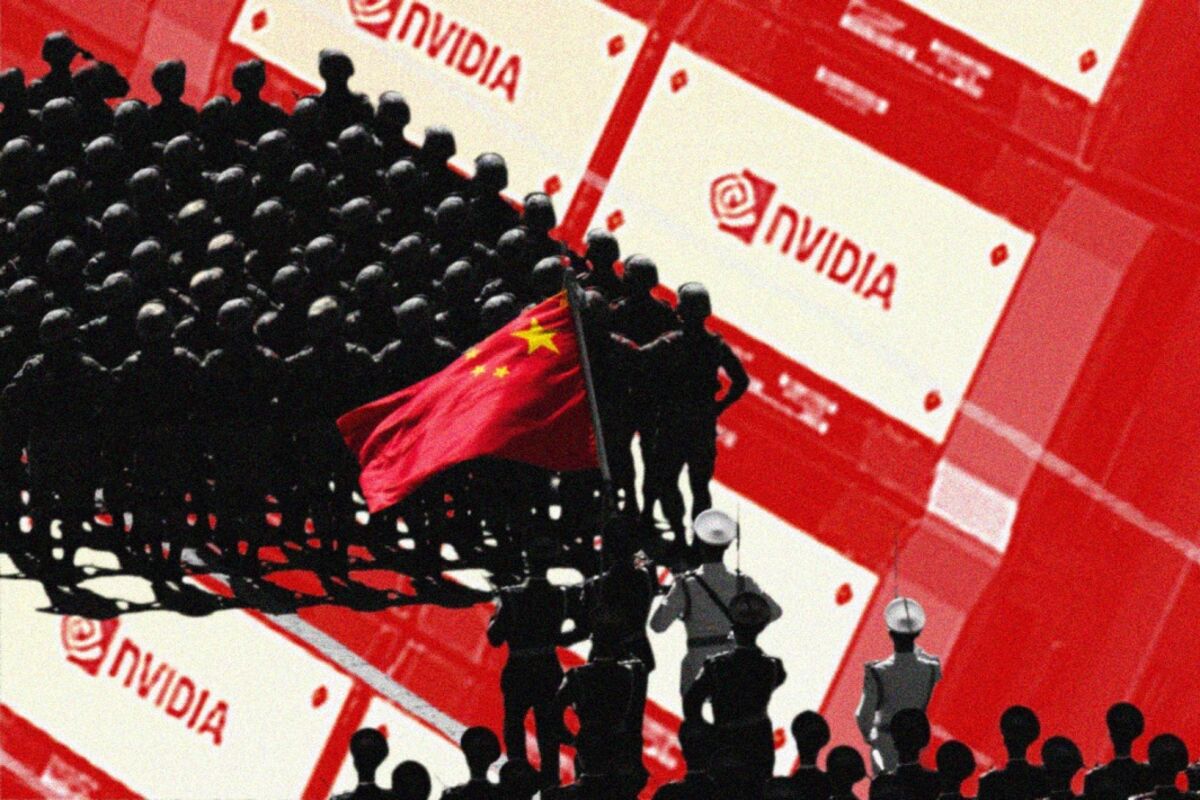
At least seven Chinese universities tied to the country’s defense sector are seeking access to Nvidia’s H200 AI chips, including Beihang University and Northwestern Polytechnical University, both blacklisted by the US Commerce Department. The report highlights continued demand for restricted U.S. semiconductor technology in China and raises export-control and national-security concerns. The immediate impact is more likely on Nvidia sentiment and policy scrutiny than on near-term fundamentals.
The key market issue is not incremental H200 revenue; it is enforcement risk repricing. Even if direct China sales remain constrained, any visible leakage of advanced accelerators into sanctioned or military-adjacent institutions raises the probability of tighter end-use screening, more aggressive diversion audits, and a broader licensing slowdown that could pressure NVDA’s China mix over the next 1-3 quarters. The second-order effect is that the marginal China buyer may increasingly prefer gray-market channels or domestic substitutes, which caps legitimate demand growth even when product demand remains strong.
This is also a competitive and geopolitical signal: the more Washington worries about downstream military utility, the more export controls shift from “model-specific” to “cluster- and networking-specific.” That would hit not just chips but also the surrounding AI infrastructure stack — interconnect, servers, ODMs, and cloud deployment partners — because the choke point moves from the silicon to the full compute system. In the medium term, that favors firms with less China exposure and better domestic/sovereign AI demand leverage, while it creates headline overhang for suppliers that rely on regulatory clarity to sustain multiples.
The contrarian read is that this may be less about near-term unit volumes and more about option value: every enforcement episode increases the chance that Chinese buyers accelerate indigenous chip development, but that transition is slow and uneven. For NVDA, the immediate financial impact is probably modest; the bigger risk is multiple compression if investors start pricing a durable ceiling on China upside plus rising policy volatility. Tail risk is a sudden rule tightening after further evidence of diversion, which could hit sentiment within days even if revenue effects take months.
AI-powered research, real-time alerts, and portfolio analytics for institutional investors.
Request DemoOverall Sentiment
mildly negative
Sentiment Score
-0.25
Ticker Sentiment
