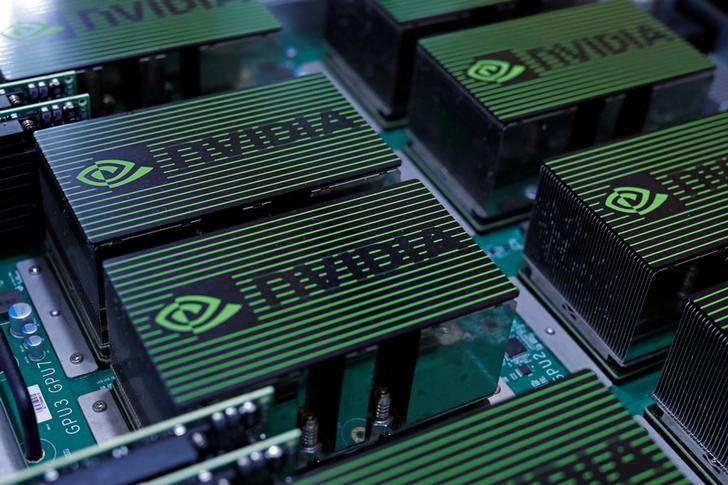
BofA Securities reiterated a Buy rating and $300 price target on Nvidia, arguing the stock could re-rate as ecosystem spending peaks and management pivots toward shareholder returns. The firm highlighted Nvidia’s sub-20x calendar 2027 P/E versus Magnificent Seven peers at 41.5x, plus potential for more than $400 billion of free cash flow across 2026-2027. The note is constructive for NVDA, though the broader article also includes mixed updates on China chip restrictions and partnership news.
The market is still treating NVDA like a cyclical hardware vendor, but the incremental setup is closer to a capital-return story with operating leverage. If management signals even a modest buyback framework, the shareholder base should mechanically broaden into dividend, quality, and income mandates that have been structurally underweight AI. That matters because the valuation discount is less about current growth and more about fear of a capital-intensive peak; a return-of-capital regime would directly attack that narrative.
Second-order, the biggest beneficiaries may be the suppliers and enablers rather than the stock itself. A cleaner capital allocation path reduces the market’s anxiety around vendor financing and surprise M&A, which should compress the “bubble premium” embedded across the AI hardware chain and support multiple expansion in adjacent winners with more durable economics. Conversely, it raises the bar for smaller AI infrastructure names that depend on perpetual reinvestment stories to justify valuation; if the category leader starts resembling a mature cash machine, lower-quality peers can lose scarcity value.
The key risk is timing: buybacks are a sentiment catalyst, but not necessarily a near-term earnings catalyst, so this is a months-to-years rerating path, not a days-to-weeks trade unless management explicitly changes capital return policy. Export-control uncertainty remains the cleanest downside convexity; any deterioration in China access would hit the market’s implied long-duration cash flow assumptions and could overwhelm the valuation support from shareholder returns. The contrarian miss is that the most powerful upside may come not from a higher multiple, but from the market finally classifying NVDA as a free-cash-flow compounder rather than a perpetual reinvestment story.
AI-powered research, real-time alerts, and portfolio analytics for institutional investors.
Request DemoOverall Sentiment
moderately positive
Sentiment Score
0.40
Ticker Sentiment
