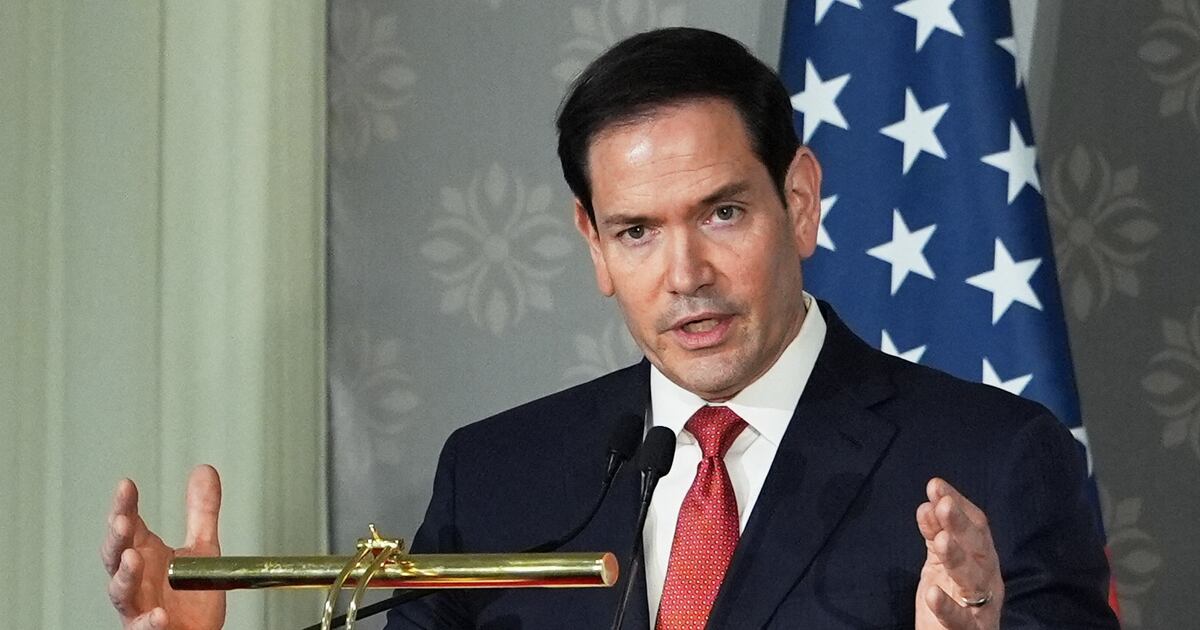
Russia warned of imminent heavy, systematic strikes on Kyiv and urged American citizens, diplomats, and international organizations to evacuate the city ahead of further escalation. The warning follows large drone and missile attacks that killed at least three people on May 24 and included a nuclear-capable Oreshnik missile launch toward an area near the capital. The article also notes stalled U.S.-led peace efforts and renewed political pressure around the war, keeping geopolitical risk elevated.
This is a near-term escalation signal, but the more important market implication is not the headline strike risk itself; it is the widening probability distribution around negotiation failure and Western policy drift. When Russia telegraphs “systematic” strikes and explicitly references command-and-control, it raises the odds of intermittent decapitation-style attacks that force Ukraine to disperse air defense, move logistics deeper west, and spend scarce interceptor inventory faster. That tends to benefit the defense supply chain more than the battlefield proxy assets: any sustained air campaign increases demand for Patriot-class interceptors, counter-UAS systems, EW, and hardened communications.
The second-order effect is on European risk assets through energy and insurance channels rather than direct equity beta. Even without direct hits to export infrastructure, elevated strike intensity raises shipping and reinsurance premia across the Black Sea corridor, while any perceived risk to power generation and rail nodes can spill into European gas forward prices and industrial margins. The market usually underprices this because it frames Ukraine escalation as a binary military event, but the real transmission is a slow tightening in logistics, replacement-capex, and sovereign procurement budgets over the next 1-3 quarters.
Politically, the biggest wildcard is that stalled diplomacy reduces the chance of any benign de-escalation window before summer, but it also increases the odds of headline-driven policy intervention if civilian casualties spike. That means the trade has convexity: defense and cyber/security names can grind higher on a bad-news baseline, but a sudden negotiation framework or U.S. pressure campaign could deflate the premium quickly. The consensus is likely too focused on “no peace, no move”; in reality, prolonged stalemate is itself supportive for defense budgets and munitions replenishment even if front-line territorial changes remain limited.
AI-powered research, real-time alerts, and portfolio analytics for institutional investors.
Request DemoOverall Sentiment
strongly negative
Sentiment Score
-0.72
