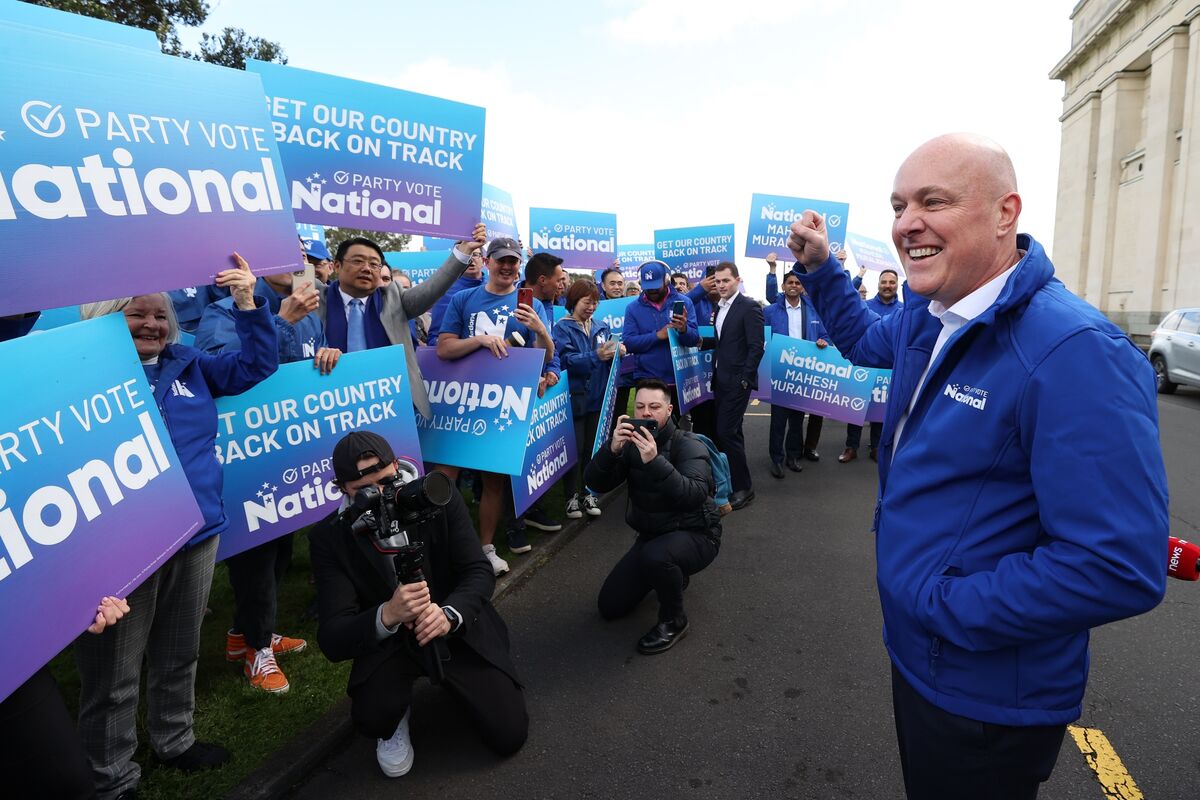
New Zealand’s governing National Party fell to 29% support in the latest 1News Verian poll, its lowest level since 2021 and down 1 point from April. Labour also weakened, dropping 5 points to 32%, leaving the election outlook more uncertain less than five months before the general election. The article is politically relevant but has limited direct market impact.
The immediate market read is not about who is ahead in the polls, but about what a closer, more volatile election implies for policy persistence and execution risk over the next 3-5 months. In a small open economy, a weakening incumbent bloc usually lifts the probability of a more populist or fiscally loose campaign, which can steepen the long end and pressure the currency via higher term premium rather than through any sudden growth shock. The second-order effect is that domestic cyclicals with high New Zealand revenue exposure tend to re-rate lower on uncertainty even before any policy change, while exporters can become a relative hedge if the NZD starts discounting a higher risk premium.
The more important nuance is positioning: when polls compress this late in the cycle, consensus often becomes under-hedged for a sharp sentiment swing after one or two macro data surprises or a debate headline. That creates asymmetric downside for NZ rate-sensitive assets if investors had been leaning on continuity trade assumptions. A cleaner expression is to fade domestic beta rather than making a directional call on the election itself, because the election risk premium can show up first in bank funding costs, retail multiples, and the currency before it is visible in earnings estimates.
The contrarian view is that the move may be overstated if the current government retains a coalition advantage and the opposition's drop reflects noise rather than durable momentum. In that case, the selloff in local-risk proxies would mean-revert quickly once the market re-prices the odds of policy continuity. The key catalyst to watch over the next 2-6 weeks is whether the polling trend broadens across multiple firms; one isolated print should not be treated as regime change unless it is confirmed by follow-through in coalition math and implied betting odds.
AI-powered research, real-time alerts, and portfolio analytics for institutional investors.
Request DemoOverall Sentiment
mildly negative
Sentiment Score
-0.15
