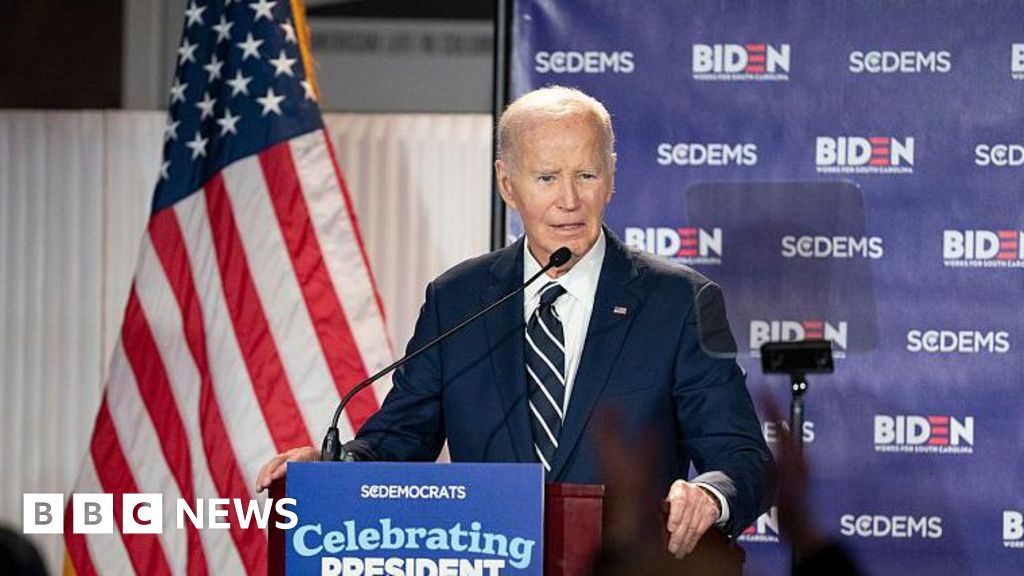
Joe Biden has sued the federal government to block release of interview recordings with his memoir ghostwriter, arguing they are private and protected under the Privacy Act. The Justice Department says the audio could show a significant decline in Biden's cognitive state and plans to release the materials by 15 June. The dispute adds to ongoing scrutiny of Biden's fitness for office, but is unlikely to have direct market impact.
This is less a one-off privacy fight than a durable political-information event with a multi-month release window. The market implication is not direct earnings exposure but an elevated probability of fresh narrative volatility around the election ecosystem, especially for media, polling-adjacent, and partisan-adjacent assets that trade on attention intensity rather than fundamentals. The key second-order effect is that anything tied to institutional credibility may see a temporary bid in distrust-driven environments, while any asset sensitive to policy continuity should face a small but nonzero risk premium until the tape proves the story is not broadening.
The asymmetric risk is that the release creates a new evidentiary anchor that can be clipped and repackaged repeatedly, extending the headline half-life well beyond the legal action itself. That matters because repeated narrative shocks tend to widen implied volatility in election-sensitive corners 30-90 days before and after a filing or release date, even when the underlying legal outcome is immaterial. If the materials are suppressed or heavily redacted, the market’s initial interpretation may reverse quickly, but the mere existence of a court battle keeps the issue alive and limits how fast reputational damage can decay.
Contrarian view: consensus will likely treat this as pure political theater, but the more tradable angle is not directionality on one political outcome; it is the persistence of uncertainty and the monetization of distrust. The bigger miss is that these episodes can shift attention away from policy into process, which reduces conviction in long-duration political bets and raises the value of optionality. If the release date approaches without resolution, expect short-horizon volatility to outrun fundamentals in the broader media and online information ecosystem.
AI-powered research, real-time alerts, and portfolio analytics for institutional investors.
Request DemoOverall Sentiment
mildly negative
Sentiment Score
-0.15
