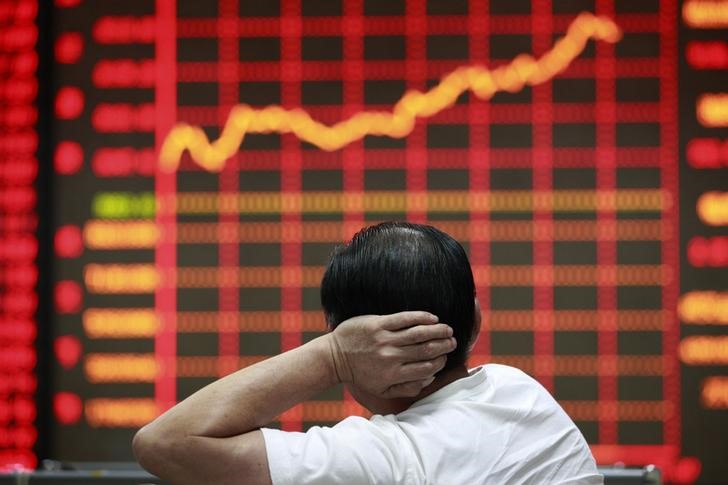
Asian equities mostly rose, with South Korea's KOSPI up 2.3% to a record 6,630.35 and Japan's Nikkei 225 up as much as 1.6% to a fresh high of 60,652.98, supported by U.S. tech strength and AI/chip sentiment. However, gains were capped by Brent crude above $107 per barrel amid stalled U.S.-Iran talks and Strait of Hormuz disruptions, keeping the backdrop cautious ahead of the Bank of Japan decision and a heavy U.S. earnings/Fed week.
The cleanest second-order winner is not the broad Asian index, but the semicap supply chain tied to AI capex: every new leg up in U.S. megacap earnings tends to reinforce the ‘AI spend is durable’ narrative, which supports memory, packaging, and foundry names in Korea and Taiwan even if local macro is softer. When SK Hynix and Samsung lead, the market is effectively pricing a longer runway for HBM demand and less sensitivity to near-term device cyclicality, which can keep the trade crowded for weeks rather than days.
The oil shock is the main brake on the risk-on impulse because it acts like a tax on Asia’s net importers while simultaneously complicating central-bank reaction functions. Japan is the most interesting cross-current: higher energy costs can delay any BOJ normalization if policymakers prioritize growth stability, but persistent inflation from imported energy also raises the odds that any pause is read as temporary, not dovish. That makes domestic financials and cyclicals more vulnerable to a flattening of the curve than the headline index strength suggests.
The market may be underestimating how quickly elevated oil can rotate leadership away from consumer and transport beneficiaries toward exporters, resource names, and high-margin technology with pricing power. If the Strait of Hormuz disruption persists beyond a few sessions, the first-order pain should show up in airlines, logistics, and import-heavy retail before it bleeds into broader earnings revisions over the next 1-2 quarters. On the other hand, if U.S.-Iran signaling improves, the recent record-highs in Korea and Japan could extend further because positioning is still likely under-owned after a long period of underperformance versus U.S. tech.
AI-powered research, real-time alerts, and portfolio analytics for institutional investors.
Overall Sentiment
mildly positive
Sentiment Score
0.20
Ticker Sentiment
